

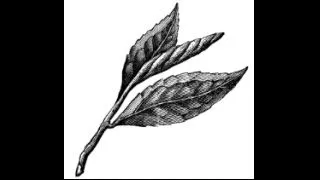
Reading the tea leaves wrong
In a country where the head of government happens to be a former tea vendor, it stands to reason that denizens (a person, animal, or plant that lives or is found in a particular place.) of New Delhi's corridors of power are obliged to closely control the welfare of India's tea industry. And why not? Tea comprises India's largest single-product agri-business in value, exports as well as employment, direct and indirect. This has been so for decades altogether.Governance, good or bad, is often fraught with the burden of adopting self seeking, here-and-now methods in an anxiety to demonstrate action. The impending dissolution of the Tea Board of India, should very recent media reports be true, would be a worrisome misstep whose logic and timing are opaque.
First, a lesson in history. Early in the post Independence flush (pun intended), the then government, headed by a mere imbiber of this delightful beverage, legislated The Tea Act (Act no. 29), 1953. The first sentence stated: “It is hereby declared that it is expedient ((of an action) suitable or appropriate.) in the public interest that the Union should take under its control the tea industry.” These 23 fateful words endowed all Union governments since, including the current one, with the right to 'control' the tea industry.
The Tea Board owes its birth (genesis) on April 1, 1954 to Section 4 of The Tea Act of 1953. The board was created as the enabling administrative tool for the Union ministry of commerce and industry to exercise the 'control' cited above. Over 80 per cent of India's harvest was, and still is, grown in Calcutta's hinterland; therefore, by executive order, the new board was headquartered in this city.
Since its inception, the Tea Board has always been a credible (tenable) representative body. By writ of law, members of the board - up to 40 in number - collectively embody interests of tea-garden owners, growers, manufacturers and employees. Dealers and traders, both exporters and domestic, consumers, governments of tea-growing states as well as Parliament are represented too. Clearly the act was drafted well enough to ensure adequate protection of all stakeholders of the tea industry.
There is a catch, though. The Tea Act specifies that the board will consist of "persons, who, in the opinion of the Central Government, ought to be represented on the Board." In other words, all members are government nominees.
There's one more peremptory (not open to appeal or challenge; final) provision. Section 11 of the Tea Act states that the “Central Government may by notification in the Official Gazette, direct that the Board shall be dissolved from such date and for such period as may be specified in the notification.”
It is rather unusual that authority to dissolve a statutory board does not vest with Parliament but with the government of India. Apparently, as quoted above, Section 11 does indeed allow dissolution by executive fiat (a formal authorization or proposition; a decree.) . This isn't quite so. The Tea Board remains a “perpetual body”; only the board's body of members is changed. Sitting members vacate office, new faces are brought in.
To its credit, for years altogether, the Tea Board has done consistently well in promoting and developing the tea industry. In fiscal 2016-17, for instance, the volume of India's tea production reached an all-time high of 1,251 million kilogrammes (m.kg), up from 1,233 m.kg the previous year. Exports stood at a robust 223 m.kg despite purchase cuts by Pakistan and Russia. By all accounts, the board works quite efficiently from its current headquarter in Calcutta. Surely there is no imperative to replace existing board members wholesale.
The board's ability to deliver results probably flows from its pan-Indian administrative structure. Geographical coverage is very satisfactory, with 20 regional and 67 sub-regional offices spread over the country's 15 tea-growing states. With 558 employees, the Tea Board's annual reports express no grouse (complain about something) about staff shortage either.
With its spirit of self-confidence running strong, the board also 'extends support' to popularize tea as a beverage through Tea Councils in the United States of America, the United Kingdom, Canada and Germany. A Promotional Directorate located at the head office in Calcutta and at overseas Tea Councils supervises the good work being done by these councils. Exports are going up, after all.
One wanders into the realm (a field or domain of activity or interest.) of conjecture but politics seems to play a role in the Centre's policy of revamping its control over tea. The industry's nodal body, the Tea Board, runs from a state where the ruling party at the Centre is a minor player in the Opposition. Its political stake in Assam, India's largest tea- growing state where the Bharatiya Janata Party is now in power, is very high. Besides, all it takes is an official notification to create a permanent tectonic ((of a change or development) very significant or considerable.) shift in the Indian tea industry's balance of power. It's easily done.
Opportunity for good governance doesn't end here. Under the Tea Act, the Centre is not required to explain why action is being taken. Therefore it need not divulge the whys and wherefores of the felt need for dissolution.
At the end of the day, runs our sad surmise (a supposition that something may be true, even though there is no evidence to confirm it.), the cup of tea brewed by the Tea Board, Calcutta, doesn't cheer its bosses in New Delhi. Nobody knows why, and never will.

Heartland churn
Mar 13, 2018

Prime minister on project spree in ne
Dec 17, 2017
Profiteer slur on hospital
Dec 17, 2017
The great smog lessons from the pollution meltdown
Dec 13, 2017





Stay updated with The Hindu Editorial Vocab24 app, your definitive source for breaking news and comprehensive coverage from India and around the globe. Whether it's political developments, business updates, sports highlights, the latest technology trends, or current events, The Hindu brings live, accurate, and reliable news directly to your device.
Don’t fall for sensationalized or fake news shared online. Read and share accurate updates with friends and family through The Hindu Editorial Vocab24 app. Download it today!
News Coverage in The Hindu Editorial Vocab24 App
Breaking News: Receive instant notifications on breaking news stories as they unfold. Stay informed about major events and developments in India and around the world with live blogs, news in shorts videos, and concise articles.
Politics: Get the latest updates on Indian politics, including elections, policy changes, government decisions, and political events that shape the nation.
Business and Economy: Stay ahead in the economic landscape with detailed business news and market analysis. Learn about stock market trends, financial reports, corporate news, and economic developments to make informed investment decisions.
Current Events: Follow stories on social issues, policy changes, global events, and daily current affairs, tailored for UPSC and other competitive exam preparations.
Technology: Keep up with the latest gadgets, innovations, and tech trends. Read expert reviews and analyses in short, concise updates on cutting-edge technology from India and beyond.
Sports: Never miss a moment of your favorite sports. Get live scores, match reports, and expert analysis on cricket, football, tennis, and more.
International News: Stay informed about global events and geopolitical developments, including the Russia-Ukraine war, Israel-Palestine conflict, and other key international stories.
Local News: Stay connected to your community with the latest updates on city events, issues, and local news. Coverage includes hyperlocal updates from cities like Bangalore, Chennai, Delhi, Hyderabad, Mumbai, Kolkata, and more.
Trending Topics: Discover what's trending today with the most talked-about stories and hot topics across India and the world.
Experience journalism that values integrity, accuracy, and reliability. Download The Hindu Editorial Vocab24 app today and stay connected with the world.
Subscribe to our newsletter!







