

Why india is about to move to the ‘center stage’ of world energy
The disconnect is huge: Even as countries of the world pledge to cut their greenhouse gas emissions going into the Paris climate talks, recent analyses suggest that overall emissions will still rise through the year 2030, and current national pledges will merely blunt the force of that trend.The key reason, highlighted in the new 2015 World Energy Outlook by the International Energy Agency, is that the coming decades will also see an incredible one-third growth in overall energy consumption through 2040, much of which will still be satisfied by coal and other fossil fuels. The agency highlights one particular country to underscore this trend – though there are many other candidates – India, home to 1.3 billion people, 240 million of whom lack electricity, most of them living in rural areas.
This, the IEA says, is why India is about to surpass China as the dominant global energy story.
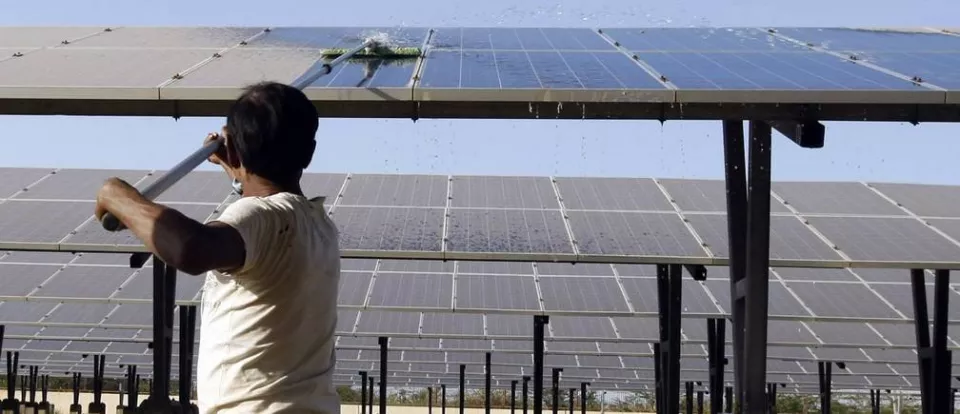
“We think India is moving to the center stage of global energy,” IEA executive director Fatih Birol says. “All the numbers are indicating that India will be the number one country in terms of coal consumption worldwide. India will be the number one country for the oil demand growth worldwide. And India will be the country with more than 20 percent of the solar PV worldwide.”
This is happening, of course, because China is slowing down, nearing the end of what Birol calls the “single largest demand growth story of energy history.” Meanwhile, India’s demand is set to boom as it not only expands electricity to those who currently lack it, but as population growth and a move toward urbanization mean more cars, more appliances, and more overall fuel and electricity.
The new IEA report profiles India in depth, pointing out that the country has ambitious clean energy plans, shooting for 175 gigawatts of renewable energy capacity by 2022 in the form of mass deployments of wind, solar and hydropower. However given the growth in electricity demand and that the country’s power sector is highly dependent on coal, a great deal of the expected demand growth will also mean burning more of this carbon intensive fuel.
Just how big is the growth likely to be? IEA points out that while India has 18 percent of the globe’s population, it only accounted for 5.7 percent of its energy demand in 2013.
And it’s not just lack of electricity – it’s everything that goes with it. “India also has the largest population in the world relying on the traditional use of solid biomass for cooking: an estimated 840 million people – more than the populations of the United States and the European Union combined,” the IEA notes.
This form of cooking is dangerous to health because of the indoor air pollution it creates. Getting people away from burning biomass is a very good thing, but it also means electrification and thus more use of all energy sources, including renewables but also coal.
India’s Intended Nationally Determined Contribution outlined for the Paris talks is highly detailed, outlining plans to have 40 percent of its power capacity be from non-fossil fuel sources 2030, to plant enough trees to pull 2.5 to 3 gigatons of carbon dioxide equivalents out of the air, and to reduce the “emissions intensity” of its economy by 33 to 35 percent. So the country has clear clean energy ambitions, but it has also been faulted for failing to declare a peak for its growing emissions.
On top of that, the IEA says that to lessen the carbon implications of India’s growth – to the extent that that is possible – the country will have to take additional measures such as constructing energy efficient buildings (so as not to be locked into inefficient ones for another generation), building smart cities and striving to control air pollution.
“We will have to follow the Indian energy policies much more closely in the future,” Birol says.
India is a key focus of the IEA’s 2015 World Energy Outlook, but the agency also examines many other trends. It expects that low oil prices will gradually rise to around $80 a barrel by 2020, though it also considers a scenario in which they could stay lower for longer, harming fuel efficiency gains and also making the world more dependent on the Middle East.
IEA also says that natural gas will continue to see global growth – “among the fossil fuels … the only one that sees its share rise” — particularly thanks to liquified natural gas or LNG transport worldwide, although the required pipelines and infrastructure will be costly. Meanwhile, coal will suffer overall, satisfying only about 10 percent of the total new growth in electricity demand. That’s because even though use will rise in places like India and Southeast Asia, it will plummet in the United States and Europe and will see renewables take its place. In the end, though, the big picture has become depressingly familiar by now – we’re changing how we get energy, but we’re not changing it fast enough for the climate. Renewables are moving too slowly, so too much of burgeoning new demand will still be met by fossil fuels, at least under current climate pledges and trends.
“The net result is that energy policies, as formulated today, lead to a slower increase in energy-related CO2 emissions, but not the full de-coupling from economic growth and the absolute decline in emissions necessary to meet the 2 °C target,” the IEA concludes.

Tropical forests used to absorb carbon not any more
Jan 29, 2018
Four new 'superpowers' you should know about
Jan 23, 2018


China is creating new forests the size of ireland
Jan 13, 2018






Stay updated with The Hindu Editorial Vocab24 app, your definitive source for breaking news and comprehensive coverage from India and around the globe. Whether it's political developments, business updates, sports highlights, the latest technology trends, or current events, The Hindu brings live, accurate, and reliable news directly to your device.
Don’t fall for sensationalized or fake news shared online. Read and share accurate updates with friends and family through The Hindu Editorial Vocab24 app. Download it today!
News Coverage in The Hindu Editorial Vocab24 App
Breaking News: Receive instant notifications on breaking news stories as they unfold. Stay informed about major events and developments in India and around the world with live blogs, news in shorts videos, and concise articles.
Politics: Get the latest updates on Indian politics, including elections, policy changes, government decisions, and political events that shape the nation.
Business and Economy: Stay ahead in the economic landscape with detailed business news and market analysis. Learn about stock market trends, financial reports, corporate news, and economic developments to make informed investment decisions.
Current Events: Follow stories on social issues, policy changes, global events, and daily current affairs, tailored for UPSC and other competitive exam preparations.
Technology: Keep up with the latest gadgets, innovations, and tech trends. Read expert reviews and analyses in short, concise updates on cutting-edge technology from India and beyond.
Sports: Never miss a moment of your favorite sports. Get live scores, match reports, and expert analysis on cricket, football, tennis, and more.
International News: Stay informed about global events and geopolitical developments, including the Russia-Ukraine war, Israel-Palestine conflict, and other key international stories.
Local News: Stay connected to your community with the latest updates on city events, issues, and local news. Coverage includes hyperlocal updates from cities like Bangalore, Chennai, Delhi, Hyderabad, Mumbai, Kolkata, and more.
Trending Topics: Discover what's trending today with the most talked-about stories and hot topics across India and the world.
Experience journalism that values integrity, accuracy, and reliability. Download The Hindu Editorial Vocab24 app today and stay connected with the world.
Subscribe to our newsletter!







