

U s backed gaza aid system rolls out amid opposition from un agencies
The Gaza Humanitarian Foundation would wrest distribution away from UN-led aid groups; the new mechanism limits food distribution to a small number of hubs; four hubs are being set up, close to Israeli military positions; Hamas warns Palestinians in Gaza against dealing with the GHF.A U.S.-backed group approved by Israel to take over aid distribution in Gaza says it has started operations, despite opposition from the UN and most humanitarian groups and the unexpected resignation of its executive director.
The Gaza Humanitarian Foundation is the linchpin of a new aid system that would wrest distribution away from aid groups led by the UN, which have carried out a massive operation moving food, medicine, fuel, tents and other supplies across Gaza since the war began in October 2023.
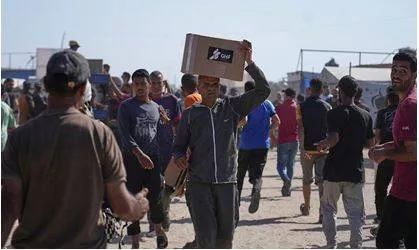
The new mechanism limits food distribution to a small number of hubs under guard of armed contractors, where people must go to pick it up. Currently four hubs are being set up, all close to Israeli military positions. Three are in the far south where few Palestinians are located.
GHF said it moved trucks of food to its hubs on Monday and began distribution, without giving details on how much aid was distributed. It said the flow of supplies would be “increasing each day.” It has said it plans to reach more than one million Palestinians by the end of the week. Gaza has a population of around 2.3 million.
Jake Wood, the American heading the effort, said Sunday night he was resigning because it was clear the organisation would not be allowed to operate independently.
Israel has demanded an alternative plan because it accuses Hamas of siphoning off aid. The United Nations and aid groups deny that there is a significant diversion. They reject the new mechanism, saying it allows Israel to use food as a weapon, violates humanitarian principles and won’t be effective.
Israel blocked food, fuel, medicine and all other supplies from entering Gaza for nearly three months, pushing the territory toward famine. Last week, it allowed in a trickle of supplies, saying it would let the UN distribute it only until GHF was running.
The Hamas-run Interior Ministry on Monday warned Palestinians in Gaza against dealing with GHF.
How will this plan work, who’s behind it and why are aid groups pushing back?
Wood’s resignation
GHF publicly launched early this year and is run by a group of American security contractors, ex-military officers and humanitarian aid officials. It has the support of Israel and the United States.
Until resigning, Jake Wood was the face of the foundation. Mr. Wood is a U.S. military veteran and co-founder of a disaster relief group called Team Rubicon.
It’s unclear who will now run GHF.
A proposal circulated by the group earlier this month included several names, including the former director of the UN World Food Program, David Beasley. Neither Beasley nor GHF have confirmed his involvement.
It’s also unclear who is funding GHF. It claims to have more than $100 million in commitments from a European Union government but has not named the donor. The U.S. and Israel have said they are not funding it.
The GHF’s plan to centralise distribution through hubs is similar to ones designed by Israel.
GHF’s plan
It says each of its initial four hubs would serve meals for roughly 300,000 people. It has said it will eventually be able to meet the needs of two million people. It said it will create more hubs within 30 days, including in the north, but did not specify their exact locations.
Aid will be delivered with the help of private subcontractors transporting supplies in armoured vehicles from the Gaza border to the hubs, where they will also provide security. It said the aim is to deter criminal gangs or militants from redirecting aid.
Satellite photos from May 10 show what appear to be the construction of the hubs. The photos show one in central Gaza, close to the Netzarim Corridor, a strip of land held by Israeli troops. Three others are in the area of Rafah, south of the Morag Corridor, another military-held strip.
Almost the entire population is currently in northern Gaza, where no hub is currently located, or in central Gaza. They would have to cross through Israeli military lines to reach the hubs near Rafah.
In a letter to Israeli officials, Mr. Wood said that until at least eight hubs are operating, the existing UN-led system will continue providing food in parallel to GHF. He also said the UN-led system would continue in the future to distribute all non-food humanitarian aid — everything from medical supplies to hygiene items and shelter materials. GHF was not capable of handling those supplies, Mr. Wood acknowledged.
In the letter, sent to Israel’s military body in charge of aid coordination in Gaza, COGAT, Mr. Wood said GHF and Israel had agreed on those terms. There was no confirmation from COGAT, however.
The UN and aid groups say that the plan would “weaponize aid” for Israel’s military and political purposes. They say Israel would have the power to determine who receives aid and to force the population to move to where it is being distributed, emptying large parts of the territory. That would potentially violate international laws against forced displacement.
GHF said in a statement it is independent and apolitical and will not be part of any mass displacement. It said its system is fully consistent with humanitarian principles.

Pm proposes new growth initiatives at g 20
Nov 25, 2025
India s russian oil cuts predate u s tariffs data
Nov 22, 2025









Stay updated with The Hindu Editorial Vocab24 app, your definitive source for breaking news and comprehensive coverage from India and around the globe. Whether it's political developments, business updates, sports highlights, the latest technology trends, or current events, The Hindu brings live, accurate, and reliable news directly to your device.
Don’t fall for sensationalized or fake news shared online. Read and share accurate updates with friends and family through The Hindu Editorial Vocab24 app. Download it today!
News Coverage in The Hindu Editorial Vocab24 App
Breaking News: Receive instant notifications on breaking news stories as they unfold. Stay informed about major events and developments in India and around the world with live blogs, news in shorts videos, and concise articles.
Politics: Get the latest updates on Indian politics, including elections, policy changes, government decisions, and political events that shape the nation.
Business and Economy: Stay ahead in the economic landscape with detailed business news and market analysis. Learn about stock market trends, financial reports, corporate news, and economic developments to make informed investment decisions.
Current Events: Follow stories on social issues, policy changes, global events, and daily current affairs, tailored for UPSC and other competitive exam preparations.
Technology: Keep up with the latest gadgets, innovations, and tech trends. Read expert reviews and analyses in short, concise updates on cutting-edge technology from India and beyond.
Sports: Never miss a moment of your favorite sports. Get live scores, match reports, and expert analysis on cricket, football, tennis, and more.
International News: Stay informed about global events and geopolitical developments, including the Russia-Ukraine war, Israel-Palestine conflict, and other key international stories.
Local News: Stay connected to your community with the latest updates on city events, issues, and local news. Coverage includes hyperlocal updates from cities like Bangalore, Chennai, Delhi, Hyderabad, Mumbai, Kolkata, and more.
Trending Topics: Discover what's trending today with the most talked-about stories and hot topics across India and the world.
Experience journalism that values integrity, accuracy, and reliability. Download The Hindu Editorial Vocab24 app today and stay connected with the world.
Subscribe to our newsletter!







