

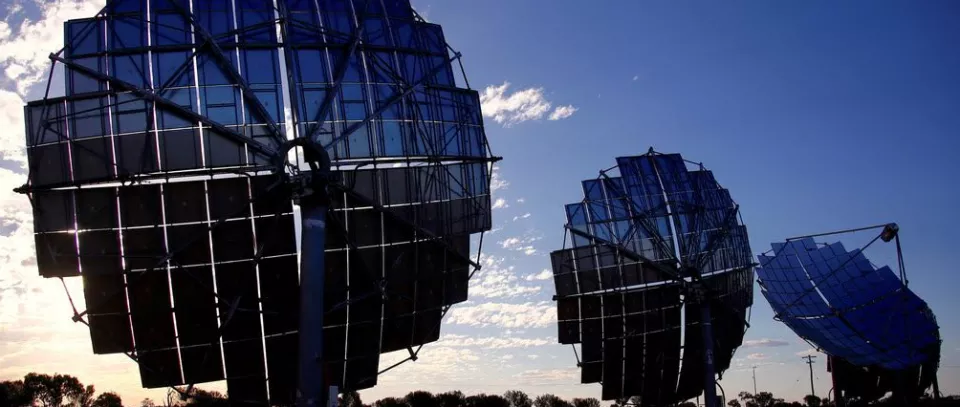
The next energy revolution is already here
Over the period of one decade, the capitalized cost of generating solar energy in 2015 has decreased to as low as one sixth the cost in 2005, and I believe it will not take long for solar energy generation to be economically cheaper than thermal power generation worldwide.Every year at the World Economic Forum, energy consumption and climate change are always hot topics.
Looking back at the history of human civilisation, for a long time, firewood was the primary source of energy; however, back then, energy ultilization was low and as such air pollution emissions were also low.
The invention of the steam engine in the 18th century marked the beginning of the industrial revolution, which led to the mining and consumption of coal on a large scale. In 1920, coal accounted for 62% of primary energy consumption, indicating that the world had entered the Coal Age.
In 1965, petroleum replaced coal as the most consumed energy, which led the world into the “petroleum age”. In 1979, petroleum contributed 54% of the world energy consumption, marking the second energy revolution from coal to petroleum. Up until now, fossil fuels have continued to dominate as our energy resource.
With each new age, the use and efficiency of energy have increased significantly - as have, unfortunately, levels of severe environmental pollution. Our future energy system must therefore be clean and low-carbon to ensure the sustainable development of human civilisation.
We are now embarking on a new era of energy revolution. The energy system of the future should have the following three features:
Low carbon energy production. Fossil fuels have to be burned to release energy, which caused emissions and environmental pollution. The existing intensive industrial usage of fossil fuels has significantly harmed the environment. Meanwhile, for most economically under-developed countries around the world, the cost of clean energy is too high to be affordable.
Solar power, however, is one of the best solutions. Not only is solar energy production clean, it may also soon become a much more affordable source of energy, as technology development and innovation continues to reduce the cost of solar power generation.
As mentioned, the cost of solar energy generation in 2015 has decreased to as low as one sixth the cost in 2005. In the near future, solar power will be less expensive than coal power. Renewable clean energy replacing fossil fuels is the trend of the ongoing energy revolution.
Energy independence and connectivity. As a typical outcome of the industrial age, the existing electrical energy system has been made of large-scale hydropower plants and coal power plants in resource-rich regions, supplying their output to consumption centres through a grid system. Such development not only requires enormous investment, it also causes serious environmental problems.
The energy system of the future, dominated by renewables, will be built on the basis of regions. Each region will have its own energy supply system. Thus, forming a new system with a regional power network which would also be interconnected with networks in other regions, so as to balance the system and ensure a consistent energy supply. An energy system like this would be far more optimised than our existing one.
Energy sharing. When solar energy is adopted by hundreds of factories and thousands of houses, the power supply system will be totally changed. Every school, every factory and every family will become a micro clean energy power station. We will be both energy consumers as well as energy producers. The direction of new energy revolution is to build an energy-sharing system, based on a large database and a smart-energy connection platform. Such a vision has already been realized in Germany, where many households are equipped with solar panels on their rooftops. If one family produces more electricity more than they use, they share the extra power with other families via regional grid. Establishing an energy-sharing system can further decrease the cost of adopting clean energy. It can be a new model of shared energy and a shared economy.
Promoting the new model of energy consumption in less-developed regions. While developed countries are changing their energy structure from fossil fuels to renewables, many less-developed regions are still short of any kind of energy supply models. Those countries could skip the traditional power system, and directly adopt new clean energy.
At present, 1.4 billion people worldwide have no access to electricity, of which 500 million are in Asia. In future, we can build a clean energy supply system featured by solar power, with distributed and micro power networks, to make electricity accessible to everyone on earth by 2030. This plan can totally meet the requirement of access to energy under the UN’s Agenda 21. This kind of energy revolution will bring universal value and significance.
Throughout the history of humanity, industrial revolutions have also been energy revolutions. Every change of a dominant energy source has been a revolution. Each time, a change had resulted in industrial and social developments. The next energy revolution is now at accelerating in pace, propelled by technology development and innovation. Consequently, the connection to grid of PV (solar) energy at a fair price will become a reality faster than we expect.

Tropical forests used to absorb carbon not any more
Jan 29, 2018
Four new 'superpowers' you should know about
Jan 23, 2018

China is creating new forests the size of ireland
Jan 13, 2018






Stay updated with The Hindu Editorial Vocab24 app, your definitive source for breaking news and comprehensive coverage from India and around the globe. Whether it's political developments, business updates, sports highlights, the latest technology trends, or current events, The Hindu brings live, accurate, and reliable news directly to your device.
Don’t fall for sensationalized or fake news shared online. Read and share accurate updates with friends and family through The Hindu Editorial Vocab24 app. Download it today!
News Coverage in The Hindu Editorial Vocab24 App
Breaking News: Receive instant notifications on breaking news stories as they unfold. Stay informed about major events and developments in India and around the world with live blogs, news in shorts videos, and concise articles.
Politics: Get the latest updates on Indian politics, including elections, policy changes, government decisions, and political events that shape the nation.
Business and Economy: Stay ahead in the economic landscape with detailed business news and market analysis. Learn about stock market trends, financial reports, corporate news, and economic developments to make informed investment decisions.
Current Events: Follow stories on social issues, policy changes, global events, and daily current affairs, tailored for UPSC and other competitive exam preparations.
Technology: Keep up with the latest gadgets, innovations, and tech trends. Read expert reviews and analyses in short, concise updates on cutting-edge technology from India and beyond.
Sports: Never miss a moment of your favorite sports. Get live scores, match reports, and expert analysis on cricket, football, tennis, and more.
International News: Stay informed about global events and geopolitical developments, including the Russia-Ukraine war, Israel-Palestine conflict, and other key international stories.
Local News: Stay connected to your community with the latest updates on city events, issues, and local news. Coverage includes hyperlocal updates from cities like Bangalore, Chennai, Delhi, Hyderabad, Mumbai, Kolkata, and more.
Trending Topics: Discover what's trending today with the most talked-about stories and hot topics across India and the world.
Experience journalism that values integrity, accuracy, and reliability. Download The Hindu Editorial Vocab24 app today and stay connected with the world.
Subscribe to our newsletter!







