


The benefits of a lousy passport
“What are you doing here?” is a question I got used to hearing pretty quickly in Kiev. It’s not that people were unhappy to see me – quite the opposite. But nobody in Ukraine could figure out why I was spending my summer vacation in a country that is the second poorest in Europe (after Moldova), at war (with Russia), and expensive to get to (a planned Ryanair route never took off). Perhaps, they ventured, I had an interest in Communist history and post-Soviet countries? Or maybe (nudge, nudge, wink, wink) because Ukrainian girls are very pretty?The real reason is deeply unsexy. I went to Ukraine because Ukraine would have me. I hold an Indian passport – ranked 159th out of 199 countries on a list of the world’s most powerful passports measured by ease of travel. In April the Ukrainian ministry of foreign affairs announced that it would grant visas on arrival to citizens of nearly three dozen countries. Earlier this year, the president of neighbouring Belarus decreed visa-free access for citizens of 80 countries. Both lists included India. So I went.
The top five slots in the ranking of powerful passports are shared by 22 countries, two thirds of which are within the European Union. EU citizens can go to more than 150 countries visa-free or get a visa on arrival. People from Canada, Japan, Singapore and America have similar privileges. At the other end of the scale are Afghanistan, Iraq, Pakistan, Syria, Somalia and Yemen, which occupy the bottom five ranks. Each one of those passports grants its holder access to, at most, 35 countries. The Indian passport is more useful, but not by much. It gives me easy access to a paltry 51 countries. The rest, including North America and all European countries, require a visa.
On the plus side, this means Indian passports tend to be full of stamps and stickers. On the minus side, getting a visa is hard. It requires lots of money in the bank, pre-booked flights and hotels, the disclosure of tax returns and payslips, proof of intent to return home, hefty fees and ritual humiliation. When a visa is rejected, it means losing money on application fees, plane tickets and other bookings as well as having to explain yourself the next time you make a visa application.
If you work in a profession that requires you to travel abroad at short notice, like journalism, having to apply for visas can hold you back. Once, in a previous job, I had to decline a free trip to report on a cocktail-making competition in Athens because I couldn’t get a visa appointment in time.
When I am travelling for leisure, I prefer to avoid the hassle of applying for a visa. I do not choose destinations so much as they choose me. That is why I have gone on holiday twice to Iran. I have ended up in countries where people are surprised and genuinely happy to meet a visitor. In Isfahan, a city in central Iran, a friend and I were stopped by a gang of excited youths as we crossed a bridge – they wanted a picture with us. (Europeans relate similar stories about feeling like mini-celebrities in small-town India.) In Minsk, complete strangers I emailed agreed to meet for drinks and acquaintances of acquaintances offered to show me around. I’ve gained valuable insights into how societies operate. In Kiev, I spent an afternoon sitting in an ancient flat chatting to a bunch of undergraduates about everything from Ukrainian education standards and the local indie music scene to the situation in Donbas and corruption in the judiciary. I have experienced extraordinary acts of generosity. In Albania a few years ago, a complete stranger drove me halfway across the country after a bus driver decided against plying his route that day.
Letting the world’s bureaucrats choose my destinations has led to enriching, unforgettable holidays. I hope there will be many more to come. Kyrgyzstan and Tajikistan have recently started granting e-visas to Indians. Over the past few years south-east Asian countries have liberalised their visa regimes, with the result that Indian and Chinese tourists have started pouring in. In September, Serbia abolished the visa requirement altogether. For the first time, I find myself confronted with a choice of where to spend my money. It is nice to feel wanted.

How to interpret a market plunge
Feb 07, 2018
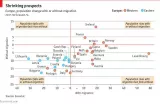
Why europe needs more migrants
Nov 12, 2017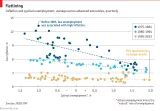
The phillips curve may be broken for good
Nov 06, 2017

Why homeopathy is nonsense
Oct 24, 2017





Stay updated with The Hindu Editorial Vocab24 app, your definitive source for breaking news and comprehensive coverage from India and around the globe. Whether it's political developments, business updates, sports highlights, the latest technology trends, or current events, The Hindu brings live, accurate, and reliable news directly to your device.
Don’t fall for sensationalized or fake news shared online. Read and share accurate updates with friends and family through The Hindu Editorial Vocab24 app. Download it today!
News Coverage in The Hindu Editorial Vocab24 App
Breaking News: Receive instant notifications on breaking news stories as they unfold. Stay informed about major events and developments in India and around the world with live blogs, news in shorts videos, and concise articles.
Politics: Get the latest updates on Indian politics, including elections, policy changes, government decisions, and political events that shape the nation.
Business and Economy: Stay ahead in the economic landscape with detailed business news and market analysis. Learn about stock market trends, financial reports, corporate news, and economic developments to make informed investment decisions.
Current Events: Follow stories on social issues, policy changes, global events, and daily current affairs, tailored for UPSC and other competitive exam preparations.
Technology: Keep up with the latest gadgets, innovations, and tech trends. Read expert reviews and analyses in short, concise updates on cutting-edge technology from India and beyond.
Sports: Never miss a moment of your favorite sports. Get live scores, match reports, and expert analysis on cricket, football, tennis, and more.
International News: Stay informed about global events and geopolitical developments, including the Russia-Ukraine war, Israel-Palestine conflict, and other key international stories.
Local News: Stay connected to your community with the latest updates on city events, issues, and local news. Coverage includes hyperlocal updates from cities like Bangalore, Chennai, Delhi, Hyderabad, Mumbai, Kolkata, and more.
Trending Topics: Discover what's trending today with the most talked-about stories and hot topics across India and the world.
Experience journalism that values integrity, accuracy, and reliability. Download The Hindu Editorial Vocab24 app today and stay connected with the world.
Subscribe to our newsletter!







