


Why homeopathy is nonsense
VISIT any health shop and you are likely to see them: packages of homeopathic remedies claiming to cure whatever ails you, from coughs and fever to insomnia and asthma. Flip the package of medicine, however, and you may be confused by the listed ingredients. Some claim to contain crushed bees, stinging nettles and even arsenic, as well as sugars such as lactose and sucrose. Americans alone spend some $3 billion a year on homeopathic medicines. What are they thinking?The history of homeopathy – literally, “similar suffering” – dates back to the late 18th century. Samuel Hahnemann, a German doctor, was unimpressed by contemporary medicine, with good reason. Doctors used leeches to let blood and hot plasters to bring on blisters, which were then drained. In 1790, Hahnemann developed a fever that transformed his career. After swallowing powder from the bark of a cinchona tree, he saw his body temperature rise.
Cinchona bark contains quinine, which was already known to treat malaria. Hahnemann considered the facts: cinchona seemed to give him a fever; fever is a symptom of malaria; and cinchona treats malaria. He then made an acrobatic leap of logic: medicines bring on the same symptoms in healthy people as they cure in sick ones. Find a substance that induces a symptom and it might be used to treat that symptom in another.
Hahnemann then decided that ingredients should be diluted and shaken repeatedly, a process called “potentiation”. The smaller the amount of the active ingredient, the more powerful the medicine would become, he believed. Homeopathic remedies use various bits of terminology to convey their supposedly potency. One common designation is “NC”, where C signifies that a substance is diluted by a ratio of 1:100 and N stands for the number of times the substance has been diluted. So a dilution of 200C would mean that one gram of a substance had been diluted within 100 grams of water, with the process repeated 200 times. At this dilution not a single molecule of the original substance remains when the water is used to make pills; most homeopathic pills thus consist entirely of sugar. However, the water and the pills are supposed to retain a “memory” of the original substance.
This is nonsense. Studying homeopathy is difficult, points out the world’s biggest funder of medical research, the US National Institutes of Health (NIH), because it is hard to examine the effects of a medicine when that medicine has little or no active ingredient. Researchers can neither confirm that the medicine contains what it claims to nor show the chemical effect of the diluted medicine within the body. The most comprehensive review of homeopathy was published in 2005 in the renowned medical journal The Lancet.
Researchers compared trials of homeopathic and conventional medicines. In the bigger, well-designed trials, there was “no convincing evidence” that homeopathy was more effective than a placebo, they found. Meanwhile, in similar trials of conventional drugs, medicines showed specific clinical effects. As the NIH drily notes: “several key concepts of homeopathy are inconsistent with fundamental concepts of chemistry and physics”. That is putting it mildly.

How to interpret a market plunge
Feb 07, 2018
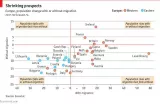
Why europe needs more migrants
Nov 12, 2017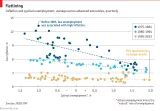
The phillips curve may be broken for good
Nov 06, 2017







Stay updated with The Hindu Editorial Vocab24 app, your definitive source for breaking news and comprehensive coverage from India and around the globe. Whether it's political developments, business updates, sports highlights, the latest technology trends, or current events, The Hindu brings live, accurate, and reliable news directly to your device.
Don’t fall for sensationalized or fake news shared online. Read and share accurate updates with friends and family through The Hindu Editorial Vocab24 app. Download it today!
News Coverage in The Hindu Editorial Vocab24 App
Breaking News: Receive instant notifications on breaking news stories as they unfold. Stay informed about major events and developments in India and around the world with live blogs, news in shorts videos, and concise articles.
Politics: Get the latest updates on Indian politics, including elections, policy changes, government decisions, and political events that shape the nation.
Business and Economy: Stay ahead in the economic landscape with detailed business news and market analysis. Learn about stock market trends, financial reports, corporate news, and economic developments to make informed investment decisions.
Current Events: Follow stories on social issues, policy changes, global events, and daily current affairs, tailored for UPSC and other competitive exam preparations.
Technology: Keep up with the latest gadgets, innovations, and tech trends. Read expert reviews and analyses in short, concise updates on cutting-edge technology from India and beyond.
Sports: Never miss a moment of your favorite sports. Get live scores, match reports, and expert analysis on cricket, football, tennis, and more.
International News: Stay informed about global events and geopolitical developments, including the Russia-Ukraine war, Israel-Palestine conflict, and other key international stories.
Local News: Stay connected to your community with the latest updates on city events, issues, and local news. Coverage includes hyperlocal updates from cities like Bangalore, Chennai, Delhi, Hyderabad, Mumbai, Kolkata, and more.
Trending Topics: Discover what's trending today with the most talked-about stories and hot topics across India and the world.
Experience journalism that values integrity, accuracy, and reliability. Download The Hindu Editorial Vocab24 app today and stay connected with the world.
Subscribe to our newsletter!







