

Pib
1. Address by the Hon’ble President of India Shri Ram Nath Kovind on the occasion of inauguration of the northeast development summitI am sure the Summit will take enlightened and actionable decisions on the development of the Northeast not just from a domestic, Indian perspective – but also in the context of the neighbourhood. The development of the Northeast is tied with the development of India’s neighbours and the countries of ASEAN. Friendly partner countries from other regions too are integral to our vision for the Northeast and can contribute substantially.
For a short period in our history, there has been a misconception about the eight states of the Northeast being a “frontier” of India. I say “short period of history” deliberately. After all, if you consider the hundreds and thousands of years of civilisation, far from being a frontier, the Northeast has been at the heart of Indian imagination. And if you take South Asia and Southeast Asia as a continuum – as it has been perceived for most of history – then the Northeast is right in the middle of it.
The Northeast is an amazing social and cultural ecosystem. Few regions of the world have such a wealth of cultural, ethnic and religious diversity packed into such a small area. This variety is an inspiration for all of us. The Northeast is home to some of the oldest indigenous communities in the world. It is one of our spiritual homelands. Whether it is the traditions of the Devi in Kamakhya or of Buddhism in Tawang and elsewhere, they make for a sacred bond that unites India with Southeast Asia. Christian missionaries have contributed to education here. And there is even a small but thriving Jewish community in Manipur and Mizoram.
Prosperity is the Northeast’s natural destiny, its default position if I may put it so. Its geographical location makes it the obvious gateway to India, linking the vast economies of the Indian subcontinent and of today’s ASEAN countries. This is the potential we have to tap. And this is the idea that must inspire this Summit.
2. Address by the Hon’ble President of India Shri Ram Nath Kovind on the occasion of inauguration of Manipur Sangai festival 2017
This is my first visit to Manipur as President of India and I am extremely happy to be inaugurating the Manipur Sangai Festival, which is the biggest festival of the state. Celebrated for 10 days every November since 2010, this is the perfect showcase for the cultural diversity and richness of Manipur, comprising its various communities and beautiful social fabric. The food and culture, adventure sports and crafts, handlooms and universally-admired dance forms of Manipur cannot find a more appropriate setting.
One can travel across the world but rarely come across a location as spectacular as Loktak Lake. I am told this is the largest freshwater lake in the Northeast, with the only floating National Park on our planet. It is a paradise for tourists and I am glad the Government is making efforts to promote the tourism potential of Manipur. Truly, this is a festival and this is a state that needs to be experienced at leisure!
Manipur’s cultural traditions, its social, religious and ethnic mosaic, and its history of courage and resilience are an inspiration for everybody in India. The war of 1891 saw the brave people of Manipur resisting the colonial powers in a manner that has few parallels. The martyrs of 1891 are heroes who will always be remembered for their contribution to the cause of our freedom and human liberty. For every Indian the great Bir Tikendrajit and his comrades are cherished icons.
About half a century later, Manipur was the unfortunate location of some of the most bitter fighting in World War II. Today, the War Memorial in Imphal and the War Cemetery serve as reminders of those times. And of the tests and trials that the people of this state have gone through. Ironically, those war relics today have international tourism potential and attract visitors from the West and from Japan. But in the 1940s, by taking the brunt of the war on its soil, Manipur in a sense protected the rest of India. Every citizen in our country is forever grateful.
3. Vice President Inaugurates 11th Indian Fisheries and Aquaculture Forum
The Vice President said that the Society is helping our country to realize the goals of not only providing nutritional and food security, but also creating opportunities for entrepreneurship, income generation, self-employment, trade and commerce. He further said that India contributes to about 6.3 % of global fish production which is also 1.1% of the national GDP and 5.15 % of the agricultural GDP of the country. The total fish production during 2015-16 was 10.79 million metric tons (MMT) of which 7.21MMT comes from inland aquaculture and capture fisheries and 3.58 MMT from marine capture fisheries, he added.
The Vice President said that our country is the 3rd largest fish producer and 2nd largest aquaculture producer in the world. The country has not only been able to meet the demand of the fish for the domestic need, it has also been able to add substantially to the foreign exchange earnings through export of fish and fisheries products, he added.
4. Canada – the Country of Focus at IFFI, Goa 2017
The International Festival of India features a Country of Focus every year. Through this category, prominent films made by the country of focus are screened at IFFI Goa 2017.
Canada, the land of vast distances and rich natural beauty has been chosen this year, as the Focus Country at the 48th International Film Festival of India.
IFFI 2017 is happy to be hosting and presenting a Canadian delegation, in addition to presenting a package of 8 best films from recent Canadian Cinema.
5. India becomes second largest fish producing country in the world: Shri Radha Mohan Singh
Overall fish production registers an increase of approximately 18.86% in comparison to the last three years & inland fisheries sector registers a growth of 26%.
Combining the production of all types of fisheries (capture and culture), the total fish production in the country reaches at about 11.41 million tonnes in 2016-17.
Use of LED lights/other artificial lights for fishing as well as practice of bull-trailing or pair-trailing have been completely banned recently on 10th November, 2017.
The duration of fishing ban has also been increased from 47 days to 61 days, with the consent of all coastal State Governments.
Scheme 'Blue Revolution' has been launched with the outlay of Rs. 300 crore for the integrated development of the Fisheries sector in the country. About 1.5 crore people in the country are employed in the fisheries sector for their livelihood . It is worth mentioning that 21st November is celebrated as a World of Fisheries Day worldwide every year.
The main aim of Blue Revolution Scheme is to increase the fish production and productivity to up to 8% annual growth rate and to produce 15 million tonnes of fish by 2020. This scheme will contribute significantly to achieving the targets of doubling the income of farmers and fishermen by 2022.
Globally, the value of export of annual fish products ranges from 85 to 90 billion dollars. Smt. Raj also informed that in the last decade, where the average annual growth rate of fish and fish products was recorded at 7.5%, India remained the first place with an average annual growth rate of 14.8%. She also informed that more than 25% of the world's protein diet is obtained by fish, and that the human population consumes more than 100 million metric tonnes of fish per year in the form of food.
Pib
Jan 31, 2018
Pib
Jan 30, 2018
Pib
Jan 29, 2018
Pib
Jan 28, 2018
Pib
Jan 27, 2018
Pib
Jan 26, 2018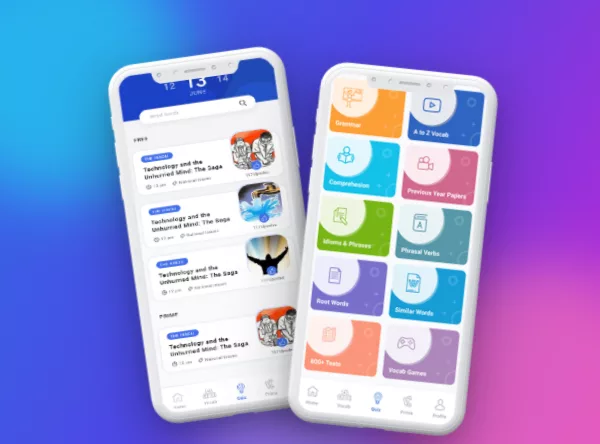




Stay updated with The Hindu Editorial Vocab24 app, your definitive source for breaking news and comprehensive coverage from India and around the globe. Whether it's political developments, business updates, sports highlights, the latest technology trends, or current events, The Hindu brings live, accurate, and reliable news directly to your device.
Don’t fall for sensationalized or fake news shared online. Read and share accurate updates with friends and family through The Hindu Editorial Vocab24 app. Download it today!
News Coverage in The Hindu Editorial Vocab24 App
Breaking News: Receive instant notifications on breaking news stories as they unfold. Stay informed about major events and developments in India and around the world with live blogs, news in shorts videos, and concise articles.
Politics: Get the latest updates on Indian politics, including elections, policy changes, government decisions, and political events that shape the nation.
Business and Economy: Stay ahead in the economic landscape with detailed business news and market analysis. Learn about stock market trends, financial reports, corporate news, and economic developments to make informed investment decisions.
Current Events: Follow stories on social issues, policy changes, global events, and daily current affairs, tailored for UPSC and other competitive exam preparations.
Technology: Keep up with the latest gadgets, innovations, and tech trends. Read expert reviews and analyses in short, concise updates on cutting-edge technology from India and beyond.
Sports: Never miss a moment of your favorite sports. Get live scores, match reports, and expert analysis on cricket, football, tennis, and more.
International News: Stay informed about global events and geopolitical developments, including the Russia-Ukraine war, Israel-Palestine conflict, and other key international stories.
Local News: Stay connected to your community with the latest updates on city events, issues, and local news. Coverage includes hyperlocal updates from cities like Bangalore, Chennai, Delhi, Hyderabad, Mumbai, Kolkata, and more.
Trending Topics: Discover what's trending today with the most talked-about stories and hot topics across India and the world.
Experience journalism that values integrity, accuracy, and reliability. Download The Hindu Editorial Vocab24 app today and stay connected with the world.
Subscribe to our newsletter!







