

Let asean nations use the hague ruling
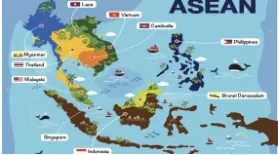
The Association of Southeast Asian Nations (Asean), which marks its 50th anniversary on August 8, finds itself at a crossroads (at a point of change.) . How can it continue to be relevant as a regional bloc (a group of countries or political parties with common interests who have formed an alliance), in the light of its inability to counter, or even merely criticise, expansive Chinese ambitions in the South China Sea? One possibility is for individual members to separately invoke last year’s arbitral (relating to settle a dispute) tribunal (a court of justice) ruling. That landmark ruling in international law which the Philippines sought and which benefits individual member-states and the Asean as a regional association has been temporarily set aside by the Philippines. The “Award” - decided by the arbitral tribunal convened under the United Nations Convention on the Law of the Sea - was released on 12 July 2016, a mere 12 days after Philippine President Rodrigo Duterte assumed office. His initial instructions were simple and forthright: provide “a soft landing.” What this meant, in the beginning, was for the Philippines to avoid gloating over (to be glad that something unfortunate has happened to someone else) the legal victory and rub China’s face in it. What this means, a year later, is that the much more pro-China administration Duterte heads has effectively shelved (decide not to proceed with (a project or plan), either temporarily or permanently) the ruling, in favour of closer cooperation with Beijing. But while it was the Philippines which brought the case, it wasn’t the only interested party in the Asean. Three other members have claims to parts of the South China Sea or the Spratly Islands or the Paracels that conflict with China’s expansive nine-dash theory: Brunei, Malaysia, and Vietnam. Indonesia, Asean’s largest economy, has continuing run-ins (A quarrel or argument) with Chinese fishing vessels and occasionally with the Chinese Coast Guard in its exclusive economic zone. As the ruling itself noted, five Asean members sent official delegations to observe the hearings at The Hague in the Netherlands: Indonesia, Malaysia, Singapore, Thailand (with the Philippines the five original members of the regional bloc), plus Vietnam. The Philippines’ setting aside of the arbitral tribunal ruling thus provoked consternation (a feeling of anxiety or dismay, typically at something unexpected) in Asean capitals, in large part because they had seen the logical progression of the Philippines’ legal approach to the disputes with China. The Award gave the Philippines, and by implication Asean and its members, genuine leverage over China by delegitimizing Beijing’s belated claims of historic rights to almost all of the South China Sea. The Philippine case against China was so carefully prepared, and the Award so carefully calibrated, that its findings can be invoked by other countries. The tribunal took pains to emphasize that it did not have the power to rule on issues of sovereignty. “None of the Tribunal’s decisions in this Award are dependent on a finding of sovereignty, nor should anything in this Award be understood to imply a view with respect to questions of land sovereignty.” Also, the Tribunal “has not been asked to, nor does it purport (appear to be or do something) to, delimit any maritime boundary between the Parties or involving any other State bordering on the South China Sea.” This obsessive consideration of its limits heightened the impact of the Award’s most famous, and most sweeping, finding: The tribunal “DECLARES that, as between the Philippines and China, China’s claims to historic rights, or other sovereign rights or jurisdiction, with respect to the maritime areas of the South China Sea encompassed by the relevant part of the ‘nine-dash line’ are contrary to the Convention and without lawful effect to the extent that they exceed the geographic and substantive limits of China’s maritime entitlements under the Convention; and further DECLARES that the Convention superseded (take the place of) any historic rights, or other sovereign rights or jurisdiction, in excess of the limits imposed therein.” Given such an overwhelming legal victory, the Duterte administration’s “soft landing” approach took its Asean partners aback. A year after the Award was handed down, however, it is possible to argue that other Asean capitals are recovering from the shock. Last month, Indonesia renamed the waters off its northern perimeter the “Laut Natuna Utara,” the Northern Natuna Sea. The Natuna Islands border the South China Sea, and its waters have been a low-intensity battleground between a special multiagency task force set up by Indonesian President Joko Widodo and Chinese fishing vessels. Last year, to help mark Indonesia’s independence day, Jakarta blew up over 60 foreign fishing vessels it had seized. Whether the renaming is mere “nationalistic posturing” or part of a new campaign to push back against Chinese expansionism, the presentation of Indonesia’s new official map was significant for another reason. It invoked the 12 July 2016 arbitral ruling. As analyst Evan A. Laksmana has noted: “The July 2016 Arbitral Tribunal ruling … was invoked to justify the ‘expansion’ of Indonesia’s EEZ in its border with Palau by assigning Tobi Island, Helen Reef and Merir Island a 12-nautical-mile enclave rather than a 200-nautical-mile maritime entitlement.” While this designation “remains subject to negotiation,” Indonesia’s reference to the arbitral ruling marks the first official government use of a decision included in the Award. Beijing did not look benignly (सहज रूप से) on Jakarta’s renaming and referencing. A spokesperson for the Chinese foreign ministry offered a simple retort. “The so-called change of name makes no sense at all and is not conducive to the effort of the international standardisation of the name of places.” To be sure, one new official map does not make a new international order. But if other Asean countries were to invoke the judicious decisions of the arbitral tribunal in the Philippines vs China case, it may strengthen the status of the Award as international law, encourage other countries to assert their maritime rights against China’s now-delegitimised nine-dashline, even embarrass the Philippines into a more assertive reception of the ruling it had fought hard for. One result would be a regional bloc that can push back against Chinese expansionism, not because of collective action, but because of individual initiatives like Indonesia’s renaming of the North Natuna Sea. Call it mini-minilateralism.At a crossroads (idiom)
(At a point of change/choice) परिवर्तन बिंदु पर
Synonyms: Turning Point, Decisive Point, Critical Point, Decisive Juncture
Example: After earning my degree, I'm at a crossroads about my career options.
Bloc (noun)
(A group of countries or political parties with common interests who have formed an alliance) गुट
Synonyms: Alliance, Association, Coalition, Federation, Confederation, League
Example: A bloc of downtown business owners has created a marketing plan to bring more shoppers into the downtown area.
Arbitral (adjective)
(Relating to settle a dispute) मध्यस्थता-संबंधी
Synonyms: Mediatory, Intermediary, Conciliatory, Of Referee
Example: The mediator made an arbitral statement which helped the two parties find common ground.
Tribunal (noun)
(A court of justice/ an assembly including one or more judges to conduct judicial business) न्यायाधिकरण
Synonyms: Court, Board Of Justice, Bench, Judiciary, Judicature
Example: A jury is like a tribunal of peers who listen to evidence and come to a verdict.
Gloat over (Phrasal verb)
(To be glad that something unfortunate has happened to someone else) किसी दुसरे के दुःख पे ख़ुशी मनाना
Synonyms: Relish, Take great pleasure in, Revel in, Rejoice in, Exult in, Crow over
Example: If you are the winner of a contest, you should not gloat over and make your competitors feel inferior.
Shelve (verb)
(Decide not to proceed with (a project or plan), either temporarily or permanently) स्थगित करना/ताक़ पर रखना
Synonyms: Put to one side, Lay aside, Pigeonhole, Keep in abeyance, Mothball, Delay
Example: Since the handyman was lazy, the homeowner knew he would Shelve the completion of the house remodel.
Run in (noun)
(A disagreement or fight, especially with someone in an official position.)
Synonyms: Disagreement, Argument, Dispute, Difference Of Opinion, Altercation, Confrontation, Contretemps
Example: Until more information is known, the police will not reveal details about the run-in between the arresting officer and the suspect.
Consternation (noun)
(A feeling of anxiety or dismay, typically at something unexpected) भयाकुलता
Synonyms: Dismay, Perturbation, Anxiety, Trepidation
Example: Discovering a water bug crawling on the ceiling left me in consternation for hours.
Purport (verb)
(To imply something is true although it is most likely false /appear to be or do something) अभिप्राय होना/अर्थ रखना
Synonyms: Implicate, Intent, Lay Claim, Object
Example: The prosecutor warned the jury the defendant would purport he was an innocent man.
Supersede (verb)
(Take the place of) (हटा देना) का स्थान ले लेना
Synonyms: Replace, Supplant, Substitute For, Displace
Example: The Supreme Court decision supersedes the decision of the lower court.

Successful operations raise hopes in kashmir
Aug 08, 2017
Mining penalty
Aug 07, 2017
Did you say privacy it has already been violated
Jul 28, 2017
Pilgrimage that builds bridges
Jul 21, 2017
Aadhaar ambivalence
Jul 02, 2017
Chinks in our armour
Jun 11, 2017





Stay updated with The Hindu Editorial Vocab24 app, your definitive source for breaking news and comprehensive coverage from India and around the globe. Whether it's political developments, business updates, sports highlights, the latest technology trends, or current events, The Hindu brings live, accurate, and reliable news directly to your device.
Don’t fall for sensationalized or fake news shared online. Read and share accurate updates with friends and family through The Hindu Editorial Vocab24 app. Download it today!
News Coverage in The Hindu Editorial Vocab24 App
Breaking News: Receive instant notifications on breaking news stories as they unfold. Stay informed about major events and developments in India and around the world with live blogs, news in shorts videos, and concise articles.
Politics: Get the latest updates on Indian politics, including elections, policy changes, government decisions, and political events that shape the nation.
Business and Economy: Stay ahead in the economic landscape with detailed business news and market analysis. Learn about stock market trends, financial reports, corporate news, and economic developments to make informed investment decisions.
Current Events: Follow stories on social issues, policy changes, global events, and daily current affairs, tailored for UPSC and other competitive exam preparations.
Technology: Keep up with the latest gadgets, innovations, and tech trends. Read expert reviews and analyses in short, concise updates on cutting-edge technology from India and beyond.
Sports: Never miss a moment of your favorite sports. Get live scores, match reports, and expert analysis on cricket, football, tennis, and more.
International News: Stay informed about global events and geopolitical developments, including the Russia-Ukraine war, Israel-Palestine conflict, and other key international stories.
Local News: Stay connected to your community with the latest updates on city events, issues, and local news. Coverage includes hyperlocal updates from cities like Bangalore, Chennai, Delhi, Hyderabad, Mumbai, Kolkata, and more.
Trending Topics: Discover what's trending today with the most talked-about stories and hot topics across India and the world.
Experience journalism that values integrity, accuracy, and reliability. Download The Hindu Editorial Vocab24 app today and stay connected with the world.
Subscribe to our newsletter!







