

Grow up india
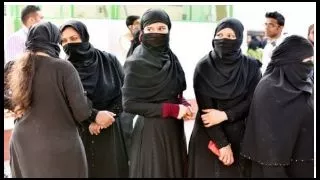
In three months, the Supreme Court of India handed down (to announce or deliver a (legal) verdict or indictment.) two ground-breaking decisions with respect to women’s rights. The Court’s judgment on 22 August found the practice of triple talaq (or talaaq-e-bidaat) unconstitutional. This was followed by the judgment on 11 October, in which the Court determined that sexual intercourse with a girl below 18 years of age was rape regardless of it being in the course of marriage. The Government now proposes to ban triple talaq legislatively, potentially ending a practice that the Quran considered “sinful” to begin with.The judgments are an answer to India’s infamous cultural tolerance of the institutionalised abuse of women and minors. This tolerance flows through every religious community and, like a strand of DNA, has become encoded into Indian society. However, the judgments provide an opportunity for the nation to use its secular Constitutional foundations to dispel (make (a doubt, feeling, or belief) disappear.) some prominent myths that exist in women’s rights policies that have been adopted by successive Governments for generations.
One of these myths is that India has the ability to protect women’s rights and promote gender equality while maintaining a policy of non-interference with religious customs and practices. Admittedly, non-interference has been a useful political choice for a nation where religious tensions bubble on the surface and are only a stone’s throw away (not very far) from reigniting. However, the learning from the Supreme Court is that the protection of women’s rights is incompatible with non-interference and the reality of gender relations in our society.
The triple talaq case examined the distinction between religious principles and religious customs, the former being founded in religious text and the latter being the practices and traditions that developed within a religious community. The case showed that, contrary to our expectations, the basis for religious customs is not always founded in religious authority, of which triple talaq is one example. Moreover, religious customs are often skewed in favour of a patriarchal system that accepts an imbalance (disparity) of power between men and women.
In this case, the parties accepted that talaaq-e-bidaat was a “sinful” form of divorce that was not supported in the Quran. Rather, it was considered to be a practice that was “good in law, but bad in theology”. However, as the Court eloquently (in a fluent or persuasive manner.) put it, “what is held to be bad in the Holy Quran cannot be good in Shariat and, in that sense, what is bad in theology is bad in law as well”. The basis for unconstitutionality was therefore logical. The illogicality in the case was that triple talaq’s lack of foundation in religious principle was recognised, accepted, but never redressed by the religious community. This shows the dangers of allowing religious customs to exist unchecked by an independent secular authority.
Similarly, the child marital rape case showed how a cultural indifference to oppressive (iron-fisted) traditions goes beyond a single community. The Court ultimately struck down the exception to marital rape in the Indian Penal Code for child marriage and, in the process, made important observations on the primacy of secular laws over religious customs.
An example was the Court’s treatment of the Government’s argument that the Hindu Marriage Act 1955 and the Dissolution of Muslim Marriages and Divorce Act 1939 contained sufficient recourse (a source of help in a difficult situation.) for child brides to renounce (formally declare one's abandonment of (a claim, right, or possession).) their marriage even in cases involving sexual intercourse. The Government’s logic required an acknowledgement that child marriage is allowed in these religious communities without acknowledging the fact that it was against India’s Prohibition of Child Marriage Act 2006 (PCMA).
The Court resolved this conflict firmly ~ the PCMA was a secular Act applicable to all and therefore prevails over the provisions of the other Acts with respect to children. Rather than accommodating the Hindu and Muslim Marriage Acts, the Court found that they should have been amended to conform to the secular law under the PCMA.
The position of the judiciary is therefore clear. Our democratic institutions do not accommodate all religious customs but are designed to create a united set of values that are unconstrained by tradition. However, this point of view must flow into other areas of India’s democracy. Positive gender relations should be the norm, not an exception to be made on a case-by-case basis. It is here that India’s international representations play a role in demonstrating how Indian society chooses to conduct itself at home.
India has ratified the 1979 Convention on the Elimination of Violence Against Women (CEDAW), the principal treaty for protecting women’s rights in international law. However, India’s ratification of the treaty came with a Declaration that India “shall abide by and ensure (articles 5(a) and 16(1)) in conformity with its policy of non-interference in the personal affairs of any community without its initiative and consent.”
Article 5(a) places an onus (something that is one's duty or responsibility.) upon the State to modify social and cultural patterns of conduct in order to eliminate all forms of prejudices and customs that are based on the idea that one sex is superior to the other (in most cases, that men are superior to women). Article 16 places the onus upon the State to eliminate discrimination against women in marriage and family relations.
The Declaration exemplifies India’s comfort with the myth that women’s rights and non-interference can work together. The Declaration essentially absolves (declare (someone) free from guilt, obligation, or punishment.) India of an obligation to rectify the imbalance of power between men and women if it means imposing upon religious communities.
The Government’s motions against triple talaq rebut (claim or prove that (evidence or an accusation) is false.) such thinking. But if India is serious about the protection of women’s rights in the country as a whole (not just with respect to the Muslim community), then it must withdraw the CEDAW Declaration as such representations are simply incompatible with a modern secular democracy.
There are a number of actions required (socially, legally and economically) to rectify the imbalance of power between men and women in India. While legislation to ban triple talaq is welcome, this addresses only one practice in a single community when the underlying problem is more diverse. Fundamentally, India must reflect on what is important ~ individual theology or secular rights. The Supreme Court’s answer is clear and the primacy of secular rights over religious customs is one imbalance that India should accept.
The Supreme Court’s judgments incorporated a common theme of time. The Court in the triple talaq case stated that “merely because a practice has continued for long, that by itself cannot make it valid if it has been expressly declared to be impermissible.” This was restated in the child marital rape case, with an additional observation ~ “Times change and what was acceptable the few decades ago may not necessarily be acceptable today.” Time moves on, and India’s stance on women’s rights must grow up as well.


Philippines president rodrigo duterte slams unhcr
Apr 06, 2018
Oli to take up currency ban issue with pm modi
Apr 02, 2018
Curbing the khaps
Apr 01, 2018





Stay updated with The Hindu Editorial Vocab24 app, your definitive source for breaking news and comprehensive coverage from India and around the globe. Whether it's political developments, business updates, sports highlights, the latest technology trends, or current events, The Hindu brings live, accurate, and reliable news directly to your device.
Don’t fall for sensationalized or fake news shared online. Read and share accurate updates with friends and family through The Hindu Editorial Vocab24 app. Download it today!
News Coverage in The Hindu Editorial Vocab24 App
Breaking News: Receive instant notifications on breaking news stories as they unfold. Stay informed about major events and developments in India and around the world with live blogs, news in shorts videos, and concise articles.
Politics: Get the latest updates on Indian politics, including elections, policy changes, government decisions, and political events that shape the nation.
Business and Economy: Stay ahead in the economic landscape with detailed business news and market analysis. Learn about stock market trends, financial reports, corporate news, and economic developments to make informed investment decisions.
Current Events: Follow stories on social issues, policy changes, global events, and daily current affairs, tailored for UPSC and other competitive exam preparations.
Technology: Keep up with the latest gadgets, innovations, and tech trends. Read expert reviews and analyses in short, concise updates on cutting-edge technology from India and beyond.
Sports: Never miss a moment of your favorite sports. Get live scores, match reports, and expert analysis on cricket, football, tennis, and more.
International News: Stay informed about global events and geopolitical developments, including the Russia-Ukraine war, Israel-Palestine conflict, and other key international stories.
Local News: Stay connected to your community with the latest updates on city events, issues, and local news. Coverage includes hyperlocal updates from cities like Bangalore, Chennai, Delhi, Hyderabad, Mumbai, Kolkata, and more.
Trending Topics: Discover what's trending today with the most talked-about stories and hot topics across India and the world.
Experience journalism that values integrity, accuracy, and reliability. Download The Hindu Editorial Vocab24 app today and stay connected with the world.
Subscribe to our newsletter!







