

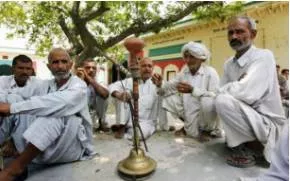
Curbing the khaps
The Supreme Court guidelines are welcome — but we need a strong law on ‘honour’ crimes.Many crimes committed in the name of defending the honour of a caste, clan or family may have their origin in India’s abominable (repugnantly hateful; detestable; loathsome) caste system, but there are other contributing factors as well. Entrenched ((of an attitude, habit, or belief) firmly established and difficult or unlikely to change; ingrained) social prejudices (preconceived opinion that is not based on reason or actual experience), feudal structures and patriarchal (relating to or denoting a system of society or government controlled by men) attitudes are behind what are referred to as ‘honour killings’. While these cannot be eradicated overnight through law or judicial diktat, it is inevitable (certain to happen; unavoidable) that a stern law and order approach is adopted as the first step towards curbing groups that seek to enforce such medieval notions of ‘honour’ through murder or the threat of murder, or ostracization (exclude from a society or group). It is in this context that the Supreme Court’s strident observations against khap panchayats and guidelines to deal with them acquire significance. It is not the first time that the apex court has voiced its strong disapproval of khaps, or village assemblies that assume the authority to discipline what they deem behaviour that offends their notions of honour. Previous judgments have made it clear that the life choices of individual adults, especially with regard to love and marriage, do not brook any sort of interference from any quarter. In the latest judgment, a three-judge Bench headed by Chief Justice Dipak Misra has located the problem as one that violates the liberty and dignity of individuals, and something that requires preventive, remedial and punitive (inflicting or intended as punishment) measures.
The High Courts of Punjab and Haryana and Madras have laid down guidelines to the police on creating special cells and 24-hour helplines to provide assistance and protection to young couples. The Supreme Court has now gone a step further and asked the police to establish safe-houses for couples under threat. The direction asking police officers to try and persuade (convince someone to do something) khaps to desist from making illegal decisions may appear soft. But in the same breath, the court has also empowered the police to prohibit such gatherings and effect preventive arrests. How far it is feasible to videograph the proceedings of such assemblies remains to be seen, but it may be a deterrent (a thing that discourages or is intended to discourage someone from doing something) against any brazen (bold and without shame) flouting of the law. The verdict is also notable for dealing with some points made often in defence of khap panchayats, rejecting outright the claims that they were only engaged in raising awareness about permissible marriages, including inter-caste and inter-faith ones, and against sapinda and sagotra marriages. The court has rightly laid down that deciding what is permitted and what is not is the job of civil courts. While these guidelines, if they are adhered to, may have some salutary effect on society, the government should not remain content with asking the States to implement these norms. It should expedite its own efforts to bring in a comprehensive law to curb killings in the name of honour and to prohibit interference in the matrimonial choices of individuals.



Philippines president rodrigo duterte slams unhcr
Apr 06, 2018

Oli to take up currency ban issue with pm modi
Apr 02, 2018
Pakistan’s man in india
Mar 30, 2018





Stay updated with The Hindu Editorial Vocab24 app, your definitive source for breaking news and comprehensive coverage from India and around the globe. Whether it's political developments, business updates, sports highlights, the latest technology trends, or current events, The Hindu brings live, accurate, and reliable news directly to your device.
Don’t fall for sensationalized or fake news shared online. Read and share accurate updates with friends and family through The Hindu Editorial Vocab24 app. Download it today!
News Coverage in The Hindu Editorial Vocab24 App
Breaking News: Receive instant notifications on breaking news stories as they unfold. Stay informed about major events and developments in India and around the world with live blogs, news in shorts videos, and concise articles.
Politics: Get the latest updates on Indian politics, including elections, policy changes, government decisions, and political events that shape the nation.
Business and Economy: Stay ahead in the economic landscape with detailed business news and market analysis. Learn about stock market trends, financial reports, corporate news, and economic developments to make informed investment decisions.
Current Events: Follow stories on social issues, policy changes, global events, and daily current affairs, tailored for UPSC and other competitive exam preparations.
Technology: Keep up with the latest gadgets, innovations, and tech trends. Read expert reviews and analyses in short, concise updates on cutting-edge technology from India and beyond.
Sports: Never miss a moment of your favorite sports. Get live scores, match reports, and expert analysis on cricket, football, tennis, and more.
International News: Stay informed about global events and geopolitical developments, including the Russia-Ukraine war, Israel-Palestine conflict, and other key international stories.
Local News: Stay connected to your community with the latest updates on city events, issues, and local news. Coverage includes hyperlocal updates from cities like Bangalore, Chennai, Delhi, Hyderabad, Mumbai, Kolkata, and more.
Trending Topics: Discover what's trending today with the most talked-about stories and hot topics across India and the world.
Experience journalism that values integrity, accuracy, and reliability. Download The Hindu Editorial Vocab24 app today and stay connected with the world.
Subscribe to our newsletter!







