

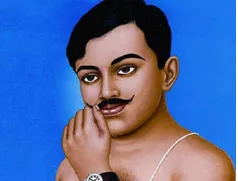
Freedom fighter chandra shekhar azad
Chandra Shekhar Azad was the quintessential firebrand revolutionary who fiercely craved independence for his country. A contemporary of Bhagat Singh, Azad never quite received the same levels of adoration for his deeds, yet his actions were no less heroic. His life-long goal was to create as much problem for the British Government as he could. He was the master of disguises and evaded capture by the British police multiple times. His famous proclamation, ‘Dushmano Ki Goliyon Ka Saamna Hum Karenge, /Azad Hi Rahe Hain, aur Azad hi Rahenge’, which translates into ‘I will face the bullets of the enemies, I have been free and I’ll forever be free’, is exemplary of his brand of revolution. He embraced martyrdom like an old friend and inspired a fierce sense of nationalism in the hearts of his contemporaries.Childhood & Early Life
Chandra Shekhar Azad was born Chandra Shekhar Tiwari, to Pandit Sita Ram Tiwari and Jagrani Devi on July 23, 1906 in Bhavra village in Jhabua district of Madhya Pradesh. Chandra Shekhar grew up with Bhils who inhabited the area and learnt wrestling, swimming along with archery. He was an ardent follower of Lord Hanuman from a young age. He practiced javelin throwing and developed an enviable physique. He received his early schooling in Bhavra. For higher studies he went to a Sanskrit Pathashala in Varanasi. As a child Chandrashekhar was wayward and preferred outdoors. As a student he was average but once in Benares, he came in contact with several young nationalists.
Revolutionary Activities
The Jallianwallah Bagh Massacre took place in 1919 and the brutal deed of British oppression had reverberating effect on the Indian Nationalist movement. The blatant disregard exhibited by the British towards basic human rights and unnecessary use of violence on a group of unarmed and peaceful people, incited a burst of hatred from the Indians directed towards the British Raj. The nation was gripped by this anti-British euphoria and Chandra Shekhar was part of a group of young revolutionaries who dedicated their lives towards a single goal – securing freedom for his beloved motherland by driving the British away from India.
Early Days: Chandrashekhar Tiwari to Chandra Shekhar Azad
The first wave of nationalist sentiments was awakened by the Non-cooperation movement declared by Gandhiji during 1920-1921. Chandra Shekhar rode this wave when he was a mere teen and participated in the various organised protests with much gusto. 16-year-old Chandra Shekhar was arrested in one of these demonstrations. When asked his name, residence and that of his father, he replied to the authorities, that his name was ‘Azad’ (free), his father’s name ‘Swatantrata’ (Freedom) and his residence as the prison cell. He was sentenced to receive 15 whiplashes as punishment. He bore those with ample nonchalance and came to be revered as Chandra Shekhar Azad from then on.
Hindustan Republican Association (HRA) & Azad
The announcement to suspend the non-cooperation movement came as a blow to the nascent Indian Nationalist Sentiments. Azad was much agitated in its aftermath and decided that a fully aggressive course of action was more suitable for his desired outcome. He met Ram Prasad Bismil, the founder of Hindustan Republican Association through Pranavesh Chatterji. He joined the HRA and concentrated his efforts on collecting funds for the association. He planned and executed daring attempts to rob government treasury to raise funds in order to further their revolutionary activities.
Kakori Conspiracy
Ram Prasad Bismil conceived the idea of looting a train carrying treasury money to fund acquiring of weapons for revolutionary activities. Bismil had noticed several security loopholes in trains carrying treasury money and a suitable plan was devised. They targeted the No. 8 Down train travelling from Shahjahanpur to Lucknow and intercepted it at Kakori. They stopped the train by pulling the chain, overpowered the guard and took 8000 rupees from the guard cabin. In the ensuing gunfight between the armed guards and the revolutionaries, one passenger died. The government declared this as murder and launched an intense manhunt to round up the involved revolutionaries. Azad evaded arrest and carried on revolutionary activities from Jhansi.
Lahore Conspiracy
Azad took a long detour and finally reached Kanpur where the headquarters of the HRA was based. There he met other firebrands like Bhagat Singh, Rajguru and Sukhdev. Pumped with renewed enthusiasm, he reorganised the HRA and renamed it as Hindustan Socialist Republican Association or HSRA together with Bhagat Singh. On October 30, 1928, Lala Lajpat Rai led a peaceful protest against the Simon Commission at Lahore. Police Superintendent James Scott ordered lathi strike to thwart the advancement of the march. Lalaji was severely injured in the process and died on November 17, 1928 as a result of the wounds. Azad and his peers held the police superintendent responsible for Lala’s death and they vowed to extract revenge. Together with Bhagat Singh, Sukhdev Thapar and Shivaram Rajguru, he plotted the assassination of Scott. On December 17, 1928, the plan was executed but a case of mistaken identity led to the killing of John P. Saunders, an Assistant Superintendent of Police. The HSRA claimed responsibility for the event the next day and the involved people shot to the top of the British’s most wanted list. Bhagat Singh was arrested following his demonstration in the Central Legislative Assembly in Delhi on April 8, 1929. When the HSRA bomb factories in Lahore and Saharanpur were busted, some of the members turned approver for the state. As a result around 21 members were arrested including Rajguru and Sukhdev. Azad along with 29 others were charged in the Lahore Conspiracy Case Trial, but he was among the few who the British authorities were unable to capture.
Martyrdom
Azad’s impact on the British Raj law enforcement faction was evident from how much effort they put to capture him, dead or alive. They even announced a reward of Rs. 30,000 on his head. The huge amount of money led to vital information on the whereabouts of Azad. On February 27, 1931 Chandrashekhar Azad was meeting with friends at Alfred Park, Allahabad. A pre-informed police surrounded the park and asked Chandrashekhar Azad to surrender. Azad fought valiantly to allow his friends safe passage and killed three policemen. Though his shooting skills were immensely sharp, he started receding and was badly injured. After nearly exhausting his ammunition and foreseeing no means of escape, he shot himself in the head with his last bullet. He upheld his vow never to be captured by the British.






Stay updated with The Hindu Editorial Vocab24 app, your definitive source for breaking news and comprehensive coverage from India and around the globe. Whether it's political developments, business updates, sports highlights, the latest technology trends, or current events, The Hindu brings live, accurate, and reliable news directly to your device.
Don’t fall for sensationalized or fake news shared online. Read and share accurate updates with friends and family through The Hindu Editorial Vocab24 app. Download it today!
News Coverage in The Hindu Editorial Vocab24 App
Breaking News: Receive instant notifications on breaking news stories as they unfold. Stay informed about major events and developments in India and around the world with live blogs, news in shorts videos, and concise articles.
Politics: Get the latest updates on Indian politics, including elections, policy changes, government decisions, and political events that shape the nation.
Business and Economy: Stay ahead in the economic landscape with detailed business news and market analysis. Learn about stock market trends, financial reports, corporate news, and economic developments to make informed investment decisions.
Current Events: Follow stories on social issues, policy changes, global events, and daily current affairs, tailored for UPSC and other competitive exam preparations.
Technology: Keep up with the latest gadgets, innovations, and tech trends. Read expert reviews and analyses in short, concise updates on cutting-edge technology from India and beyond.
Sports: Never miss a moment of your favorite sports. Get live scores, match reports, and expert analysis on cricket, football, tennis, and more.
International News: Stay informed about global events and geopolitical developments, including the Russia-Ukraine war, Israel-Palestine conflict, and other key international stories.
Local News: Stay connected to your community with the latest updates on city events, issues, and local news. Coverage includes hyperlocal updates from cities like Bangalore, Chennai, Delhi, Hyderabad, Mumbai, Kolkata, and more.
Trending Topics: Discover what's trending today with the most talked-about stories and hot topics across India and the world.
Experience journalism that values integrity, accuracy, and reliability. Download The Hindu Editorial Vocab24 app today and stay connected with the world.
Subscribe to our newsletter!







