

Courting faith and reason
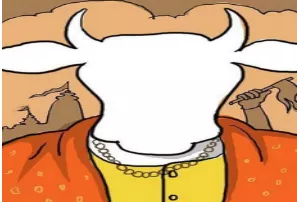
The Challenger space shuttle exploded in 1986, killing all seven crew members. It occurred because of a design flaw in the rocket boosters of the spacecraft. The U.S. National Aeronautics and Space Administration (NASA) had sub-contracted the design of the boosters to an independent company. The company had noticed that the putty used to seal rings on the boosters was forming bubbles that caused a heat jet so hot that it could burn through the rings. The engineers changed the putty. They knew that a putty erosion could still occur, but with very low probability of a catastrophic disaster. Unfortunately for the seven who perished (died) , in a series of small steps NASA deviated from its safety standards and determined that the erosion of the putty was an acceptable risk of flight. Later, NASA commissioned many inquiries into the cause of the disaster. The most insightful (having or showing an accurate and deep understanding) report came from Diane Vaughan, then a teacher of sociology at Boston College, who attributed the disaster to what she called a “normalisation of deviance”. The phrase meant that “people within the organisation become so much accustomed to a deviant behaviour that they don't consider it as deviant, despite the fact that they far exceed their own rules for the elementary safety”. Today on B.R. Ambedkar’s 126th birth anniversary, violence over cow slaughter threatens to rend apart the Republic and his magnificent Constitution which gave us a secular country with a fundamental right to life and liberty assured to every citizen. How did the body politic slowly deviate so much so that a man’s choice of meat has become his poison? It is time to recount Ambedkar’s normalisation of deviance in the Constituent Assembly on the question of cow protection. That deviance emboldened the Supreme Court decades later to take a position that would have been an abomination (तिरस्कार) to men like Ambedkar. Political and pragmatic In 1948 Ambedkar published his book The Untouchables: Who Were They and Why They Became Untouchables? He wrote: “In the first place, we have the fact that the Untouchables or the main communities which compose them eat the dead cow and those who eat the dead cow are tainted with untouchability and no others. The co-relation between untouchability and the use of the dead cow is so great and so close that the thesis that it is the root of untouchability seems to be incontrovertible (निर्विवाद). In the second place if there is anything that separates the Untouchables from the Hindus, it is beef-eating.” He went on to say: “The reason why Broken Men only became Untouchables was because in addition to being Buddhists they retained their habit of beef-eating which gave additional ground for offence to the Brahmins to carry their new-found love and reverence (आदर/सम्मान) to the cow to its logical conclusion.” However, in the Constituent Assembly debates around the same time, Ambedkar was not as vocal against ‘cow reverers’. In February 1948, the first draft of the Constitution was placed before the Assembly. It contained no reference to cow slaughter. The cow protection brigade within the Assembly pushed for an amendment seeking for cow protection as a fundamental right. Ambedkar and his team of draftsmen came up with a constitutional compromise. A directive principle, seemingly based on economic and scientific grounds, was allowed to be introduced by Pandit Thakurdas Bhargava, a prosperous Brahmin lawyer from Hisar. It read: “The State shall endeavour to organise agriculture and animal husbandry on modern and scientific lines and shall, in particular, take steps for preserving and improving the breeds, and prohibiting the slaughter, of cows and calves and other milch and draught cattle.” Despite his political stance outside the Constituent Assembly, within it Ambedkar said nothing substantial in the debates on cow slaughter, only that he accepted Bhargava’s amendment. Bhargava, however, emphasised his reluctant acceptance of the compromise when he said, “… for people like me and those that do not agree with the view of Ambedkar and others, this entails, in a way, a sort of sacrifice.” Another cow proponent, Seth Govind Das, amplified Ambedkar’s lawyerly thinking in the matter. “I had then stated that just as the practice of untouchability was going to be declared an offence so also we should declare the slaughter of cows to be an offence. But it was said that while untouchability directly affected human beings, the slaughter of cows affected the life of animals only and that as fundamental rights were for human beings, this provision could not be included therein.” The economic backdoor Thus, though expressed in terms of economic policy, underlying this agreed amendment was the Assembly’s covert yielding (समर्पण/स्वीकृति), in a limited measure, to Hindu sentiments of cow protection. Protection ostensibly (प्रकट रूप से) was restricted to cows and calves, milch cattle and those cattle capable of pulling heavy loads. A bench of five judges of the Supreme Court in the 1959 case of Mohammed Hanif Quareshi v the State of Bihar strengthened the compromise when it did not uphold a complete ban on slaughter. Bhargava, appearing as an amicus (an impartial adviser to a court of law in a particular case.) in this matter, submitted that the directive principle of cow protection in Article 48 ought to have primacy over any fundamental right of the petitioners. Turning him down, the court said that “a harmonious interpretation has to be placed upon the Constitution and so interpreted it means that the State should certainly implement the directive principles but it must do so in such a way that its laws do not take away or abridge (curtail (a right or privilege) the fundamental rights”. The court finally concluded: “(i) a total ban on the slaughter of cows of all age and calves of cows and calves of she-buffaloes, male and female, is quite reasonable and valid and is in consonance with the directive principles laid down in Art. 48; (ii) a total ban on the slaughter of she-buffaloes or breeding bulls or working bullocks (cattle as well as buffaloes) as long as they are as milch or draught cattle is also reasonable and valid; and (iii) a total ban on the slaughter of she-buffaloes, bulls and bullocks (cattle or buffalo) after they cease to be capable of yielding (producing/generating) milk or of breeding or working as draught animals cannot be supported as reasonable in the interest of the general public.” This formulation held till 2005 when a seven-judge bench was constituted by Chief Justice R.C. Lahoti with five vegetarian judges on it. The resultant judgment had the Supreme Court — by a 6-1 majority — permitting State governments to impose total bans on cow slaughter. The reasoning was that “Times have changed; so have changed the social and economic needs… there is no escape from the conclusion that the protection conferred by impugned (विवादित) enactment on cow progeny (सन्तति/वंश) is needed in the interest of Nation’s economy.” Justice A.K. Mathur dissented on the principle of stare decisis (the legal principle of determining points in litigation according to precedent.) — that long-settled positions of law should not be easily reversed — adding, “There is no material change in ground realities warranting reversal of earlier decisions.” Questions for our Republic The questions that today haunt our Republic are — would the country not have been safer and better off had Ambedkar stuck to his first draft, which had no reference to cow slaughter at all? Did he allow a “normalisation of deviance” from the constitutional norm of secularism when he allowed a religious belief to be disguised as an economic principle? Has the Supreme Court done justice to the original intent of Ambedkar’s magnificent Constitution by reversing itself to keep up with political fashions of the day? A Challenger need not explode for us to realise that deviance into vigilantism (law enforcement undertaken without legal authority by a self-appointed group of people.) can’t always be normalised.Yield (verb)
Give way to arguments, demands, or pressure. समर्पण करना
Synonyms: Surrender, Capitulate, Submit, Relent, Concede Defeat, Give In
Example: The debater refuses to yield the podium to his challenger.
Impugn (verb)
Dispute the truth, validity, or honesty of (a statement or motive) वाद-विवाद करना/खण्डन करना
Synonyms: Call Into Question, Challenge, Question, Dispute, Query
Example: When the prosecutor tried to impugn the defendant’s character, the defense lawyer jumped to his feet and made an objection.
Progeny (noun)
A descendant or the descendants of a person, animal, or plant सन्तति/वंश
Synonyms: Descendant, Offspring, Successor
Example: Because the billionaire bachelor did not have a progeny, his entire estate went to charity when he died.
Vigilante (noun)
A member of a self-appointed group of citizens who undertake law enforcement in their community without legal authority निगरानी समिति सदस्य
Synonyms: Chaperone, Overseer, Watchdog, Custodian
Example: The danger of self-appointed vigilantes is that they sometimes trouble innocent people.
Insightful (adjective)
Having or showing an accurate and deep understanding. गहरी पहुँच वाला/अनुबोधक
Synonyms: Discerning, Wise, Perceptive, Prudent, Sagacious, Sage, Sapient
Example: The wedding planner offered insightful advice on how to throw a memorable wedding without overspending.
Abomination (noun)
A thing that causes disgust or loathing. तिरस्कार
Synonyms: Atrocity, Disgrace, Bane, Stigma, Odium
Example: Some people view the erotic sculpture as art while others see it as an abomination.
Incontrovertible (adjective)
Not able to be denied or disputed. निर्विवाद
Synonyms: Indisputable, Incontestable, Undeniable, Irrefutable, Unassailable, Unquestionable
Example: Failing grades revealed an incontrovertible fact - no student properly studied for the test.
Reverence (noun)
Deep respect for someone or something. आदर/सम्मान
Synonyms: Acclaim, Veneration, Honor, Regard, Respect, Deference
Example: As the president walked by, the veteran got out of his wheel chair and stood with reverence.
Perish (verb)
(die, especially in a violent or sudden way./ to become destroyed or ruined मर जाना/समाप्त होना
Synonyms: Cease, Crumble, Die, Pass Away, Succumb, Vanish
Example: Many ancient languages have perished over time.
Ostensibly (adverb)
As appears or is stated to be true, though not necessarily so. प्रकट रूप से
Synonyms: Outwardly, Professedly, Apparently, Seemingly
Example: Ostensibly, the candidate seemed in favor of lowering taxes during the election, but when he was elected, he reversed his opinion on the subject.
Patriot games at attari wagah
Aug 22, 2017
Beauty and the regulatory beast
Aug 16, 2017
Us north korea stand off sound and fury
Aug 14, 2017
The march from yesterday
Aug 11, 2017
A judgment for the ages
Aug 04, 2017
Cinema & censorship
Jul 29, 2017





Stay updated with The Hindu Editorial Vocab24 app, your definitive source for breaking news and comprehensive coverage from India and around the globe. Whether it's political developments, business updates, sports highlights, the latest technology trends, or current events, The Hindu brings live, accurate, and reliable news directly to your device.
Don’t fall for sensationalized or fake news shared online. Read and share accurate updates with friends and family through The Hindu Editorial Vocab24 app. Download it today!
News Coverage in The Hindu Editorial Vocab24 App
Breaking News: Receive instant notifications on breaking news stories as they unfold. Stay informed about major events and developments in India and around the world with live blogs, news in shorts videos, and concise articles.
Politics: Get the latest updates on Indian politics, including elections, policy changes, government decisions, and political events that shape the nation.
Business and Economy: Stay ahead in the economic landscape with detailed business news and market analysis. Learn about stock market trends, financial reports, corporate news, and economic developments to make informed investment decisions.
Current Events: Follow stories on social issues, policy changes, global events, and daily current affairs, tailored for UPSC and other competitive exam preparations.
Technology: Keep up with the latest gadgets, innovations, and tech trends. Read expert reviews and analyses in short, concise updates on cutting-edge technology from India and beyond.
Sports: Never miss a moment of your favorite sports. Get live scores, match reports, and expert analysis on cricket, football, tennis, and more.
International News: Stay informed about global events and geopolitical developments, including the Russia-Ukraine war, Israel-Palestine conflict, and other key international stories.
Local News: Stay connected to your community with the latest updates on city events, issues, and local news. Coverage includes hyperlocal updates from cities like Bangalore, Chennai, Delhi, Hyderabad, Mumbai, Kolkata, and more.
Trending Topics: Discover what's trending today with the most talked-about stories and hot topics across India and the world.
Experience journalism that values integrity, accuracy, and reliability. Download The Hindu Editorial Vocab24 app today and stay connected with the world.
Subscribe to our newsletter!







