

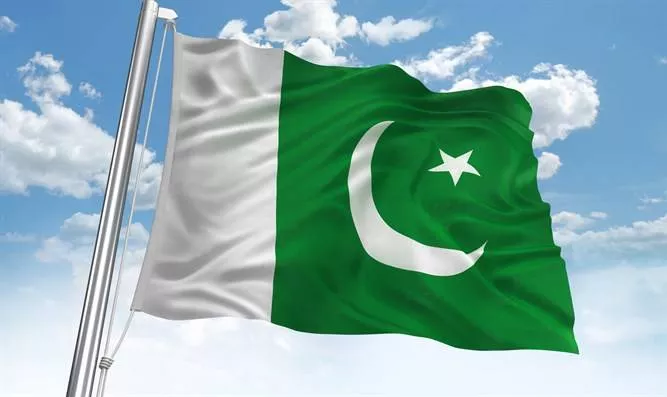
2018 — a testing year for pakistan
December 2017 ended with confusion for Pakistan. US President Donald Trump blocked release of funds on Pakistan’s non-cooperation in reducing support to terror groups operating on its soil. The ‘humanitarian’ meeting for the family of Kulbhushan Jadhav, which was supposed to be a signal for a stand down in Pakistan’s approach, turned into a choreographed fiasco, substantiating India’s resolve in unaccepting the words of that country. A day after the meeting, India launched a cross-border operation, eliminating at least three Pakistani soldiers, in response to an earlier strike by Pakistan’s strike, ending the year with enhanced border tensions.During 2017, India culled over 200 Pak infiltrated terrorists in the valley, eliminating most of the terror group leaders, thus regaining complete control. A terrorist strike on a CRPF training camp in Pulwama on the last day of the year claimed five lives, indicating Pak sponsored militancy may be down, but not out. It would continue, however, as the Indian army successes grow, it would have lesser and lesser impact.
The marginalising of the Hurriyat and blocking hawala inflow of funds reduced anti-India violence and strife in the valley, enabling the government to appoint an interlocutor, whom many delegations, including students, who earlier led the violence, have met. With the dropping of charges against over five thousand first time stone throwers, hope is back in the hearts of the youth. Political control has been re-established in the valley. Calls for bandhs by the pro-Pak Hurriyat are being largely ignored. This has caused concern in Pakistan, as its Kashmir strategy appears to be failing.
Sharif flew into Saudi Arabia at the end of the year, seeking to resolve impending cases against him and settle the battle between him and the army, using the influence of the House of Saud. To top it all, the Pakistan army chief stated in his senate briefing and discussion that the army does not oppose improving relations with India and Afghanistan and the very next day, praised Hafiz Saeed, distancing the two countries even more. Palestine withdrew its Pakistan ambassador on his sharing a platform with Hafiz Saeed, conveying its intention of being closer to India than Pakistan.
It was a year when the Pakistan army established complete control over the country. It had the elected Prime Minister, Nawaz Sharif, removed from power on flimsy grounds, supported fundamentalists in seeking to establish a political party and backed a sit in by religious parties, ultimately brokering a peace deal, leading to the surrender of the state. It orchestrated the release of Hafiz Saeed from house arrest, when it found its Kashmir policy in tatters. Its permitting Saeed to rant against Pakistan’s political parties and India will add to internal and external tensions.
It ended the year only banking on China for economic aid, development as also for diplomatic backup. It has been China alone which has blocked the listing of Hafiz Saeed as a global terrorist. Though the CPEC is partially operationalised, its true costs, repayment and ultimate benefits to Pakistan remain mired in secrecy. China’s demand for the Pakistan army to be directly involved in the CPEC only raises the question of the legality and power of its polity. China has readjusted its terms of investments, details of which would only emerge later, most likely enhancing problems of repayment by Pakistan.
2018 for Pakistan is an election year, which could possibly push the country deeper into an abyss. The Pakistan army’s backing to fundamentalist and religious groups is likely to result in a mixed bag of elected members of senate, providing the army a stronger hold on the state. The army will have complete authority and control with no accountability and responsibility.
Relations between Pakistan and its neighbours, Afghanistan and India, are only likely to grow worse. The lack of trust between India and Pakistan, despite the meeting of the two NSAs, at the end of the year in Bangkok, would only increase, not decrease, especially as the internal situation in Pakistan, post the elections is likely to be more anti-peace. Therefore, the LoC would remain tense and become more active as a desperate Pakistan would seek to increase infiltration to reignite the valley, which would be strongly challenged by India. Tensions would increase with a possible decision favouring India in the Kulbhushan Jadhav case at the International Court of Justice.
Pakistan’s continued support to the Taliban and Haqqani network operating in Afghanistan will remain. This implies, there would be increased tensions between the two countries as strikes by Taliban and Haqqani network would claim additional civilian casualties. Strikes in Pakistan by anti-Pak terror groups, operating from Afghanistan, would increase Pak-Afghan tensions and lead to regular closure of borders between the two countries, ending in accusations and counter accusations.
US pressure on Pakistan to act against terror groups would increase. With no substantial action being undertaken by Pakistan, attacks on coalition forces post the launch of the Taliban Spring offensive would compel the US to launch cross border drone strikes, enhancing Pak anger and worsening relations. India’s growing proximity to Afghanistan and increased support to the country would see it playing a larger role in the country, worrying Pakistan.
Thus, at the end of 2017, Pakistan appeared to be facing more problems than at the commencement of the year. Its internal instability and rising enmity with its neighbours marks the commencement of the coming year. It has throughout the year not shown any desire to resume dialogue, mend fences with its neighbours and overcome internal chaos. The army has moved the nation away from political stability to instability by openly supporting fundamentalist and religious groups for their own greed and power.
Therefore, in 2018 Pakistan would move deeper into internal chaos, its relations with its neighbours would only worsen adding to tensions on both its borders. The elections, likely to throw up a mixed bag of politicians, including fundamentalists and religious leaders, would enhance trouble for its religious minorities, while strengthening the hold of the army. Any government formed post the elections would not have the power to even contemplate raising talks of peace and reconciliation with its neighbours.
International pressure on Pakistan would continue to grow, while India would increase its assertiveness and aggressiveness along the LoC. Kashmir would remain generally peaceful, adding to Pakistan’s discomfiture. India’s growing military power would compel Pakistan to spend beyond its budgetary capability on defence, placing its economy at risk. In short, 2018 would be a testing year for Pakistan as its internal and external challenges would increase manifold.
Author : HARSHA KAKAR

India’s ambitious outreach
Jan 28, 2018






Stay updated with The Hindu Editorial Vocab24 app, your definitive source for breaking news and comprehensive coverage from India and around the globe. Whether it's political developments, business updates, sports highlights, the latest technology trends, or current events, The Hindu brings live, accurate, and reliable news directly to your device.
Don’t fall for sensationalized or fake news shared online. Read and share accurate updates with friends and family through The Hindu Editorial Vocab24 app. Download it today!
News Coverage in The Hindu Editorial Vocab24 App
Breaking News: Receive instant notifications on breaking news stories as they unfold. Stay informed about major events and developments in India and around the world with live blogs, news in shorts videos, and concise articles.
Politics: Get the latest updates on Indian politics, including elections, policy changes, government decisions, and political events that shape the nation.
Business and Economy: Stay ahead in the economic landscape with detailed business news and market analysis. Learn about stock market trends, financial reports, corporate news, and economic developments to make informed investment decisions.
Current Events: Follow stories on social issues, policy changes, global events, and daily current affairs, tailored for UPSC and other competitive exam preparations.
Technology: Keep up with the latest gadgets, innovations, and tech trends. Read expert reviews and analyses in short, concise updates on cutting-edge technology from India and beyond.
Sports: Never miss a moment of your favorite sports. Get live scores, match reports, and expert analysis on cricket, football, tennis, and more.
International News: Stay informed about global events and geopolitical developments, including the Russia-Ukraine war, Israel-Palestine conflict, and other key international stories.
Local News: Stay connected to your community with the latest updates on city events, issues, and local news. Coverage includes hyperlocal updates from cities like Bangalore, Chennai, Delhi, Hyderabad, Mumbai, Kolkata, and more.
Trending Topics: Discover what's trending today with the most talked-about stories and hot topics across India and the world.
Experience journalism that values integrity, accuracy, and reliability. Download The Hindu Editorial Vocab24 app today and stay connected with the world.
Subscribe to our newsletter!







