

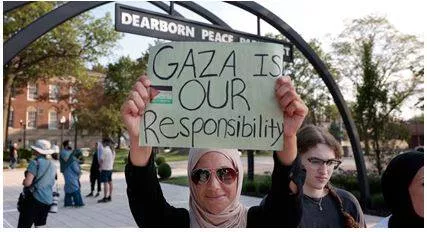
20 years after disengagement israel is mired in gaza with no end in sight
Twenty years after Israel’s withdrawal from Gaza, the war with Hamas drags on and Israeli troops control most of the territory; disengagement, once seen as a step toward peace, deepened political divides and boosted Hamas’s power; many now believe Israel will maintain a long-term grip on Gaza.Twenty years ago, Israel withdrew from the Gaza Strip, dismantling 21 Jewish settlements and pulling out its forces. The Friday anniversary of the start of the landmark disengagement comes as Israel is mired in a nearly two-year war with Hamas that has devastated the Palestinian territory, and means it is likely to keep troops there long into the future.
Israel’s disengagement, which also included removing four settlements in the Israeli-occupied West Bank, was then-Prime Minister Ariel Sharon’s controversial attempt to jump-start negotiations with the Palestinians. But it bitterly divided Israeli society and led to the empowerment of Hamas.
The emotional images of Jews being ripped from their homes by Israeli soldiers galvanised Israel’s far-right and settler movements. The anger helped them organise and increase their political influence, accounting in part for the rise of hard-line politicians.
On Thursday, Smotrich boasted of a settlement expansion plan east of Jerusalem that will “bury” the idea of a future Palestinian state.
Not an end
For Palestinians, even if they welcomed the disengagement, it didn’t end Israel’s control over their lives.
Soon after, Hamas won elections in 2006, then drove out the Palestinian Authority in a violent takeover. Israel and Egypt imposed a closure on the territory. Though its intensity varied over the years, the closure helped impoverish the population and entrenched a painful separation from Palestinians in the West Bank.
Israel captured the West Bank, East Jerusalem, and the Gaza Strip in the 1967 Mideast war. The Palestinians claim all three territories for a future independent state.
Israel couldn’t justify the military or economic cost of maintaining the heavily fortified settlements in Gaza, explained Kobi Michael, a senior researcher at the Misgav Institute and the Institute for National Security Studies think tanks. There were around 8,000 Israeli settlers and 1.5 million Palestinians in Gaza in 2005.
By contrast, there are more than 500,000 Israeli settlers in the West Bank, most living in developed settlement blocs that have generally received more support from Israeli society, Mr. Michael said.
Because Israel withdrew unilaterally, it enhanced Hamas’s stature among Palestinians in Gaza.
“This contributed to Hamas’ win in the elections in 2006, because they leveraged it and introduced it as a very significant achievement,” Mr. Michael said.
Footage of the violence between Israeli settlers and Israeli soldiers also created an “open wound” in Israeli society, he said.
“I don’t think any government will be able to do something like that in the future,” he said. That limits any flexibility over settlements in the West Bank if negotiations over a two-state solution with the Palestinians ever resume.
“Disengagement will never happen again, this is a price we’re paying as a society, and a price we’re paying politically,” he said.
‘Willing to build’
Anita Tucker, now 79, was part of the first nine Jewish families that moved to the Gaza Strip in 1976. She and her husband and their three kids lived in an Israeli army outpost near what is today Deir al-Balah, while the settlement of Netzer Hazoni was constructed.
At first, relations were good with their Palestinian neighbours, she said, and they worked hard to build their home and a “beautiful community.”
She can still recall the moment, 20 years ago, when 1,000 Israeli soldiers arrived at the gate to the settlement to remove the approximately 400 residents. Some of her neighbours lit their houses on fire in protest.
“Obviously it was a mistake to leave. The lives of the Arabs became much worse, and the lives of the Jews became much, much worse, with rockets and October 7,” she said, referring to the decades of rockets fired from Gaza into Israel and the date in 2023 of the Hamas attack that launched the ongoing war.
Despite the passage of time, her family still is “yearning and longing for their home,” she said.
“It’s hard to believe, because of all the terrible things that happened that we predicted, but we’re willing to build there again,” said Ms. Tucker.
Many Palestinians believe Mr. Sharon carried out the withdrawal so Israel could focus on cementing its control in the West Bank through settlement building.
Now some believe more direct Israeli occupation is returning to Gaza. After 22 months of war, Israeli troops control more than 75% of Gaza, and Prime Minister Benjamin Netanyahu speaks of maintaining security control long term after the war.
Amjad Shawa, the director of the Palestinian NGO Network, said he doesn’t believe Mr. Netanyahu will repeat Mr. Sharon’s full withdrawal. Instead, he expects the military to continue controlling large swaths of Gaza through “buffer zones.”
Israeli former Major General Dan Harel, who was head of the country’s Southern Command during the disengagement, remembers the toll of protecting a few thousand settlers. There were an average of 10 attacks per day against Israeli settlers and soldiers.
Mr. Harel said the decision to evacuate Israeli settlements from the Gaza Strip was the right one, but that Israel missed crucial opportunities.
He also sharply criticised Israel’s policy of containment toward Hamas after disengagement. “We had such a blind spot with Hamas, we didn’t see them morph from a terror organisation into an organised military, with battalions and commanders and infrastructure,” he said.
The October 7 attack, Israel’s largest military intelligence failure to date, was not a result of the disengagement, said Mr. Harel. “The main issue is what we did in the 18 years in between.”
Pm proposes new growth initiatives at g 20
Nov 25, 2025
India s russian oil cuts predate u s tariffs data
Nov 22, 2025









Stay updated with The Hindu Editorial Vocab24 app, your definitive source for breaking news and comprehensive coverage from India and around the globe. Whether it's political developments, business updates, sports highlights, the latest technology trends, or current events, The Hindu brings live, accurate, and reliable news directly to your device.
Don’t fall for sensationalized or fake news shared online. Read and share accurate updates with friends and family through The Hindu Editorial Vocab24 app. Download it today!
News Coverage in The Hindu Editorial Vocab24 App
Breaking News: Receive instant notifications on breaking news stories as they unfold. Stay informed about major events and developments in India and around the world with live blogs, news in shorts videos, and concise articles.
Politics: Get the latest updates on Indian politics, including elections, policy changes, government decisions, and political events that shape the nation.
Business and Economy: Stay ahead in the economic landscape with detailed business news and market analysis. Learn about stock market trends, financial reports, corporate news, and economic developments to make informed investment decisions.
Current Events: Follow stories on social issues, policy changes, global events, and daily current affairs, tailored for UPSC and other competitive exam preparations.
Technology: Keep up with the latest gadgets, innovations, and tech trends. Read expert reviews and analyses in short, concise updates on cutting-edge technology from India and beyond.
Sports: Never miss a moment of your favorite sports. Get live scores, match reports, and expert analysis on cricket, football, tennis, and more.
International News: Stay informed about global events and geopolitical developments, including the Russia-Ukraine war, Israel-Palestine conflict, and other key international stories.
Local News: Stay connected to your community with the latest updates on city events, issues, and local news. Coverage includes hyperlocal updates from cities like Bangalore, Chennai, Delhi, Hyderabad, Mumbai, Kolkata, and more.
Trending Topics: Discover what's trending today with the most talked-about stories and hot topics across India and the world.
Experience journalism that values integrity, accuracy, and reliability. Download The Hindu Editorial Vocab24 app today and stay connected with the world.
Subscribe to our newsletter!







