

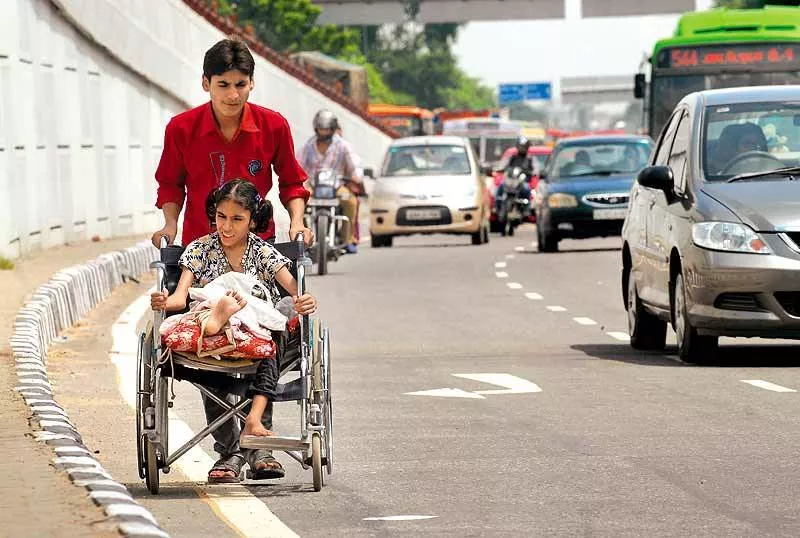
Workforce integration of the disabled needed
This month marked the first anniversary of the passage of the Rights of Persons with Disabilities Act, 2016. It is a landmark Act for many reasons. One of the most important aspects is that it brings the private sector within its purview. This is a big leap forward from the Persons with Disabilities Act, 1995, where the applicability of the law to the private sector was open to subjective interpretation.With this Act, no person can be discriminated against on the grounds of their disability. In addition, there are a number of provisions that India Inc. is expected to comply with. These include: having a stated equal opportunity policy, appointing a liaison officer, ensuring accessibility of the physical and digital environment, etc. Interestingly, a denial of reasonable accommodation could count as discrimination and could form a basis for a court complaint. New office premises, also understood as public buildings as per the Act, may not get clearance due to non-compliance. This is indeed a new paradigm for the disabled in the country.
Having said that, it isn’t that the private sector has been oblivious. Led by the information technology, retail and hospitality industries, over the past decade or so, there has been heightened awareness. Several companies have made significant strides in creating an inclusive work environment. In fact, there are organizations that can boast of hundreds of employees with disabilities. But that’s largely restricted to a few pockets of urban India; a lot more is needed for integrating persons with disabilities in the mainstream workforce.
We’re at an inflection point—and there is a need to challenge some of our old assumptions when it comes to inclusion. Firstly, we should stop demanding a business case for employing persons with disability. This is already well established. Companies in India, especially in service industries like IT, hospitality, retail, etc. have been hiring persons with disabilities for more than a decade. Early adopters have experienced a direct positive impact on the business through matrices such as better productivity, lower attrition, and higher workforce morale. Moreover, isn’t it simply the right thing to do? Just as a person’s gender, ethnic background or religion doesn’t require a business case, a person’s disability should also not warrant any justification.
Secondly, these early adopters should not be taken as proof of broad success of integration efforts in India. Most private sector doors are still not open. Furthermore, disabled employees are now starting to experience a glass ceiling with limited-to-non-existent growth opportunities. Job enrichment and career progression are serious causes of concern. It’s not about promotions alone. Are such employees being considered for client-facing roles or meatier responsibilities? What’s the share of employees with disability at management levels? I am not suggesting a compromise on merit—but why can’t there be focused career tracks and mentorship programmes such as those for women employees? The need of the hour is for organizations and industries to draw parallels with the journey of women’s inclusion, and create focus tracks to drive equity and growth opportunities for employees with disabilities.
One also can’t overlook the future workplace scenario. Many of the early success stories in the IT sector came about by placing employees with disabilities in roles that were predictable and repeatable in nature. Such jobs will be the first victims of automation. Clearly, our talent supply chain for persons with disability is not equipped to face the consequences. This should make all stakeholders, including companies, the government, NGOs and employees with disabilities reconsider existing skill programmes.
Thirdly, stop thinking disability inclusion is a human resources initiative. For many, disability inclusion starts and ends with the recruitment of disabled people. There are two factors that differentiate and sustain an organization’s commitment to creating an inclusive work environment—a commitment driven by the leadership and a shared vision across the organization. It’s not acceptable, for instance, if a visually impaired recruit has to wait for weeks to get screen-reading software because the IT and procurement teams don’t have it listed. Similarly, it’s not inclusive if the organization has not planned to have sign-language interpreters for its annual events despite boasting of a large number of hearing-impaired recruits.
And, far from being empathetic, when wheel-chair users are asked to refrain from participating in emergency mock drills on the pretext of inconvenience, it is discriminatory. Let’s pause and examine: Do we have a common understanding of disability in the organization? Are teams across organizational functions in sync with a shared vision of enabling or empowering persons with disability? Are the organization’s people, policies and processes in place for creating a barrier-free and non-discriminating environment?
As conversations around the rights of persons with disabilities mature in corporate circles in the wake of the disability Act, I hope it is not just compliance with the Act which drives efforts for inclusion. It will probably be relatively easy to tick the boxes required by law without actually achieving sufficient change. But, as a society, if we are truly serious about empowerment of a group which has been marginalized for very long, then we should go beyond compliance.
Author : Ankit Rajiv Jindal

The non trivial costs of a slow judiciary
Jan 31, 2018
Very important the economic survey an overview
Jan 30, 2018
The conflict between equity and efficiency
Jan 29, 2018
Judicial primacy is not the same as exclusivity
Jan 25, 2018
Global monetary policy enters a decisive phase
Jan 25, 2018





Stay updated with The Hindu Editorial Vocab24 app, your definitive source for breaking news and comprehensive coverage from India and around the globe. Whether it's political developments, business updates, sports highlights, the latest technology trends, or current events, The Hindu brings live, accurate, and reliable news directly to your device.
Don’t fall for sensationalized or fake news shared online. Read and share accurate updates with friends and family through The Hindu Editorial Vocab24 app. Download it today!
News Coverage in The Hindu Editorial Vocab24 App
Breaking News: Receive instant notifications on breaking news stories as they unfold. Stay informed about major events and developments in India and around the world with live blogs, news in shorts videos, and concise articles.
Politics: Get the latest updates on Indian politics, including elections, policy changes, government decisions, and political events that shape the nation.
Business and Economy: Stay ahead in the economic landscape with detailed business news and market analysis. Learn about stock market trends, financial reports, corporate news, and economic developments to make informed investment decisions.
Current Events: Follow stories on social issues, policy changes, global events, and daily current affairs, tailored for UPSC and other competitive exam preparations.
Technology: Keep up with the latest gadgets, innovations, and tech trends. Read expert reviews and analyses in short, concise updates on cutting-edge technology from India and beyond.
Sports: Never miss a moment of your favorite sports. Get live scores, match reports, and expert analysis on cricket, football, tennis, and more.
International News: Stay informed about global events and geopolitical developments, including the Russia-Ukraine war, Israel-Palestine conflict, and other key international stories.
Local News: Stay connected to your community with the latest updates on city events, issues, and local news. Coverage includes hyperlocal updates from cities like Bangalore, Chennai, Delhi, Hyderabad, Mumbai, Kolkata, and more.
Trending Topics: Discover what's trending today with the most talked-about stories and hot topics across India and the world.
Experience journalism that values integrity, accuracy, and reliability. Download The Hindu Editorial Vocab24 app today and stay connected with the world.
Subscribe to our newsletter!







