

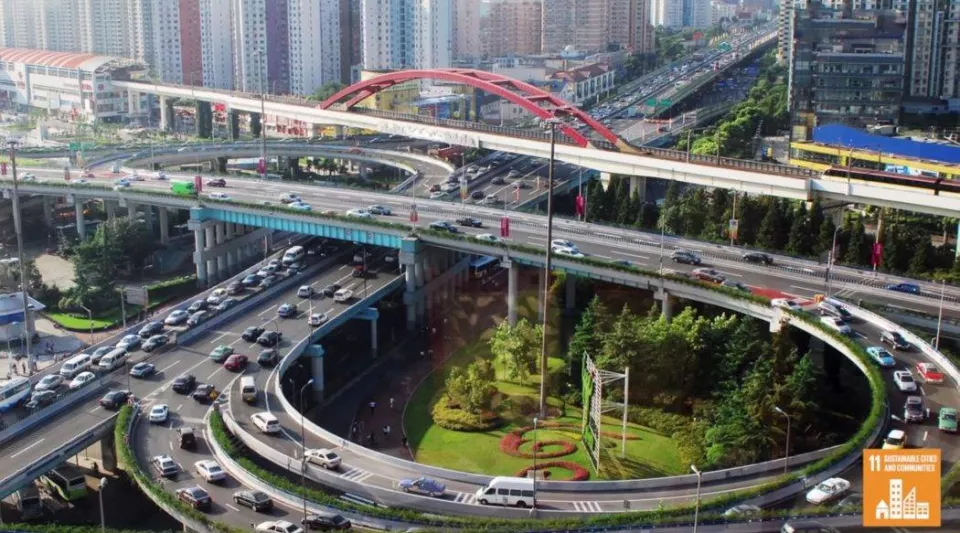
Cities need a sustainable transport update
The car has been the signifier of the aspiring Indian for decades. Starting in the 1980s, the democratization of car ownership with the explosion in sales of the humble Maruti 800 heralded an emergent middle class.Every year, governments across the country lay down fresh tar on any available city space to welcome the latest entrants into the coveted league of car owners. Meanwhile, the millions who don’t own cars—and are sidelined to the narrow footpaths that lead to the distant bus stop—continue to aspire to own their own car one day.
The government is now beginning to see why this is a problem. Bengaluru is engulfed in a never-ending traffic jam, Delhi’s pollution is at world-beating levels and Mumbai was never famous for its fast roads. This decade has made it resoundingly clear that the present model of urban transport is unsustainable, and the only way out of the cycle—of rising incomes and more wheels on the road—is an efficient public transport alternative.
In light of this realization, Prime Minister Narendra Modi’s inauguration speech for the Magenta Line of the Delhi Metro was on point. Using a city’s public transport should be a matter of prestige, he said. Modi made a fine attempt to persuade people to choose public transport over private, but persuasion only goes so far. India is stuck in a collective action problem: It’s not rational for anyone to switch to public transport until everyone else also follows. An individual will stop using his car if the bus is faster, but that is possible only if others also get their cars off the road. Unfortunately, city-development plans have failed to create the right incentives, as is borne out by the preference for private transport.
For example, Bengaluru has seen an increase in the number of private vehicles from 2.7 million in 2008 to 6 million in 2017. The growth in roads cannot keep up with this. Meanwhile, roughly half the city’s passenger trips (5 million) are via a fleet of 6,000 Bengaluru Metropolitan Transport Corporation buses.
The problem starts with the way cities are governed in India. The lack of adequate devolution as per the Constitution (74th Amendment) Act, 1992, and consequently, effective power vested in a city-level governance mechanism, exacts a heavy toll. Chief ministers, whose remit should be the state, are inevitably involved at the city level. Municipal corporations lack adequate transparency and accountability, and urban governance is a tangled web of overlapping jurisdictions. This becomes abundantly clear every time a major city floods or faces some other upheaval, like the Elphinstone Road railway bridge tragedy in Mumbai earlier this year. Urban planning is a mechanistic process that pays little heed to evolving urban landscapes. Taken together, this means band-aid solutions to congestion, i.e. building more roads. That is what the Jawaharlal Nehru Urban Renewal Mission did, as it allocated 80% of the budget to building roads and flyovers.
The urban transport policy must rethink the hierarchy of needs; pedestrians and cyclists must be on top, followed by buses and then motor vehicles.
It is absolutely clear that there isn’t enough space for everyone to drive a car, and the government must pivot the policy to delivering reliable public transport. The metro project is a step in the right direction, but it needs complementary changes that improve the citizens’ experience.
For starters, the metro system needs a bus system to provide last-mile connectivity. If people have to take buses, they need pedestrian paths to walk on the roads. The bus system also needs to be reliable. Mysuru has managed to achieve that because of a centralized monitoring system that tracks buses using GPS. monitors driving speed and ensures that they stop at every bus stop.
Second, the government must resist using attractive-sounding propositions, like pushing electric and hybrid buses, to give the impression that there is political will to improve urban transport. Changing the fuel of the bus will reduce emissions, but there will be dramatically bigger gains if we are able to prompt even a quarter of the private vehicle-using population to use public transport.
Third, India has plenty of assets that are decaying due to poor maintenance. Policymakers will do well to make space for depreciation accounts in their budgets to pay for maintenance and replacement of public assets.
As a positive step towards reforming urban governance, the Centre has proposed incentives worth Rs10,000 crore for meeting certain defined parameters. This should, hopefully, empower municipal bodies, encourage states to delegate more powers to them, and improve the delivery of services. There are other reforms as well, like lateral entry of officers and giving local bodies greater flexibility in urban planning. However, it remains to be seen whether these reforms will be able to change the conventional ways of the bureaucracy.
India is a growing economy, and census data suggests that only 31% of the population lives in urban centres. Another 300 million people will be added by 2050 and the planning for carrying those people in our cities must begin now. Public transport can easily be the cheaper, faster and economical alternative if policymakers plan for tomorrow’s problems today.
Courtesy : Livemint Editorial
The non trivial costs of a slow judiciary
Jan 31, 2018
Very important the economic survey an overview
Jan 30, 2018
The conflict between equity and efficiency
Jan 29, 2018
Judicial primacy is not the same as exclusivity
Jan 25, 2018
Global monetary policy enters a decisive phase
Jan 25, 2018





Stay updated with The Hindu Editorial Vocab24 app, your definitive source for breaking news and comprehensive coverage from India and around the globe. Whether it's political developments, business updates, sports highlights, the latest technology trends, or current events, The Hindu brings live, accurate, and reliable news directly to your device.
Don’t fall for sensationalized or fake news shared online. Read and share accurate updates with friends and family through The Hindu Editorial Vocab24 app. Download it today!
News Coverage in The Hindu Editorial Vocab24 App
Breaking News: Receive instant notifications on breaking news stories as they unfold. Stay informed about major events and developments in India and around the world with live blogs, news in shorts videos, and concise articles.
Politics: Get the latest updates on Indian politics, including elections, policy changes, government decisions, and political events that shape the nation.
Business and Economy: Stay ahead in the economic landscape with detailed business news and market analysis. Learn about stock market trends, financial reports, corporate news, and economic developments to make informed investment decisions.
Current Events: Follow stories on social issues, policy changes, global events, and daily current affairs, tailored for UPSC and other competitive exam preparations.
Technology: Keep up with the latest gadgets, innovations, and tech trends. Read expert reviews and analyses in short, concise updates on cutting-edge technology from India and beyond.
Sports: Never miss a moment of your favorite sports. Get live scores, match reports, and expert analysis on cricket, football, tennis, and more.
International News: Stay informed about global events and geopolitical developments, including the Russia-Ukraine war, Israel-Palestine conflict, and other key international stories.
Local News: Stay connected to your community with the latest updates on city events, issues, and local news. Coverage includes hyperlocal updates from cities like Bangalore, Chennai, Delhi, Hyderabad, Mumbai, Kolkata, and more.
Trending Topics: Discover what's trending today with the most talked-about stories and hot topics across India and the world.
Experience journalism that values integrity, accuracy, and reliability. Download The Hindu Editorial Vocab24 app today and stay connected with the world.
Subscribe to our newsletter!







