

Why inclusive growth is indispensable to india
On 15 August India marked 70 years of independence from the British empire, a monumental triumph in social and political liberalization. Today, India is in the midst of an equally monumental struggle in economic liberalization. The stakes could not be higher. An economic future of broadly shared prosperity and vanishing poverty for more than 1.2 billion people is within grasp. To get there, however, calls for advancing inclusive growth.India’s economic performance in recent years has been outstanding in relation to both its own historical record and the global economy. Between 2010 and 2016, for example, annual real gross domestic product (GDP) growth in India averaged 6.7% despite a relatively weak post-crisis global economy that averaged only 2.7% annual gains. Yet the economic optimism in recent years is now tempered by a growing recognition that many deficiencies in the economy remain deep-seated and if not effectively addressed could undermine future growth.
Front and centre is the concern over employment growth.
Despite strong economic growth in the last decade, job growth averaged only approximately 2% a year in the formal sector. Such growth is basically flat when adjusted for the growing population. In the coming decades, some 12-15 million Indians will enter the labour force each year, and if the current job growth trends persist, fewer than half of them will be able to secure formal employment of any kind. For those who fail to find formal employment, their only option is to work in the informal economy.
It is estimated that about 80% of India’s labour force works in the informal economy. Jobs in the informal economy are typically insecure, with neither employment contracts nor regular pay, and very often workers are engaged on a day-to-day basis. The working conditions in the informal economy therefore resemble a low-productivity trap.
Employers have no incentives to invest in training workers who are seen as transient and interchangeable or to invest in better tools and equipment for them. Without some assurance of future income, workers find it difficult to plan for the long term, let alone find the means to invest in learning new skills. The informal economy thus embodies the exact opposite of inclusive growth: workers are effectively excluded from accessing many of the resources they need to make themselves more productive and thereby improve their life chances.
This is why advancing inclusive growth is so important in India today. At the most basic level, economic growth results from labour force growth and productivity growth of workers. With 80% of the labour force stuck in low-productivity activities in informal employment, it is not surprising that the Indian economy is performing far below its true potential.
For the Indian economy to reach its growth potential, ways and means must be found to move workers from informal to formal employment. Ultimately, the economy can reach its full potential only when the hundreds of millions of Indian workers can escape the trap of low productivity.
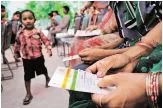
The good news is that recent reform initiatives are preparing the ground for greater inclusion. The biometric-based unique identification system, Aadhaar, now ensures that the poor are no longer invisible and, therefore, more empowered. A bank account for every adult now ensures universal access to financial services, at least in principle. When combined with Aadhaar, such access will accelerate financial inclusion. The shock of demonetisation and the introduction of the new national goods and services tax will gradually expand India’s tax base and eliminate incentives for businesses to operate in the shadow of the formal economy.
Critics of the government’s recent reforms are quick to decry their disruptive effects. But this is to miss the woods for the trees. Any reforms that have an impact and are worth doing are necessarily disruptive. Without short-term cyclical effects, there are no longer-term structural gains. Much greater gains will be realized when the different reforms begin to converge to bring more people into the mainstream economy altogether. What is needed is to sustain the push for more reforms, not fewer.
Reducing the size of the informal economy is pivotal to inclusive growth. It allows India to reach its growth potential and deliver broadly shared prosperity for the vast majority. Sustaining a real GDP growth rate of 7% each year until 2040 will quintuple per capita GDP to $28,000 on a purchasing power parity basis. By 2040, India will also reach its maximum share of the working-age population. This is a glittering prize— endowing its youth bulge with meaningful, well-compensated and rewarding formal employment in a society where prosperity is broadly shared and absolute poverty has become a thing of the past.
The historian Ramachandra Guha has argued (India After Gandhi: The History Of The World’s Largest Democracy, New York: Harper Collins, 2007) that India is both the world’s largest and least likely democracy. The odds were daunting that India could hold as a democracy, and yet it did. At 70, what India needs to do next is clear: democratize productivity through inclusive growth to finally reach its full economic potential.










Stay updated with The Hindu Editorial Vocab24 app, your definitive source for breaking news and comprehensive coverage from India and around the globe. Whether it's political developments, business updates, sports highlights, the latest technology trends, or current events, The Hindu brings live, accurate, and reliable news directly to your device.
Don’t fall for sensationalized or fake news shared online. Read and share accurate updates with friends and family through The Hindu Editorial Vocab24 app. Download it today!
News Coverage in The Hindu Editorial Vocab24 App
Breaking News: Receive instant notifications on breaking news stories as they unfold. Stay informed about major events and developments in India and around the world with live blogs, news in shorts videos, and concise articles.
Politics: Get the latest updates on Indian politics, including elections, policy changes, government decisions, and political events that shape the nation.
Business and Economy: Stay ahead in the economic landscape with detailed business news and market analysis. Learn about stock market trends, financial reports, corporate news, and economic developments to make informed investment decisions.
Current Events: Follow stories on social issues, policy changes, global events, and daily current affairs, tailored for UPSC and other competitive exam preparations.
Technology: Keep up with the latest gadgets, innovations, and tech trends. Read expert reviews and analyses in short, concise updates on cutting-edge technology from India and beyond.
Sports: Never miss a moment of your favorite sports. Get live scores, match reports, and expert analysis on cricket, football, tennis, and more.
International News: Stay informed about global events and geopolitical developments, including the Russia-Ukraine war, Israel-Palestine conflict, and other key international stories.
Local News: Stay connected to your community with the latest updates on city events, issues, and local news. Coverage includes hyperlocal updates from cities like Bangalore, Chennai, Delhi, Hyderabad, Mumbai, Kolkata, and more.
Trending Topics: Discover what's trending today with the most talked-about stories and hot topics across India and the world.
Experience journalism that values integrity, accuracy, and reliability. Download The Hindu Editorial Vocab24 app today and stay connected with the world.
Subscribe to our newsletter!







