

U s envoy doubles down on support for syria slams israel’s intervention
There is ‘no Plan B’ to working with new government to unite the country, says Tom Barrack; he calls the strikes in Sweida, Damascus ‘poorly timed’ and says it complicated efforts to stabilise the region; while the government has vowed to protect the minorities, many feel it has not done enough.A U.S. envoy doubled down on Washington’s support for Syria’s new government, saying on Monday there is “no Plan B” to working with it to unite the country still reeling from years of civil war and wracked by new sectarian violence.
In an exclusive interview, Tom Barrack also criticised Israel’s recent intervention in Syria, calling it poorly timed and saying it complicated efforts to stabilise the region.
Mr. Barrack is ambassador to Turkiye and special envoy to Syria, with a short-term mandate in Lebanon. He spoke in Beirut following more than a week of clashes in Syria’s southern province of Sweida between militias of the Druze religious minority and Sunni Muslim Bedouin tribes.
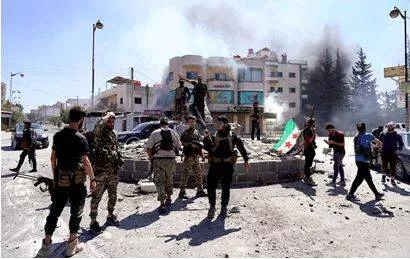
Syrian government forces intervened, ostensibly to restore order, but ended up siding with the Bedouins before withdrawing under a ceasefire agreement with Druze factions. Hundreds have been killed in the fighting, and some government fighters allegedly shot dead Druze civilians and burned and looted homes.
Neighbouring Israel intervened last week on behalf of the Druze, who are seen as a loyal minority within Israel and often serve in its military. Israel launched dozens of strikes on convoys of government forces in Sweida and struck the Ministry of Defence headquarters in central Damascus.
‘Initial efforts’
Over the weekend, Mr. Barrack announced a ceasefire between Syria and Israel. Syrian government forces have redeployed in Sweida to halt renewed clashes between the Druze and Bedouins, and civilians from both sides were set to be evacuated on Monday.
Mr. Barrack said that “the killing, the revenge, the massacres on both sides” are “intolerable,” but that “the current government of Syria, in my opinion, has conducted themselves as best they can as a nascent government with very few resources to address the multiplicity of issues that arise in trying to bring adiverse society together”.
At a press conference later, he said Syrian authorities “need to be held accountable” for violations.
Regarding Israel’s strikes on Syria, Mr. Barrack said: “The U.S. was not asked, nor did they participate in that decision, nor was it the United States’ responsibility in matters that Israel feels is for its own self-defence.”
However, he said Israel’s intervention “creates another very confusing chapter” and “came at a very bad time”.
Prior to the violence in Sweida, Israel and Syria had been in talks over security matters, while the Trump administration had been pushing them to move toward full normalisation of diplomatic relations. When the latest fighting erupted, “Israel’s view was that south of Damascus was this questionable zone, so that whatever happened militarily in that zone needed to be agreed upon and discussed with them,” Mr. Barrack said. “The new government [in Syria] coming in was not exactly of that belief.”
Limited agreement
The ceasefire announced on Saturday between Syria and Israel is a limited agreement addressing only the conflict in Sweida, he said. It does not address broader issues including Israel’s contention that the area south of Damascus should be a demilitarised zone.
In the discussions leading up to the ceasefire, Mr. Barrack said “both sides did the best they can” to reach agreement on specific questions related to the movement of Syrian forces and equipment from Damascus to Sweida.
“Whether you accept that Israel can intervene in a sovereign state is a different question,” he said.
He suggested that Israel would prefer to see Syria fragmented and divided rather than a strong central state in control of the country.
“Strong nation-states are a threat — especially Arab states are viewed as a threat to Israel,” he said. But in Syria, he said, “I think all of the the minority communities are smart enough to say, ‘We’re better off together, centralised.’”
Later on Monday, Israeli Defence Minister Israel Katz posted on X that Israel’s strikes “were the only way to stop the massacre of the Druze in Syria, who are brothers of our Druze brothers in Israel.”
Mr. Katz added: “Whoever criticises the attacks are not familiar with the facts.” It was not clear if he was responding to Mr. Barrack’s comments.
The violence in Sweida has deepened the distrust of minority religious and ethnic groups in Syria toward the new government in Damascus, which is led by Sunni Muslim former insurgents who unseated long-time autocratic ruler, Bashar Assad in an offensive in December.
The attacks on Druze civilians followed the deaths of hundreds of civilians from the Alawite minority, to which Assad belongs, earlier this year in sectarian revenge attacks on the Syrian coast. While interim President Ahmad al-Sharaa, also known as Abu Mohammad al-Jolani, has promised to protect minorities and punish those who target civilians, many feel his government has not done enough.

Trump announces ceasefire between Lebanon and Israel
Apr 19, 2026

As trade row eases u s clears missile sale to india
Nov 23, 2025





Stay updated with The Hindu Editorial Vocab24 app, your definitive source for breaking news and comprehensive coverage from India and around the globe. Whether it's political developments, business updates, sports highlights, the latest technology trends, or current events, The Hindu brings live, accurate, and reliable news directly to your device.
Don’t fall for sensationalized or fake news shared online. Read and share accurate updates with friends and family through The Hindu Editorial Vocab24 app. Download it today!
News Coverage in The Hindu Editorial Vocab24 App
Breaking News: Receive instant notifications on breaking news stories as they unfold. Stay informed about major events and developments in India and around the world with live blogs, news in shorts videos, and concise articles.
Politics: Get the latest updates on Indian politics, including elections, policy changes, government decisions, and political events that shape the nation.
Business and Economy: Stay ahead in the economic landscape with detailed business news and market analysis. Learn about stock market trends, financial reports, corporate news, and economic developments to make informed investment decisions.
Current Events: Follow stories on social issues, policy changes, global events, and daily current affairs, tailored for UPSC and other competitive exam preparations.
Technology: Keep up with the latest gadgets, innovations, and tech trends. Read expert reviews and analyses in short, concise updates on cutting-edge technology from India and beyond.
Sports: Never miss a moment of your favorite sports. Get live scores, match reports, and expert analysis on cricket, football, tennis, and more.
International News: Stay informed about global events and geopolitical developments, including the Russia-Ukraine war, Israel-Palestine conflict, and other key international stories.
Local News: Stay connected to your community with the latest updates on city events, issues, and local news. Coverage includes hyperlocal updates from cities like Bangalore, Chennai, Delhi, Hyderabad, Mumbai, Kolkata, and more.
Trending Topics: Discover what's trending today with the most talked-about stories and hot topics across India and the world.
Experience journalism that values integrity, accuracy, and reliability. Download The Hindu Editorial Vocab24 app today and stay connected with the world.
Subscribe to our newsletter!







