

Traders of learning
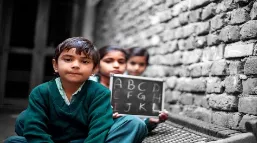
The recent controversy over private hospitals may be overshadowed by major decisions that are on the anvil in the running of private schools in West Bengal. The screws are set to be tightened on these institutions and it is felt that privately managed schools require more rational and broad-based guidelines for governance. In a country with a majority of children languishing (शिथिल होना) in hunger and malnutrition, the phenomenal rise in the cost of education is disproportionate to the standard offered. The resultant hardship (कठिनाई) on families forced to send their children to expensive private schools is a social anachronism which the government seems anxious to address. Admittedly, setting up private schools is no longer an act of philanthropy, but an attractive investment for the corporate sector. Education has been continuously debased and educational institutions have become a part of a flourishing business enterprise. Periodically, the Centre unveils a national education policy, which is essentially a statement of intent to improve the quality and content of education. And with the recent triumph of the free market philosophy, education is now open to crass (मूर्खतापूर्ण/मूढ़) commercial exploitation. There is a technical expression ~ “donation” ~ for selling a seat in an educational institution, a price which only the rich can afford to pay. Privatised education thus implies unequal distribution of educational opportunities. The more the World Bank and the international Monetary Fund insist that public expenditure for social purposes be reduced to the barest minimum, the greater will be the emerging affluence (संपन्नता/प्रचुरता) of private enterpreneurs running educational rackets, and lesser will be the prospects for the economically weak to benefit from the fruits of learning. Money buys education; lack of purchasing power means virtual lack of education. The logic of the free market is amazing: only the rich shall inherit knowledge and skills which shall, in turn, ensure further riches for them. Once an educational racket is in control, one can mint money through the capitation fee (Capitation fee refers to an illegal transaction whereby an organisation that provides (or supposedly provides) educational services collects a fee that is more than what is approved by regulatory norms.), which is sometimes camouflaged (छद्मावरण से छिपाना) by a polite expression ~ “donation”. A cardinal (आधारभूत/मुख्य) principle of a monopolised arrangement is to restrict entry for that is how one can hike the price of admission. Economists describe this phenomenon as the interplay of the elasticity of demand and supply; the supply must be sufficiently inelastic so that admission-seekers, who constitute the demand side are willing to pay through their nose. As the nation slips back into the cusp of colonialism, the craze for English medium educational institutions rises to fever pitch. The enterpreneurs are only too anxious to exploit the situation. True, private schools have to meet rising costs from their own resources, which include the fees they collect from their students. But the sharp increase in fees and donations has not been generally endorsed by parents who send their wards to private schools in the hope that they will receive a good education. Some even argue that the accountability of teachers must be ensured. Given the lack of such accountability, most students are compelled to rely on private tuition which increases the financial pressure on guardians. There is a well-grounded complaint that public education is sub-standard as teaching is casual and management inefficient. The heavy workload of private schools runs counter to the proper strategy for development of young minds. The curriculum is not scientific and as often as not the course is rather burdensome. There is a high price tag for extra-curricular activities; this only encourages a vicious consumer psychology. Parents are apparently satisfied with the discipline and superficial glamour of these schools, but are generally ignorant of the fact that infrastructure and educational facilities are inadequate in many of these schools. Students have to bear the brunt of an exceedingly heavy syllabus, high tuition fees, unreasonable session charges and development fees and other charges like computer fees even for tiny tots (छोटा बच्चा) . Other fees include a magazine fund, an excursion (भ्रमण) fund, a science fee, sports fee, library fee and so on. The authorities prefer to supply their own material for uniforms and other necessities or specify tailors and stationery shops where the rates are invariably higher than what prevails in the local market. Some of these schools encourage a well coordinated racket and it is the child who ultimately suffers. Publishers churn out substandard books which institutions prescribe as compulsory. The teachers are offered lower salaries than what the government has prescribed, many of them are temporary and are even asked to work under contract. These institutions need to be run by a properly constituted managing committee under a registered society or trust which should be of a non-proprietary character. They must conform to the specifications relating to space and accommodation, laboratory and library facilities, provision for co-curricular activities, well-qualified staff with salaries at par with the corresponding categories in government schools. Private English-medium schools have mushroomed (तेज़ी से बढ़ना) not as an act of philanthropy or a gesture of dedication to a social cause, but with the objective of selling education. The rights of religious or linguistic minorities to establish and administer educational institutions are often questioned. It is imperative that privately managed schools require more rational and broadbased guidelines from the government. The recent exorbitant (अत्यधिक/अत्यंत) hike in “donations” has aggravated the issue. The government has to come forward with comprehensive guidelines and certain concrete rules and regulations aimed at improving the quality of school education. However, any drastic measure of state control should not be encouraged. The National Education Policy (1986-92) has suggested decentralisation at all levels, favouring responsive and participatory management tempered with an element of autonomy and accountability. The West Bengal government is reportedly considering the proposal mooted by the All Bengal Teachers’ Association to bear full salaries of teaching and non-teaching employees. If executed, the government would certainly be taking the opportunity to interfere in the running of such institutions. Despite rising prices, government schools charge much less. Teachers in private schools are not always generously paid, whereas their counterparts in government managed schools can be sure of decent salaries and inbuilt security of service. Many of these schools lack trained personnel as well. In reality, however, state governments are finding it increasingly difficult to effectively manage their own institutions. The administration is more streamlined in private schools. This largely explains the tremendous rush for admission. The Supreme Court had once observed: “Commercialisation of education cannot and should not be permitted”. It is encouraging that the government has eventually come forward to combat profiteering by traders of education. Increased salaries, swanky (शानदार/सजीला) buildings and reduced fees ~ in the absence of quality education ~ are very poor parameters of a good system of education.Languish (verb)
Lose or lack vitality; grow weak. शिथिल होना
Synonyms: Weaken, Deteriorate, Dwindle, Faint, Wither
Example: Away from the sunlight, the plant will languish and eventually die.
Hardship (noun)
Something that causes or entails suffering or privation कठिनाई
Synonyms: Adversity, Asperity, Hardness, Difficulty, Indigence
Example: The city has been experiencing a period of financial hardship, which is hampering the development.
Crass (adjective)
Showing no intelligence or sensitivity. मूर्खतापूर्ण/मूढ़
Synonyms: Stupid, Insensitive, Asinine, Foolish
Example: I wish he would realize that his racism and bigotry are based on crass stereotypes of people that are just as human as you and I.
Cardinal (adjective)
Of the greatest importance/ of basic importance. आधारभूत/मुख्य
Synonyms: Fundamental, Basic, Main, Chief, Primary, Prime, Principal
Example: The marriage counselor addressed the cardinal rule of marriage which is to always compromise on issues.
Affluence (noun)
The state of having a great deal of something. संपन्नता/प्रचुरता
Synonyms: : Prosperity, Opulence, Richness, Plenty
Example: Lance has never wanted for anything because of his parents’ affluence.
Camouflage (verb)
Hide or disguise the presence of. छद्मावरण से छिपाना
Synonyms: Disguise, Hide, Conceal, Mask, Veil, Cloak
Example: As a defensive measure, some lizards can camouflage by changing colors to blend into their environments.
Excursion (noun)
A short journey or trip. भ्रमण
Synonyms: Trip, Outing, Jaunt, Expedition, Journey, Tour
Example: On our excursion to see our grandparents in Colorado, we ran into a snowstorm which delayed our trip.
Mushroom (verb)
Increase, spread, or develop rapidly. तेज़ी से बढ़ना
Synonyms: Proliferate, Grow/Develop Rapidly, Burgeon, Spread, Increase, Expand, Spring Up
Example: When the new factory is built, job opportunities are expected to mushroom in the country.
Exorbitant (adjective)
Unreasonably high. अत्यधिक/अत्यंत
Synonyms: Extortionate, Excessive, Extravagant, Extreme, Inordinate
Example: Students pay exorbitant tuition fee at the name of education.
Swanky (adjective)
Stylishly luxurious and expensive. शानदार/सजीला
Synonyms: Classy, Luxurious, Sumptuous, Expensive, Grand, Lavish
Example: On our tour to Goa, we stayed in a swanky hotel.

Successful operations raise hopes in kashmir
Aug 08, 2017
Mining penalty
Aug 07, 2017
Let asean nations use the hague ruling
Aug 07, 2017
Did you say privacy it has already been violated
Jul 28, 2017
Pilgrimage that builds bridges
Jul 21, 2017
Aadhaar ambivalence
Jul 02, 2017





Stay updated with The Hindu Editorial Vocab24 app, your definitive source for breaking news and comprehensive coverage from India and around the globe. Whether it's political developments, business updates, sports highlights, the latest technology trends, or current events, The Hindu brings live, accurate, and reliable news directly to your device.
Don’t fall for sensationalized or fake news shared online. Read and share accurate updates with friends and family through The Hindu Editorial Vocab24 app. Download it today!
News Coverage in The Hindu Editorial Vocab24 App
Breaking News: Receive instant notifications on breaking news stories as they unfold. Stay informed about major events and developments in India and around the world with live blogs, news in shorts videos, and concise articles.
Politics: Get the latest updates on Indian politics, including elections, policy changes, government decisions, and political events that shape the nation.
Business and Economy: Stay ahead in the economic landscape with detailed business news and market analysis. Learn about stock market trends, financial reports, corporate news, and economic developments to make informed investment decisions.
Current Events: Follow stories on social issues, policy changes, global events, and daily current affairs, tailored for UPSC and other competitive exam preparations.
Technology: Keep up with the latest gadgets, innovations, and tech trends. Read expert reviews and analyses in short, concise updates on cutting-edge technology from India and beyond.
Sports: Never miss a moment of your favorite sports. Get live scores, match reports, and expert analysis on cricket, football, tennis, and more.
International News: Stay informed about global events and geopolitical developments, including the Russia-Ukraine war, Israel-Palestine conflict, and other key international stories.
Local News: Stay connected to your community with the latest updates on city events, issues, and local news. Coverage includes hyperlocal updates from cities like Bangalore, Chennai, Delhi, Hyderabad, Mumbai, Kolkata, and more.
Trending Topics: Discover what's trending today with the most talked-about stories and hot topics across India and the world.
Experience journalism that values integrity, accuracy, and reliability. Download The Hindu Editorial Vocab24 app today and stay connected with the world.
Subscribe to our newsletter!







