

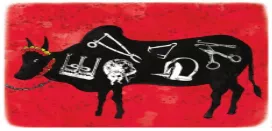
Torture through the ages
Jallikattu, animal rights and the cultural argument: A changing collective consciousness. That there are two sides to jallikattu, those who are for and those who are against, only shows that India is both global and updated. If we walk back to the past, sensitivity to torture of any kind is a rather contemporary phenomenon, showing up first in the 19th century. Till then, worldwide, the torture of both humans and animals was taken as normal. Between 1807-50, as if making up for past injustices, our collective consciousness suddenly woke up to ethically (नैतिक रूप से) question the torture of all living beings. Is it just coincidence that around this time, in Britain for example, slave trade was abolished (समाप्त कर देना), the 1832 Reform Act was passed, and bear baiting, even dog fights, became illegal? Conferring respect on ordinary electorates was accompanied by a ban on cruelty to animals and people, as if one entailed (के लिए आवश्यक होना) the other. Till then, voters were limited to a select few and hanging was a popular, town square event. Likewise, to set dog against dog, or bear against dogs, were huge draws often patronised by the rich and powerful. Elizabeth I, reportedly, could not tear herself away from such spectacles. It would appear then that with the increase in democratic awareness, we also became mindful of animal life. Decades before Darwin came on the scene, 19th century attitudes were inclining towards accepting humans and animals as somewhat continuous creations. Therefore, what applied to us was now being extended to include other living creatures too. By this token convicts, their wickedness (क्रूरता/अनैतिकता) notwithstanding, deserved consideration as well. Again, it was in the mid-19th century that the hangman's rope was lengthened so that death would be quick; the earlier short drop left the condemned person dangling for long. Crucifixion (an ancient form of execution in which a person was nailed or bound to a cross.), stoning, or the Chinese practice of Li Ching, where the convict's flesh was slowly sliced off (hence the phrase, death by a thousand cuts), were no longer considered civilised. Likewise, in 1839, Britain banned punishment by drawing and quartering as this involved the strewing of the dead person's body parts. All of this is crazily off the charts today, but in the past they were seen as normal, even fun. Though we still continue with capital punishment, yet we strive to make it as pain free as modern medical knowledge will allow ¬ enter the lethal (जानलेवा/घातक) injection. No more howling and cheering from a frenzied crowd; the sentence is now delivered within prison confines. All these changes have happened in recent times as old fashioned torture is no longer acceptable. Humans and beasts, individually and singly, are not to be put in pain, and if they have to die because we must punish, or we must eat, let us deliver the blow as softly as we can. Yet, when man and beast are performing together in acts that involve pain, sometimes death, there has been much stronger resistance against banning them. This is true of jallikattu, the bull fight and the fox hunt. All these three were once banned and then un-banned. On these matters, the struggle between status quoists and change agents has been very contentious (विवादपूर्ण) and bitter. The Catalonia region of Spain disallowed bullfights, but the Spanish Supreme Court ruled against it. The fox hunt likewise won judicial approval and, for the time being, jallikattu has also earned a reprieve (दण्डविराम) . Unlike dog fights or bear baiting, these are no longer instances of outright animal torture as humans are also involved. This is what makes jallikattu and bullfights appear sporty for now there is an aura of uncertain outcome, though highly controlled. Consequently, guilt is replaced by participatory euphoria (उत्साह) and it is this that gives them the look and feel of being cultural and harmless. If, however, only the rich participate in the sport, as in the case of tiger hunts, then such acts do not become “cultural”, deserving of popular approval. Fox hunting was never passionately defended as long as it was limited to the aristocrats. From the 1950s on numerous fox hunting clubs, with middle class membership, sprang up all over Britain lending this activity a democratic character. The Spanish bullfight has always been a spectacular public sport, not just because it entertained large crowds but also because matadors (a bullfighter whose task is to kill the bull.) came from the ranks of ordinary people. It is this as well as their skills that together made bullfighters like Antonio Ordinez, Luis Dominguin, and Manuel Benitez (also known as El Cordobez) such super stars. Jallikattu still does not have its home bred heroes, but it too is a popular sport that has become culture as it pits man against beast, rather ordinary men against ordinary beasts. It is almost as if we are compelled to demonstrate our mastery over nature at regular intervals. But because we are blessed with cunning, a trait (विशिष्टता) that animals do not possess, we pick on four-legged creatures that are not carnivores, nor are naturally dangerous to us. We hunt foxes, that attack poultry, or we fight bulls that have no quarrel with humans. Nobody would like to take on tigers or grizzly bears and then call it culture. As humans we need to show off our cultural might and we do this best by fighting the weak, never the strong, not even those who are our equals. This is what prompted the anarchist (अराजकतावादी) Peter Kropotkin to remark that nature is not “red in tooth and claw”, but people are.Ethically (adverb)
In a way that relates to moral principles/ in a morally good or correct manner. नैतिक रूप से
Synonyms: Morally, Lawfully, Legitimately, Sincerely, Righteously
Example: It is important that police officers prove themselves to be ethical if they hope to really serve the community.
Abolish (verb)
Formally put an end to (a system, practice, or institution). समाप्त कर देना
Synonyms: Scrap, End, Stop, Terminate, Eradicate, Eliminate, Exterminate
Example: Many historians point out that Abraham Lincoln did not abolish slavery out of compassion but rather as a political move.
Entail (verb)
Involve (something) as a necessary or inevitable part or consequence. के लिए आवश्यक होना
Synonyms: Involve, Require, need, call for, Necessitate, Impose
Example: The success entails hard work which in turn entails perseverance; hence success is cumulative sum of hard work.
Wickedness (noun)
The quality of being evil or morally wrong/ the quality of being disgusting to the senses or emotions. क्रूरता/अनैतिकता
Synonyms: Depravity, Atrocity, Deviltry, Evil, Immorality, Infamy
Example: The murderer was so wicked that he did not even left Jack’s family.
Lethal (adjective)
Very harmful or destructive. जानलेवा/घातक
Synonyms: Fatal, Deadly, Destructive, Devastating
Example: Drinking and driving is a lethal combination.
Contentious (adjective)
Causing or likely to cause an argument; controversial. विवादपूर्ण
Synonyms: Controversial, Disputable, Objectionable, Moot
Example: Article 370 and Uniform Civil code are highly contentious issues in our country these days.
Reprieve (noun)
A cancellation or postponement (especially of punishment). दण्डविराम
Synonyms: Acquittal, Abatement, Postponement, Amnesty, Pardon
Example: Because of a legal review, the criminal was granted a reprieve on his sentence.
Euphoria (noun)
A feeling or state of intense excitement and happiness. उत्साह
Synonyms: Happiness, Joyousness, Delight, Glee, Excitement, Exhilaration, Animation, Jubilation, Exultation.
Example: When she received her acceptance letter to Harvard, she was in a state of euphoria for weeks.
Trait (noun)
A distinguishing quality or characteristic, typically one belonging to a person. विशिष्टता
Synonyms: Characteristic, Attribute, Feature, Quality, Property, Distinction
Example: The trait of John to believe on every stranger will surely lead him to trouble.
Anarchist (noun)
A person who believes in or tries to bring about anarchy. अराजकतावादी
Synonyms: Nihilist, Insurgent, Agitator, Subversive, Mutineer
Example: The magazine Revolt is published by a famed anarchist who encourages citizens to revolt against unjust laws.

Mumbai's long wait
Jun 19, 2017
Transparent justice
Mar 30, 2017





Stay updated with The Hindu Editorial Vocab24 app, your definitive source for breaking news and comprehensive coverage from India and around the globe. Whether it's political developments, business updates, sports highlights, the latest technology trends, or current events, The Hindu brings live, accurate, and reliable news directly to your device.
Don’t fall for sensationalized or fake news shared online. Read and share accurate updates with friends and family through The Hindu Editorial Vocab24 app. Download it today!
News Coverage in The Hindu Editorial Vocab24 App
Breaking News: Receive instant notifications on breaking news stories as they unfold. Stay informed about major events and developments in India and around the world with live blogs, news in shorts videos, and concise articles.
Politics: Get the latest updates on Indian politics, including elections, policy changes, government decisions, and political events that shape the nation.
Business and Economy: Stay ahead in the economic landscape with detailed business news and market analysis. Learn about stock market trends, financial reports, corporate news, and economic developments to make informed investment decisions.
Current Events: Follow stories on social issues, policy changes, global events, and daily current affairs, tailored for UPSC and other competitive exam preparations.
Technology: Keep up with the latest gadgets, innovations, and tech trends. Read expert reviews and analyses in short, concise updates on cutting-edge technology from India and beyond.
Sports: Never miss a moment of your favorite sports. Get live scores, match reports, and expert analysis on cricket, football, tennis, and more.
International News: Stay informed about global events and geopolitical developments, including the Russia-Ukraine war, Israel-Palestine conflict, and other key international stories.
Local News: Stay connected to your community with the latest updates on city events, issues, and local news. Coverage includes hyperlocal updates from cities like Bangalore, Chennai, Delhi, Hyderabad, Mumbai, Kolkata, and more.
Trending Topics: Discover what's trending today with the most talked-about stories and hot topics across India and the world.
Experience journalism that values integrity, accuracy, and reliability. Download The Hindu Editorial Vocab24 app today and stay connected with the world.
Subscribe to our newsletter!







