

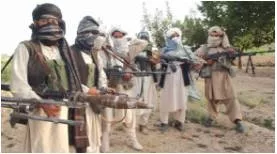
Tinderbox next door
The last economic survey of Pakistan (2016-17) had estimated a whopping (extremely large, impressive) $123.1 billion as the price-tag of the ‘war on terror’ on the Pakistani economy. In the immediate aftermath of 9/11, it had become a frontline ally of the US. With a GDP volume of approximately $300 billion, this perceived loss is tantamount (equivalent in value, significance, or effect) to over two-fifth of its entire economy. Even the Global Peace Index 2017, that measures the relative peace of a nation, ranks Pakistan at a dismal 152 out of the 163 countries that it tracks. An estimated 60,000 Pakistani civilian and military lives are said to have been lost in the last 17 years of violent killings, bombings and suicide attacks that are directly attributed to terror.Despite the legislative and the administrative bite afforded by the ‘National Action Plan’ that was put in place in January 2015 (following the Peshawar school massacre) to tackle terror in Pakistan, the security situation following Operation Zarb-e-Azb, or the more recent, Operation Radd-ul-Fasaad, is still clearly out-of-control and the entirety of the Durand Line (Af-Pak border) remains as lawless as ever. The Baluch insurgency (a usually violent attempt to take control of a government : a rebellion or uprising) in the hinterlands and the worrying signs of an increasingly Talibanised Punjab, only add to the tinderbox of Pakistan.
Yet the consistent Pakistani policy towards terror ~ running with the hare and hunting with the hound ~ was exemplified by the previous Prime Minister, Nawaz Sharif, in the UN General Assembly debate. He said: “My country has been the principal victim of terrorism including that supported, sponsored, financed from abroad” and incredously mentioned in the same discourse that the Hizbul commander, “Burhan Wani, the young leader was murdered by Indian forces”.
This patent formula of segregating aspects within terror has tied up Pakistan in intractable (not easily governed, managed, or directed) knots, and the Frankensteinian monster is dangerously turning on its progenitor (who originates a cultural or intellectual movement) . Even the relatively approachable Obama administration had issued unequivocal messages to the Pakistanis via its Secretary of State, Hillary Clinton, when she famously said as early as 2011, “You can’t keep snakes in your backyard and expect them only to bite your neighbors. You know, eventually those snakes are going to turn on whoever has them in the backyard”.
Nearly seven years later, the Republican US President echoes the same Pakistani duplicity, and more virulently. “The United States has foolishly given Pakistan more than $33 billion in aid over the last 15 years, and they have given us nothing but lies and deceit, thinking of our leaders as fools…they give safe haven to the terrorists we hunt in Afghanistan, with little help. No more!”
Donald Trump’s no-holds-barred rant against Pakistan had a foreboding sense of reality as the neighbouring Afghanistan went up in an inferno of terror attacks that saw a hotel siege, suicide attack using an ambulance and an attack on the office of the NGO, ‘Save the Children’, killing over 300 people, all within a span of 15 days. The government is Kabul accused Pakistan of ‘undeniable’ evidence that was handed over to the Pakistani authorities in person, by the Afghan Interior Minister and the Intelligence head.
The initial benefit of doubt that the President of Afghanistan, Ashraf Ghani, had offered to Pakistan on assuming charge in September 2014 ~ much to the consternation (a strong feeling of surprise or sudden disappointment that causes confusion) of India and contrary to the experience of the previous Hamid Karzai government ~ was soon torn apart by Pakistan’s incorrigible ways and dealings. The Pakistani doctrine of ‘Strategic Depth’ in Afghanistan, envisaging a client or subservient (prepared to obey others unquestioningly) state that is beholden to the Pakistani security establishment, was reconfirmed by General Ashfaq Kayani in 2010 as it was regarded as integral to protecting Pakistan’s ‘strategic interests’. It is the invaluable patronisation and support to these perceived ‘strategic interests’ of Pakistan that riles neighbouring India and Afghanistan into routinely blaming Pakistan for terror in their respective countries.
Beyond ‘strategic interests’, the Pakistani establishment has also lost the nerve to take on the ‘nurseries’ of terror and their ideologues. Beyond the ignored Afghan pleas for restraining the likes of the dreaded (regarded with great fear or apprehension) Haqqanis and the pending Indian extradition cases against the Zaikur Lakhvis and Hafiz Saeeds, the political enfeeblement and cultural retrogression within the Pakistani state was symbolised by the virtual capitulation and abandonment of the officialdom, when a sit-in by a little-known Tehreek-e-Labaik was lifted only after the Law Minister was removed and a religious ‘correction’ made. The troika of clergy, military and politicians is mired in intra-institutional intrigues (a complex scheme devised to gain something in a sneaky way) that disallow the Pakistani establishment to come clean.
The regressive hold and mutations of the clergy provide succour to the likes of Mumtaz Qadri (bodyguard of the Governor of Punjab, who was shot for speaking against blasphemy laws) and morphs into bloody sieges like the one at Lal Masjid in 2007.
Speaking for moderation, non-sectarianism or tolerance would militate against the natural course of relevance for the clergy in Pakistan. Similarly, the absence of an ‘enemy’ in India would diminish the relevance, investments and rationale for the sort of fiefdom that the state-within-a-state i.e. Pakistani military, has appropriated for itself. Lastly, the politicians are torn between pandering (to do or provide what someone wants or demands even though it is not proper, good, or reasonable) to basic instincts of religiosity, ignorance and the historically-invested fantasies ~ the principal one being Kashmir, that feeds and sustains the lifeline for all three institutions of clergy, military and politicos in a dangerous game of one-upmanship, with histrionics and support.
Globally, the governments are on a short-fuse with the terror sophistries and ambiguities of the traditional Pakistani line of differentiating between a ‘good terrorist’ and a ‘bad terrorist’. Even though the unconquerable Wakhan corridor wedges and physically protects the Chinese territory from a possible Pakistani spillover into the restive Xinjiang province, the portents of religious terrorism with the brewing Uighur movement could make Pakistani line on terror, untenable, even in Beijing. The sense of “terror-victimhood” within the Pakistani narrative flares up every time public pressure erupts owing to an internal bloodbath or the sovereign humiliation of international sanctions, like the recent withholding of US military aid.
The fact of the matter is that despite the international opprobrium and the widening societal faultlines, Pakistan still insists on juggling with many balls in the air, hoping that it can continue feeding the hand that bites. Far from victimhood, embarrassing insinuations like ‘Terroristan’ have resonated in the precincts of UN debates, while the Pakistani insistence on victimhood is getting no traction, internationally.


Philippines president rodrigo duterte slams unhcr
Apr 06, 2018
Oli to take up currency ban issue with pm modi
Apr 02, 2018
Curbing the khaps
Apr 01, 2018





Stay updated with The Hindu Editorial Vocab24 app, your definitive source for breaking news and comprehensive coverage from India and around the globe. Whether it's political developments, business updates, sports highlights, the latest technology trends, or current events, The Hindu brings live, accurate, and reliable news directly to your device.
Don’t fall for sensationalized or fake news shared online. Read and share accurate updates with friends and family through The Hindu Editorial Vocab24 app. Download it today!
News Coverage in The Hindu Editorial Vocab24 App
Breaking News: Receive instant notifications on breaking news stories as they unfold. Stay informed about major events and developments in India and around the world with live blogs, news in shorts videos, and concise articles.
Politics: Get the latest updates on Indian politics, including elections, policy changes, government decisions, and political events that shape the nation.
Business and Economy: Stay ahead in the economic landscape with detailed business news and market analysis. Learn about stock market trends, financial reports, corporate news, and economic developments to make informed investment decisions.
Current Events: Follow stories on social issues, policy changes, global events, and daily current affairs, tailored for UPSC and other competitive exam preparations.
Technology: Keep up with the latest gadgets, innovations, and tech trends. Read expert reviews and analyses in short, concise updates on cutting-edge technology from India and beyond.
Sports: Never miss a moment of your favorite sports. Get live scores, match reports, and expert analysis on cricket, football, tennis, and more.
International News: Stay informed about global events and geopolitical developments, including the Russia-Ukraine war, Israel-Palestine conflict, and other key international stories.
Local News: Stay connected to your community with the latest updates on city events, issues, and local news. Coverage includes hyperlocal updates from cities like Bangalore, Chennai, Delhi, Hyderabad, Mumbai, Kolkata, and more.
Trending Topics: Discover what's trending today with the most talked-about stories and hot topics across India and the world.
Experience journalism that values integrity, accuracy, and reliability. Download The Hindu Editorial Vocab24 app today and stay connected with the world.
Subscribe to our newsletter!







