


The stupid economy
Most discussions about the march of robotics and artificial intelligence (AI) have understandably concentrated on fears of massive job losses. But the implications of these technologies are actually far more terrifying. We have been brought to the brink (a crucial or critical point, especially of a situation or state beyond which success or catastrophe occurs) of an alarming evolutionary transformation, not just of human capacities, but of the individual self. History provides only a partial guide for the uncertain future we face. What we know from the first Industrial Revolution is that new technologies can fundamentally alter humans and other species. The key to this process, according to Cambridge University’s Tony Wrigley, the great historian of the era, was the replacement of human- and animal-driven mechanical energy by more productive forms, such as coal and other fossil fuels.To be sure, the large-scale devaluation of human and animal muscle power did not happen immediately. At first, many auxiliary tasks – including mining the coal, or creating intermediate products in workshops – still required enormous physical exertion. But, after around two centuries, physical strength was rarely in demand.
Gradually, the basic nature of work had changed. By the late twentieth century, farmers sat on tractors, and even coal mining had become largely mechanized. There were few people in developed economies still earning incomes from the sweat of their brows.
Human physiognomy also changed, especially when the Industrial Revolution’s full potential was realized. Sedentary (staying or living in one place instead of moving to different places) lifestyles produced visibly different people. Waistlines expanded as previously salubrious (favorable to or promoting health; healthful) diets, needed to fuel massive physical exertion, became increasingly unhealthy. Some people saw these changes happening, and worried about them. A growing minority started to pursue intense physical activity not in fields or factories, but in leisure settings. The sweat of one’s brow was no longer associated with productive work, but with consumption – often conspicuous (attracting special attention, as by outstanding qualities or eccentricities) consumption. Gyms became new sources of community. And as coworkers started to exercise together, enlightened employers came to see such recreation as a valuable source of physical and mental wellbeing. The Industrial Revolution was driven by mental activity. Another way of thinking about it, then, is as an “industrious revolution,” a term advanced by Jan De Vries of the University of California, Berkeley, Joel Mokyr of Northwestern University and the University of Tel Aviv, and other historians. In an industrious revolution, inter-connected groups of innovators compete with one another to devise (to form in the mind by new combinations or applications of ideas or principles) new solutions to existing problems, resulting in a virtuous circle.
By putting a premium on mental endeavors and making physical routines obsolete (no longer used because something newer exists), the transformation over the past three centuries gave people more opportunities to think. As humankind’s collective intelligence rose to new heights, the dream of human perfectibility emerged. But that, we now know, was an illusion. The level of intellectual attainment that resulted from the Industrial Revolution may turn out to have been a plateau.
The technological revolution now underway is generating a different sort of replacement. Many tasks that once required human intelligence – making connections and drawing inferences; recognizing patterns; tracing the implications of complex events – are now better handled by AI applications. Whether the job is to scan thousands of pages of legal contracts for inconsistencies, or to make radiological assessments, an algorithm can now do it more reliably and less expensively. Soon, this will also be true of driving a vehicle.
At the same time, modern behavioral economics has shown that human thought can introduce irrational elements into otherwise straightforward processes. The search is on to discover and control for characteristics of the human mind that could produce distorting, unproductive, or inefficient results. Apparently, the next stage in human perfectibility will require us to give up independent thinking and judgment altogether.
AI and automation have obvious implications for employment. But they will also affect the human mind. The jobs of the future, most of them in the services sector, will require a different set of skills, particularly interpersonal skills that robotic applications – even Siri or Alexa – cannot provide. The ability to perform complex calculations or sophisticated analyses will be far less important.
The problem is that many older activities – be it driving in difficult conditions on a mountain road or taking on a complex legal case – are a source of fulfillment for countless people, because they provide opportunities to confront difficult, intrinsically (belonging to a thing by its very nature) motivated challenges. Soon, those activities, like plowing a medieval field, may be lost forever.
Worse still, ample evidence shows that people may have reason to regret retiring from mentally demanding jobs and embarking on a life of leisure. It turns out that not having to think on a regular basis is neither restful nor enjoyable. On the contrary, it tends to lead to poor mental and physical health, and a deteriorating quality of life.
The elimination of countless cognitive (of, relating to, being, or involving conscious intellectual activity (such as thinking, reasoning, or remembering) tasks has alarming implications for the future. Just as the Industrial Revolution made most humans physically weaker, the AI revolution will make us collectively duller. In addition to flabby (lacking strength or determination) waistlines, we will have flabby minds. It’s not the economy, stupid; it’s the stupid economy. Already, central banks are urgently exploring new ways to dumb down their statements for an increasingly unsophisticated public.
Mass stupidity will be driven by technology. But, as with the cult of physical fitness that took hold during the Industrial Revolution, a new industry of intelligence training will likely emerge to counter mental deterioration. Listening to someone constructing a logically articulated (expressed, formulated, or presented with clarity and effectiveness) argument will become an exclusive source of aesthetic pleasure and distinction. “Difficult” works of literature or visual arts will become an ever more attractive form of conspicuous consumption.
And yet something about this seems deeply unpleasant. It is bad enough to listen to people boast about their physical fitness. But braggadocio about superior intellect will be far worse. The need to prove oneself as a lasting relic of the old human supremacy will threaten not just the common good, but also our common humanity.

Will china weaponize social media
Feb 11, 2018
A climate cure worse than the disease
Dec 27, 2017
Asia’s new entente
Dec 23, 2017
The wrong way to prevent nuclear war
Aug 23, 2017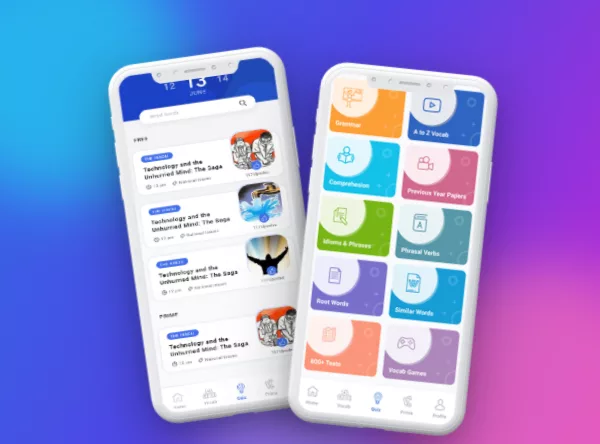




Stay updated with The Hindu Editorial Vocab24 app, your definitive source for breaking news and comprehensive coverage from India and around the globe. Whether it's political developments, business updates, sports highlights, the latest technology trends, or current events, The Hindu brings live, accurate, and reliable news directly to your device.
Don’t fall for sensationalized or fake news shared online. Read and share accurate updates with friends and family through The Hindu Editorial Vocab24 app. Download it today!
News Coverage in The Hindu Editorial Vocab24 App
Breaking News: Receive instant notifications on breaking news stories as they unfold. Stay informed about major events and developments in India and around the world with live blogs, news in shorts videos, and concise articles.
Politics: Get the latest updates on Indian politics, including elections, policy changes, government decisions, and political events that shape the nation.
Business and Economy: Stay ahead in the economic landscape with detailed business news and market analysis. Learn about stock market trends, financial reports, corporate news, and economic developments to make informed investment decisions.
Current Events: Follow stories on social issues, policy changes, global events, and daily current affairs, tailored for UPSC and other competitive exam preparations.
Technology: Keep up with the latest gadgets, innovations, and tech trends. Read expert reviews and analyses in short, concise updates on cutting-edge technology from India and beyond.
Sports: Never miss a moment of your favorite sports. Get live scores, match reports, and expert analysis on cricket, football, tennis, and more.
International News: Stay informed about global events and geopolitical developments, including the Russia-Ukraine war, Israel-Palestine conflict, and other key international stories.
Local News: Stay connected to your community with the latest updates on city events, issues, and local news. Coverage includes hyperlocal updates from cities like Bangalore, Chennai, Delhi, Hyderabad, Mumbai, Kolkata, and more.
Trending Topics: Discover what's trending today with the most talked-about stories and hot topics across India and the world.
Experience journalism that values integrity, accuracy, and reliability. Download The Hindu Editorial Vocab24 app today and stay connected with the world.
Subscribe to our newsletter!







