

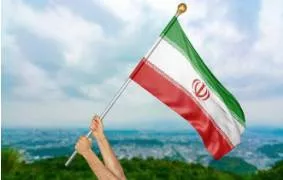
The iranian crisis is not yet over
When revolutionary regimes stagnate (cease developing), confusion and chaos reign, and both are palpably (clearly) true of the Islamic Republic of Iran today. Amid a deep economic, political and now social crisis, many on the ground in Iran and even more observing from abroad don’t know what to think or to do. The recent protests which spread around Iran in the waning days of 2017 and early 2018 represented the largest public display of discontent in Iran since the 2009 Green Movement.Beyond Tehran
Unlike the 2009 Green Movement, which was largely a product of the urban middle class youth in Tehran, the recent unrest in Iran seems to reflect the economic grievances of the lower and working classes, alienated from institutional politics and suffering heavily from the consequences of an unjust and unequal management of the Iranian economy. As a result, these protests have been largely driven by disaffected young people in rural areas, towns and small cities who seized a pretext to express their frustrations with economic woes that are caused by Iran’s foreign policy, as the country has been largely involved in both the Syrian conflict and turmoil in Yemen.
However, more than two weeks ago, the hard-liners who encouraged the rioters to direct their economic frustrations against the reformist government of President Hassan Rouhani had no idea that a small regional expression of dissent would take on a life of its own and turn into a general uprising. The protests, therefore, turned not only into a reaction over rampant inflation, continuous corruption and rising prices, but also focused on the crisis of legitimacy of the Islamic regime in Iran, totally misunderstood by a generation of Iranians who were too young to remember the revolution of 1979.
The growing generational gap between the Islamic state and the Iranian youth, particularly young women, has never been wider. In the ‘last 25 years Iran has been on a course of major political and societal evolution, as the increasingly young population has become more educated, secular and rebellious’.
An ‘explosive mix of a growing population — which led to a youth bulge (an unusual temporary increase in number) — combined with urbanisation, an increasing unemployment rate and the rapid expansion of university education, produced new sociological actors in Iran who were essentially young and educated (and mostly women, in fact) but with no political, economic or social future. As a result, a generational gap divided Iranian society between moneymaking and powerful conservatives and young rebels without a cause. Iran became a society divided between rich supporters of the regime and poor rebels with no ideology and no political leaders. On one side are those who use power to make money, and on the other side are those who disobey the social and political order’.
Political fragmentation
A large segment of the youth in Iran have access to ‘satellite television and the Internet and see how their counterparts in the rest of the world, particularly in the West, are living, and they long for the same lifestyle’. Recent events indicate the impact of a long-term demographic problem which has no short term remedies and which foretells certain unavoidable truths for the Iranian regime — that undeniably, a young and restless population can only be contained and repressed for so long. For the past 40 years the Islamic regime has continuously searched for an ‘appropriate approach to cope with the challenge of governance while contending with a perpetual (uninterrupted) struggle for power between competing tendencies and grave regional and international challenges’. Political fragmentation within Iran has never been more evident, and the clerical elite have never been challenged more clearly, both at the domestic and international level.
As recent riots in cities around Iran reveal, despite the subjects having been systematically arrested or killed by the authorities, the tension between discontented youth and the regime will continue. It happens that Iranians remain unsurprisingly unreconciled to theocracy. Moreover, even when protests in Iran start over economic issues, as in the past few weeks, it seems that people are not just ‘demonstrating for better working conditions or pay, but insisting on wholesale rejection of the system itself’. The widespread waves of protests that have swept Iran practically every ten years suggest the gradual meltdown of the theocratic ideology in Iran.
Let us not forget that ‘Iran’s recent violent protests surged among the nation’s poor, presumed bedrock supporters of the regime’, who have been disappointed by the limited economic and social improvements of the nation. The Iranian government’s promises to revitalise the Iranian economy after the re-election of Mr. Rouhani as President must be seen against the rise of youth unemployment which stands today at more than 40%. Also, those young Iranians who supported the nuclear deal of 2015 between the Rouhani cabinet and the Obama administration considered it as an ‘opportunity for Iranian civic actors to enable and empower Iran’s civil society space’.
Almost ten years ago, what was known as the Green Movement of 2009 ‘changed the destiny of the Iranian civil society. The unprecedented protests that followed the presidential elections presented serious challenges to the moral status of the theological sovereignty and its legitimacy in the world. The public anger and the ensuing (following or occurring as a consequence) infighting among the founding architects of the revolution presented the most serious challenge to Iran’s clerical regime since it replaced the Shah in 1979. Those among the reformists who believed that the system allowed scope for reform found themselves face-to-face with a theological-political structure that used extreme violence to ensure its legitimacy’.
The reformists’ silence
Strangely, the reformists were totally absent in leading or participating in the recent unrest in Iran. Iranian reformists, like former President Mohammad Khatami, could have provided leadership but decided to stay out of the action. Some have attributed the reformists’ reluctance to their fear of Iran turning into a new Syria, in other words, a war-torn country heading for “failed state” status and threatening the region’s fragile stability. This is certainly not what Saudi Arabia, Israel and Donald Trump’s America are looking for.
As a result, while the recent protests engulfed (घेर लेना) Iranian cities of all sizes and the country’s lower class population, the reaction among political leaders around the globe has been far from united. While Mr. Trump endorsed the protests in Iran, advocating change, the European leaders along with Russia’s Vladimir Putin took a more cautious tone, pointing to the “unpredictable outcome” of the Arab Spring. Even Saudi Arabia, Iran’s arch-enemy in the region, stayed unusually quiet.
One way or another, both inside and outside Iran, observers are worried about the future. All this as Iran might be leading to a new period of political repression and economic hardship, while its population continues to grow, with few new jobs, and more international isolation. It looks like the Iranian crisis is not yet over.



Top court quashes FIRs against Gen Z protesters
Sep 04, 2026






Stay updated with The Hindu Editorial Vocab24 app, your definitive source for breaking news and comprehensive coverage from India and around the globe. Whether it's political developments, business updates, sports highlights, the latest technology trends, or current events, The Hindu brings live, accurate, and reliable news directly to your device.
Don’t fall for sensationalized or fake news shared online. Read and share accurate updates with friends and family through The Hindu Editorial Vocab24 app. Download it today!
News Coverage in The Hindu Editorial Vocab24 App
Breaking News: Receive instant notifications on breaking news stories as they unfold. Stay informed about major events and developments in India and around the world with live blogs, news in shorts videos, and concise articles.
Politics: Get the latest updates on Indian politics, including elections, policy changes, government decisions, and political events that shape the nation.
Business and Economy: Stay ahead in the economic landscape with detailed business news and market analysis. Learn about stock market trends, financial reports, corporate news, and economic developments to make informed investment decisions.
Current Events: Follow stories on social issues, policy changes, global events, and daily current affairs, tailored for UPSC and other competitive exam preparations.
Technology: Keep up with the latest gadgets, innovations, and tech trends. Read expert reviews and analyses in short, concise updates on cutting-edge technology from India and beyond.
Sports: Never miss a moment of your favorite sports. Get live scores, match reports, and expert analysis on cricket, football, tennis, and more.
International News: Stay informed about global events and geopolitical developments, including the Russia-Ukraine war, Israel-Palestine conflict, and other key international stories.
Local News: Stay connected to your community with the latest updates on city events, issues, and local news. Coverage includes hyperlocal updates from cities like Bangalore, Chennai, Delhi, Hyderabad, Mumbai, Kolkata, and more.
Trending Topics: Discover what's trending today with the most talked-about stories and hot topics across India and the world.
Experience journalism that values integrity, accuracy, and reliability. Download The Hindu Editorial Vocab24 app today and stay connected with the world.
Subscribe to our newsletter!







