

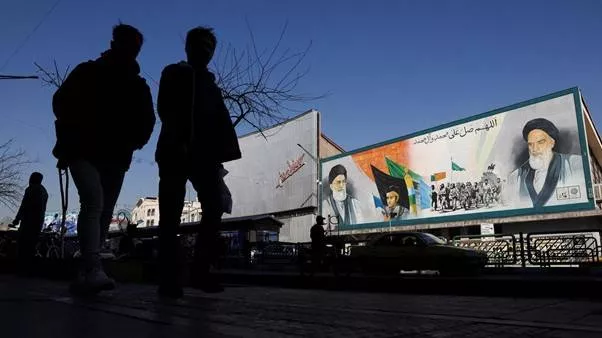
Tehran reenters the global geopolitical spotlight
In late 2013, the White House in Washington DC — then under President Barack Obama — embarked on a multi-national, complicated, and ambitious journey to negotiate with Iran to curtail its nuclear programme. The United States, along with some of its allies, particularly Israel, was at a level convinced that Tehran had set out to develop a nuclear weapons programme. The negotiations, which involved a consortium of United Nations Security Council Members along with Germany, collectively known as the P5+1, managed to reach an agreement in 2015 called the Joint Comprehensive Plan of Action (JCPOA). The aim was to install guardrails around the Shia power’s nuclear activities, which its then President Hassan Rouhani and the Supreme Leader Ayatollah Khamanei maintained, was only for civil use.The Trump years
In 2018, as the first presidency of Donald Trump began, the U.S. exited the agreement leaving not just Iran but also its allies in Europe in the lurch. Russia and China, technically allies for Iran, but not wanting a nuclearised West Asia, were also left stumped. Mr. Trump had long advocated that the JCPOA was farcical and negotiated in a way which did not secure American interests. Fast forward to 2025. Now, in Mr. Trump’s second run as President, the U.S., with Israel, bombed Iran’s nuclear and air defence sites followed by a narrative that the country’s capacities to pursue such weapons lied in tatters.
However, a few months following the attacks, Mr. Trump is now chasing a deal through diplomacy, in a very similar manner as Mr. Obama did and succeeded, albeit not a perfect one. Israel’s Prime Minister Benjamin Netanyahu, who, in a speech at the United Nations in 2012, had shown a drawing depicting the various stages at which Iran’s nuclear programme had progressed, kept stopping Tehran as a non-negotiable security aim. With Mr. Obama, and even President Joe Biden later, Mr. Netanyahu had limited success. But with Mr. Trump, it was an opportunity as the Israeli leader managed to market his state’s celebrated intelligence apparatus’s assessment that Iran was racing towards nuclear weapons. While the U.S.’s assessments differed, Mr. Netanyahu’s whisperings in Mr. Trump’s ear won the battle.
Now, in 2026, even as the U.S. moves notable military capacity in the region while simultaneously holding talks with Iran, hosted by long-time mediator Oman, Mr. Trump seemingly wants his own JCPOA. The language from the White House today resembles that of the pre-Obama era. “... I insisted that negotiations with Iran continue to see whether or not a deal can be consummated,” he said. “If it can, I let the Prime Minister know that will be a preference. If it cannot, we will just have to see what the outcome will be,” Mr. Trump said while meeting Mr. Netanyahu, who, once again, had to rush to the White House as U.S. interlocutors met their Iranian counterparts in Muscat.
No escalation is what the Arab powers want
Arab powers of the Gulf, who over the past year or two have committed hundreds of billions of dollars of investment towards Mr. Trump, despite their own troubles with Tehran, do not want to see military escalation. And it is not just them. Others across the world would rather see talks succeed than fail, avoiding pushing the region into another conflict which could run for years should it spread. Iran has made no bones that it retains the kinetic capacity to strike back — a claim that is increasingly being taken seriously by analysts and officials alike. Further threats from Tehran that any strikes this time will be met by retaliation targeting U.S. military facilities in the region, largely situated in the Gulf states, have led to anxieties peaking. The stress is not coming from Iran’s intentions, but more from an inability to predict or influence Mr. Trump’s thinking.
The stakes for India
The Iran file coming back as a point of geopolitical friction, at a moment when the world identifies more as a disordered than an ordered one, poses renewed challenges for many. India, for example, was a supporter of the erstwhile JCPOA process. In fact, New Delhi had highlighted to its peers in Tehran the perks of such an agreement, such as ease of sanctions and a return of oil trade. Iran was at a point one of the top two oil suppliers for India, only to lose out as U.S. pressure peaked. JCPOA was seen as the way out. But even as focus usually comes down to oil, or the Chabahar Port, a long-standing Indian connectivity investment, Tehran remains an important political player — for its fractious relationship with Pakistan, its practicality with the Taliban in Afghanistan, and its posturing in Central Asia vis-à-vis Turkish and Pakistani influences. Iran offers much for India than just its West Asia policies.
Finally, Iran also stands at a crossroads. Internal protests have been consistent, gnawing into the state’s political stability. The ‘moderates’, once powerful, have had to align with their conservative peers to build a nationalists narrative following the U.S. bombings. Domestic power plays, much like before, will heavily impact external outcomes. Any success of these talks will be a better option moving forward than the alternatives being presented by the largest American military build-up in the region since 2003.
Iran returns to haunt the United States and West Asia alike
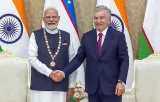
Ensure peace, freedom of navigation, PM urges Iran
Sep 03, 2026





Stay updated with The Hindu Editorial Vocab24 app, your definitive source for breaking news and comprehensive coverage from India and around the globe. Whether it's political developments, business updates, sports highlights, the latest technology trends, or current events, The Hindu brings live, accurate, and reliable news directly to your device.
Don’t fall for sensationalized or fake news shared online. Read and share accurate updates with friends and family through The Hindu Editorial Vocab24 app. Download it today!
News Coverage in The Hindu Editorial Vocab24 App
Breaking News: Receive instant notifications on breaking news stories as they unfold. Stay informed about major events and developments in India and around the world with live blogs, news in shorts videos, and concise articles.
Politics: Get the latest updates on Indian politics, including elections, policy changes, government decisions, and political events that shape the nation.
Business and Economy: Stay ahead in the economic landscape with detailed business news and market analysis. Learn about stock market trends, financial reports, corporate news, and economic developments to make informed investment decisions.
Current Events: Follow stories on social issues, policy changes, global events, and daily current affairs, tailored for UPSC and other competitive exam preparations.
Technology: Keep up with the latest gadgets, innovations, and tech trends. Read expert reviews and analyses in short, concise updates on cutting-edge technology from India and beyond.
Sports: Never miss a moment of your favorite sports. Get live scores, match reports, and expert analysis on cricket, football, tennis, and more.
International News: Stay informed about global events and geopolitical developments, including the Russia-Ukraine war, Israel-Palestine conflict, and other key international stories.
Local News: Stay connected to your community with the latest updates on city events, issues, and local news. Coverage includes hyperlocal updates from cities like Bangalore, Chennai, Delhi, Hyderabad, Mumbai, Kolkata, and more.
Trending Topics: Discover what's trending today with the most talked-about stories and hot topics across India and the world.
Experience journalism that values integrity, accuracy, and reliability. Download The Hindu Editorial Vocab24 app today and stay connected with the world.
Subscribe to our newsletter!







