

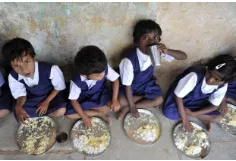
States should spend more on nutrition
Mohandas Karamchand Gandhi once said, “There are people in the world so hungry, that God cannot appear to them except in the form of bread.” Sadly, hunger and undernutrition continue to plague our country. India’s record in addressing undernutrition is abysmal. With a stunting rate of 38.4%, India accounts for about a third of the world’s stunted children. The proportion of wasted children in India increased from 19.8% in 2005-06 to 21% in 2015-16. Moreover, in states like Bihar and Madhya Pradesh, more than 40% of the children are underweight. Thus, nutrition should be high on India’s list of development priorities.To be fair, India has a number of nutrition intervention programmes under different ministries. In absolute terms, India’s expenditure on nutrition schemes is quite high at Rs2.98 trillion but this is woefully inadequate if we take into account the level of deprivation in India. Moreover, dramatic changes in the fiscal architecture based on the recommendations of the Fourteenth Finance Commission have raised serious concerns with regard to public spending on nutrition.
There has been a substantial decline in allocation for Central schemes. The Integrated Child Development Services Scheme (ICDS), a key scheme which provides basic education and health services to women and children below six years, suffered serious budget cuts. Allocation for ICDS declined consistently from Rs16,684 crore in 2014-15 to Rs15,489 crore in 2015-16 and Rs14,736 crore in 2016-17. Although 2017-18 saw an increase in the allocation for ICDS to Rs16,745.2 crore, this figure is only 0.5% higher than the actual expenditure incurred in 2014-15.
In the case of other schemes, like the Rajiv Gandhi Scheme for Empowerment of Adolescent Girls, also known as Sabla, and the Mid-Day Meal Scheme (MDMS), budget cuts were deeper. The outlay for Sabla declined from Rs622.4 crore in 2014-15 to Rs475.2 crore in 2015-16, and to Rs460 crore in 2016-17. In 2017-18, the allocation has been kept at the same level as 2016-17, which actually implies a decrease in allocation in real terms.
In the case of MDMS, there was a persistent decline in allocation from Rs10,917.6 crore in 2013-14 to Rs10,523.4 crore in 2014-15, and further down to Rs9,144.9 crore in 2015-16. In 2017-18, there was only a 3% increase in allocation, from Rs9,700 crore in 2016-17 to Rs10,000 crore. Again, the allocation in 2017-18 is lower than the actual expenditure of Rs10,761.4 crore incurred under the scheme in 2012-13. Even the 3% increase over last year does not mean much if inflation is factored in.
However, some Central schemes did witness an increase in allocation. The Maternity Benefit Programme, a conditional cash transfer to pregnant and lactating women to provide compensation for wage loss and adequate nutrition and rest, witnessed an increase in allocation from Rs634 crore in 2016-17 to Rs2,700 crore in 2017-18. The total cost of the programme up to 2019-20 is Rs12,661 crore for 5.17 million beneficiaries. However, nutrition experts regard this as inadequate because the number of beneficiaries under other schemes, notably the Janani Suraksha Yojana, was much higher at about 7.5 million, and that too in 2015-16.
Although the whole argument behind fiscal restructuring was that with more resources at their disposal, states would step up their expenditure, data on state budget allocation for nutrition schemes is not encouraging.
In fact, 2015-16 witnessed a decline in budget allocation in many states. In Uttar Pradesh, the total budget outlays for nutrition-specific interventions declined from Rs4,358.1 crore in 2014-15 to Rs4,054.9 crore in 2015-16, and subsequently increased to Rs4,573.3 crore in 2016-17. Budget outlays for micronutrient supplementation and deworming declined from Rs67.7 crore in 2014-15 to Rs58.9 crore in 2015-16, and Rs56.5 crore in 2016-17.
Similarly, in Odisha, the budget for nutrition-specific interventions declined from Rs1,188 crore in 2014-15 to Rs961 crore in 2015-16, and then increased to Rs1,302 crore in 2016-17.
In Bihar, there was a small increase in the allocation for nutrition-specific interventions, from Rs1,778 crore in 2014-15 to Rs1,972 crore in 2016-17. Rajasthan witnessed a modest increase in outlay for nutrition-specific schemes from Rs975 crore in 2014-15 to Rs1,022 crore in 2015-16 and Rs 1,106 crore in 2016-17. But budget allocation for nutrition-specific schemes in 2016-17 is 13% lower than the budget allocation in 2014-15.
Thus, greater fiscal autonomy has not yet translated into higher spending on nutrition by states.
Two critical questions emerge. First, can the Centre renege on its responsibility at a time when a large proportion of India’s children are undernourished?
Second, given that states have a greater responsibility, what can be done to ensure that they step up their allocation for nutrition?
While the former is an ideological question, here are some recommendations for the latter. Firstly, the Centre and state should work together to set nutrition targets for every state and district. Secondly, the Centre should play a more proactive role in monitoring the nutrition programmes of every state. Lastly, effective steps need to be undertaken to upgrade capacity at the state level.










Stay updated with The Hindu Editorial Vocab24 app, your definitive source for breaking news and comprehensive coverage from India and around the globe. Whether it's political developments, business updates, sports highlights, the latest technology trends, or current events, The Hindu brings live, accurate, and reliable news directly to your device.
Don’t fall for sensationalized or fake news shared online. Read and share accurate updates with friends and family through The Hindu Editorial Vocab24 app. Download it today!
News Coverage in The Hindu Editorial Vocab24 App
Breaking News: Receive instant notifications on breaking news stories as they unfold. Stay informed about major events and developments in India and around the world with live blogs, news in shorts videos, and concise articles.
Politics: Get the latest updates on Indian politics, including elections, policy changes, government decisions, and political events that shape the nation.
Business and Economy: Stay ahead in the economic landscape with detailed business news and market analysis. Learn about stock market trends, financial reports, corporate news, and economic developments to make informed investment decisions.
Current Events: Follow stories on social issues, policy changes, global events, and daily current affairs, tailored for UPSC and other competitive exam preparations.
Technology: Keep up with the latest gadgets, innovations, and tech trends. Read expert reviews and analyses in short, concise updates on cutting-edge technology from India and beyond.
Sports: Never miss a moment of your favorite sports. Get live scores, match reports, and expert analysis on cricket, football, tennis, and more.
International News: Stay informed about global events and geopolitical developments, including the Russia-Ukraine war, Israel-Palestine conflict, and other key international stories.
Local News: Stay connected to your community with the latest updates on city events, issues, and local news. Coverage includes hyperlocal updates from cities like Bangalore, Chennai, Delhi, Hyderabad, Mumbai, Kolkata, and more.
Trending Topics: Discover what's trending today with the most talked-about stories and hot topics across India and the world.
Experience journalism that values integrity, accuracy, and reliability. Download The Hindu Editorial Vocab24 app today and stay connected with the world.
Subscribe to our newsletter!







