

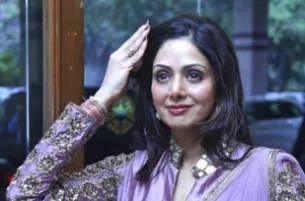
Sridevi the actor
Sridevi, Hindi cinema’s first female superstar, died on Saturday at the age of 54 after suffering a cardiac arrest in Dubai. As the news of her death settles, the sadness will eventually give way to countless happy memories.First will come the songs. Hawa Hawaii, from Mr India, will be played, and everyone will marvel all over again at Sridevi walking an impossible line between comedy, camp and glamour. Kaate Nahin Katate, from the same film, will be recalled as well—six and a half minutes of sensual abandon in a family entertainer. So will Chaalbaaz’s Na Jaane Kahan Se Aayi Hai, with its mutated Gene Kelly moves and translucent raincoat and hat, and the catch-in-the-throat simplicity of Ae Zindagi Gale Laga Le from Sadma.
Then we’ll remember the performances. In his memoir Guns and Thighs, in a chapter titled “My Sridevi”, filmmaker Ram Gopal Varma wrote, “Even though her acting prowess was evident from her debut film, her superstardom kind of gave prominence only to her sex-symbol image, which was so strong that it blinded everybody to her tremendous talent.” But even at the height of her commercial success, Sridevi could throw curveballs at the audience. One such zigzagging pitch was 1983’s Sadma, in which she played a woman suffering from amnesia who regresses to a child-like state, and is taken care of by Kamal Haasan.
Sadma was Balu Mahendra’s remake of his own Tamil film Moondram Pirai, which also starred Sridevi. It’s a daring, complex film, one which would have sparked a lot of debate had it released today. By committing so wholly to the character’s childlike mannerisms, Sridevi manages to make the character both endearing and discomfiting; imagine the scene where she licks ice-cream off a melting cone, but with less sympathetic onlookers.
Though Himmatwala was probably the first time the Hindi audience took note of the actor, she was already popular in southern cinemas. Karan Bali, film critic and director of An American in Madras, spoke about how Sridevi was, from the beginning, regarded as a more-than-capable actor, with well-received turns in films by K. Balachander, P. Bharathiraja and Balu Mahendra. “She was really good in the original Red Rose, unlike Poonam Dhillon in the Hindi version,” Bali says over the phone. “I liked her in Moondram Pirai. And I liked her a hell of a lot in 16 Vayathinile.”
I ask Bali if Sridevi’s move to Hindi cinema and her subsequent superstardom might have limited her creative options. “Actually no, because in Hindi cinema she reached the position where roles were being written around her and she could do heroine-centric cinema,” he says. “Regional cinema stories might have been more rooted, but this gave her a pan-India audience.” Later in our conversation, he says that Sridevi gave the impression of “coming alive on screen”, of commanding the viewer’s attention like stars such as Madhubala once did.
Given the paucity of star comics and comediennes in Hindi cinema today, it’s nice to think back to a time when Juhi Chawla and Sridevi were not only two of the biggest names in the industry, but also consistently funny onscreen. Whenever Sridevi’s acting abilities are questioned, the two films usually trotted out are Sadma and Lamhe—the 1991 Yash Chopra film in which Anil Kapoor falls for a Rajasthani woman, who marries someone else and then dies, and later falls for her daughter, who looks exactly like her. These are fine performances, but limiting oneself to the serious stuff is to miss out on the comic genius of Sridevi. Who could be as delightful saying “shoo” to a cockroach as she is in Mr India? Or, in the same film, the way she nonchalantly picks pieces of fruit off her hat and eats them. Or when she drunkenly slurs her thanks to Sunny Deol for offering to pay their beer tab in Chaalbaaz. Or the vaudeville-like sideways hop behind a pillar that she does in Judaai to avoid being seen by Urmila Matondkar.
What makes Sridevi’s sudden demise all the more cruel is that her return to the Hindi screen, only two films old, promised so much. In English Vinglish and Mom we saw a new side of the actor: pared-down, quietly authoritative. The former, directed by Gauri Shinde, has a wonderful lead part, and Sridevi’s gradual flowering as a shy homemaker who joins an English-learning course is a delight to watch. And Ravi Udyawar’s Mom showed that she was up for a challenge, playing a schoolteacher who exacts revenge after her stepdaughter is raped. Irrespective of what one feels about the film’s politics, it’s difficult to suppress a thrill when she whispers to one of the perpetrators, “Aa gayi uski maa (her mother is here)”.
In an interview at the time of English Vinglish’s release, Adil Hussain praised his co-star, saying: “She is someone who knows what is to be done precisely. She is very observant at the sets. She can foresee and foretell.” On Sunday, still processing the news of her passing, he told ABP News about the first time he met her. “I told her, I saw Sadma and I didn’t eat for two days after that.”
Shekhar Kapur, Sridevi’s Mr India director, tweeted on Sunday: “A beautiful story just ended. An amazing spirit just vanished leaving us with amazing love and incredible grief.” This reminded me of a recent, memorable Sridevi moment: not a performance, and not on the big screen. Recording a message for her Pakistani co-stars Sajal Ali and Adnan Siddiqui in Mom—they couldn’t be in India for the film’s promotion and premiere—Sridevi speaks movingly about their contribution and comes close to breaking down. “Adnanji… Sajal mera bachcha… I really miss you all,” she says to the camera. Amazing love, incredible grief.








Stay updated with The Hindu Editorial Vocab24 app, your definitive source for breaking news and comprehensive coverage from India and around the globe. Whether it's political developments, business updates, sports highlights, the latest technology trends, or current events, The Hindu brings live, accurate, and reliable news directly to your device.
Don’t fall for sensationalized or fake news shared online. Read and share accurate updates with friends and family through The Hindu Editorial Vocab24 app. Download it today!
News Coverage in The Hindu Editorial Vocab24 App
Breaking News: Receive instant notifications on breaking news stories as they unfold. Stay informed about major events and developments in India and around the world with live blogs, news in shorts videos, and concise articles.
Politics: Get the latest updates on Indian politics, including elections, policy changes, government decisions, and political events that shape the nation.
Business and Economy: Stay ahead in the economic landscape with detailed business news and market analysis. Learn about stock market trends, financial reports, corporate news, and economic developments to make informed investment decisions.
Current Events: Follow stories on social issues, policy changes, global events, and daily current affairs, tailored for UPSC and other competitive exam preparations.
Technology: Keep up with the latest gadgets, innovations, and tech trends. Read expert reviews and analyses in short, concise updates on cutting-edge technology from India and beyond.
Sports: Never miss a moment of your favorite sports. Get live scores, match reports, and expert analysis on cricket, football, tennis, and more.
International News: Stay informed about global events and geopolitical developments, including the Russia-Ukraine war, Israel-Palestine conflict, and other key international stories.
Local News: Stay connected to your community with the latest updates on city events, issues, and local news. Coverage includes hyperlocal updates from cities like Bangalore, Chennai, Delhi, Hyderabad, Mumbai, Kolkata, and more.
Trending Topics: Discover what's trending today with the most talked-about stories and hot topics across India and the world.
Experience journalism that values integrity, accuracy, and reliability. Download The Hindu Editorial Vocab24 app today and stay connected with the world.
Subscribe to our newsletter!







