

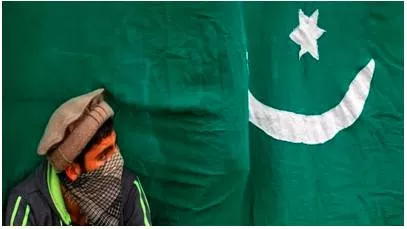
Soon pakistan will be next sri lanka what it means for india as china’s debt trap grows
The dynamics of South Asian geopolitics is all set to change in the coming months with Pakistan going the Sri Lanka way, buckling under the debt pressure of China. Many other economies in the region are likely to face similar headwinds considering the economic downturn if the Russia-Ukraine conflict does not abate soon. For India, the economic and political crisis in Pakistan is both a challenge and an opportunity to script a new chapter in geopolitics and geo-economics.The Shehbaz Sharif government has many things in common with ousted PM Imran Khan’s regime — its readiness to bow to the diktats of the Pakistan Army is only one of them. Add to the list the government’s desperate need for financial assistance to avoid an economic catastrophe. And like its predecessor, Sharif can only look at Gulf states for help.
Pakistan urgently needs billions of dollars infused into its foreign reserve to ward off payment defaults. Besides, the steady flow of oil on credit has to be kept up to avoid scarcity and a riotous situation. It is clear that the western neighbour is on its way to meet the fate of Sri Lanka.
Uncertainty all around
Economic profligacy, rampant corruption and excessive spending on army, whose agencies remain preoccupied in perpetrating terrorism in India and elsewhere, can be considered to be the hallmark of Pakistan’s economic planning. While Imran Khan lamented of corruption at high places — “countries go bankrupt and become indebted when the head of state/government and his ministers are corrupt” — the present interior minister Rana Sanaullah called the former PM’s tenure a rule by “an incompetent mob”.
Meanwhile, the people of Pakistan are having to tighten their belts and prepare for a bigger disaster than the one they have faced so far. The country’s central bank said its foreign exchange reserves declined by $145 million to reach $10 billion by mid May. The negative foreign reserve inflows, trade and current account deficit, and mounting debt repayment burden has forced the government to hold negotiations with the International Monetary Fund (IMF) for a bailout package.
Under pressure from the IMF, the government has increased the retail price of cooking oil, palm oil and fuel to an all-time high. The rollback in fuel subsidies and skyrocketing prices have resulted in chaotic situations on the streets, which could go out of control anytime. To add fuel to the fire, the ousted PM Imran Khan is all set to make the most of the discontent and vitiate the atmosphere. Many friendly countries are not ready to bail the Sharif government out as it is a temporary one and not likely to complete its full term.
Tough to maintain ties
Pakistan’s beeline to the Gulf states will require it to amend many of its foreign policy decisions, ostensibly taken under pressure from either the US or China. Islamabad had proposed to mediate between the US and Iran on nuclear issues. The Central Asian countries have to depend on Iran and Pakistan to reach out to the Indian Ocean for trade. Both countries are on the Chinese development radar in Gwadar and Chabahar. The two countries are also required to cooperate on border issues and deal with the fallout of Afghan turmoil. Pakistan is under Chinese obligation to reign in the Baloch freedom fighters who are known to use the Iranian soil for refuge.
All these factors brought Islamabad and Tehran closer during the Imran Khan regime. Now, some of the Gulf states would want Pakistan to amend its Iran policy much to the annoyance of both China and the US. In any case, a bankrupt Pakistan is of little use to Tehran.
The US too is not happy with Pakistan in the face of its ongoing energy security projects with Iran. In fact, the Iran-Pakistan-India gas pipeline project was jettisoned a decade back as New Delhi felt the cost was very high and the prevailing security situation in Pakistan was not conducive to the success of the project. But Pakistan continued with the project, which was partially completed by the Iranian side. Pakistan had to withdraw from the agreement due to US sanctions on Iran much to the irritation of Tehran.
The China-Pakistan Economic Corridor (CPEC) was touted as a game changer for Pakistan’s economy. For China, it was a strategic move to construct a road through Pakistan-occupied Kashmir (PoK). India raised objections on PoK being usurped by China. Even as some of the CPEC projects are yet to begin, the ongoing ones do not seem to accrue any benefit to the local population. Pakistan’s inability to repay about $1.5 billion dollars of the outstanding dues is cited as a reason behind China halting some of the projects. In reality, though, it could be because of the resurgence of Covid-19 in China. In any case, the CPEC story seems to be over.
In a few months from now, with a bankrupt Pakistan, China could be looking for an alternative route to ports in the Indian Ocean. With the announcement of the Indo-Pacific Economic Framework for Prosperity and other factors, New Delhi has a window of opportunity to alter South Asia’s geopolitics to the best of its national interests and emerge as a strong trading partner in the region for anyone willing to come on board, including Beijing.











Stay updated with The Hindu Editorial Vocab24 app, your definitive source for breaking news and comprehensive coverage from India and around the globe. Whether it's political developments, business updates, sports highlights, the latest technology trends, or current events, The Hindu brings live, accurate, and reliable news directly to your device.
Don’t fall for sensationalized or fake news shared online. Read and share accurate updates with friends and family through The Hindu Editorial Vocab24 app. Download it today!
News Coverage in The Hindu Editorial Vocab24 App
Breaking News: Receive instant notifications on breaking news stories as they unfold. Stay informed about major events and developments in India and around the world with live blogs, news in shorts videos, and concise articles.
Politics: Get the latest updates on Indian politics, including elections, policy changes, government decisions, and political events that shape the nation.
Business and Economy: Stay ahead in the economic landscape with detailed business news and market analysis. Learn about stock market trends, financial reports, corporate news, and economic developments to make informed investment decisions.
Current Events: Follow stories on social issues, policy changes, global events, and daily current affairs, tailored for UPSC and other competitive exam preparations.
Technology: Keep up with the latest gadgets, innovations, and tech trends. Read expert reviews and analyses in short, concise updates on cutting-edge technology from India and beyond.
Sports: Never miss a moment of your favorite sports. Get live scores, match reports, and expert analysis on cricket, football, tennis, and more.
International News: Stay informed about global events and geopolitical developments, including the Russia-Ukraine war, Israel-Palestine conflict, and other key international stories.
Local News: Stay connected to your community with the latest updates on city events, issues, and local news. Coverage includes hyperlocal updates from cities like Bangalore, Chennai, Delhi, Hyderabad, Mumbai, Kolkata, and more.
Trending Topics: Discover what's trending today with the most talked-about stories and hot topics across India and the world.
Experience journalism that values integrity, accuracy, and reliability. Download The Hindu Editorial Vocab24 app today and stay connected with the world.
Subscribe to our newsletter!







