

What is national dental commission bill 2023 and how it plans to give indian dentistry a makeover
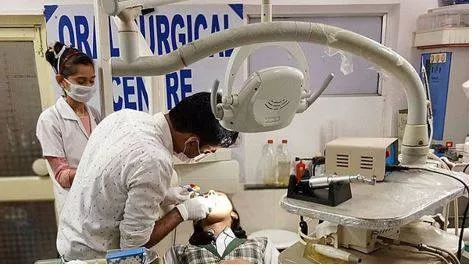
The bill, tabled this week, seeks to establish a National Dental Commission modelled after the NMC. Objectives include enhancing quality and affordability of dental education.Representative image of a dental clinic in India | Commons
Text Size: A- A+
New Delhi: Making dental education more “reasonably priced”, upholding higher standards in dentistry, and expanding access to high-quality oral healthcare — these are some of the objectives outlined in the National Dental Commission Bill 2023, tabled by Union Health Minister Mansukh Mandaviya Monday.
The new bill proposes the creation of a new regulatory and policymaking body called the National Dental Commission, which will replace the Dental Council of India. The proposed new body will also organise a common qualifying examination, called the National Exit Test (Dental), for all final year Bachelor of Dental Surgery (BDS) students.
Further, the bill proposes that the National Dental Commission will directly control the fees for 50 per cent of the seats in private dentistry institutions and work to align the regulatory structure of the dentistry education profession with international standards.
The dental bill, notably, has echoes of the National Medical Commission (NMC) Act 2019, which replaced the Medical Council of India with a government-appointed National Medical Commission, albeit amidst protests from some doctors.
Dentists who spoke to ThePrint, meanwhile, were optimistic about the new bill.
“New people come with fresh ideas, so I hope the commission, once it comes through, brings about real changes in the profession and dental education in India,” said Dr Manish Kumar, professor and head of the department of public health dentistry at GITAM Dental College and Hospital in Visakhapatnam. “However, it should not be like old wine in a new bottle.”
Here’s a look at the salient features of the National Dental Commission Bill 2023 and what it hopes to achieve through the new regulatory body and policies.
The bill proposes that the new National Dental Commission will work “to regulate the practice of dentistry in the nation, to offer high-quality, reasonably priced dental education, and to increase access to high-quality oral healthcare”.
The commission will have a chairperson, eight ex-officio members, and 24 part-time members, all selected by the Union government.
The eight ex-officio members will include representatives from the National Medical Commission (NMC), Union health ministry, and the All-India Institute of Medical Sciences (AIIMS), New Delhi.
Nineteen of the 24 part-time members will serve a two-year term, with the posts rotating among nominees from the states and Union territories.
Apart from controlling fees for half the seats in private dental colleges, the commission will establish boards to ensure the enforcement of quality standards in dental education.
The Undergraduate and Postgraduate Dental Education Boards will establish criteria and standards for institutions teaching dentistry.
On the other hand, the Dental Assessment and Grading Board will oversee the evaluation and grading of such colleges. It will also release evaluation results and rankings and have the authority to make decisions on degree de-recognition and withdrawal of recognition of colleges.
Additionally, the bill proposes the establishment of a Dental Advisory Council by the Union government. This council will provide advice to the commission and serve as a forum for the states and Union territories to express their opinions.
The proposed council will also provide recommendations to the commission on how to “improve equitable access to dental education and uniform system of examination”.
‘Dental education needs reforms’
Dental practitioners who spoke to ThePrint said that they anticipated positive changes with the National Medical Commission replacing the Dental Council of India.
“The NMC has brought many good changes in the way the medical sector works and I would expect results on the same lines in the field of dentistry too,” said Dr Sowmya K R, a dentist and the former editor of the Journal of Indian Association of Public Health Dentistry, a peer-reviewed publication of Indian Association of Public Health Dentistry.
Dr Manish Kumar, quoted earlier, said he anticipated improvements not just in the quality of dental education but in the implementation of government schemes.
He pointed out that while the Union government has proposed creating a post of dentist in every primary health centre (PHC) in the country, implementation remains pending in states.
“That’s mainly because it will take initial investment in setting up dental centres in PHCs,” he said. “I genuinely hope that once the National Dental Commission comes through, policies like this one are implemented across India,” he said.
In the area of education, Kumar pointed out there was a need to improve the quality of existing colleges rather than set up new ones.
“Except for the north-eastern parts of the country, there are a sufficient number of dental colleges in India which produce a large number of dentists every year,” he said. “The need of the hour is to ensure that these graduates are absorbed in the system and get quality education while they are in college.”
According to government data, there are nearly 2.89 lakh registered dentists in the country.










Stay updated with The Hindu Editorial Vocab24 app, your definitive source for breaking news and comprehensive coverage from India and around the globe. Whether it's political developments, business updates, sports highlights, the latest technology trends, or current events, The Hindu brings live, accurate, and reliable news directly to your device.
Don’t fall for sensationalized or fake news shared online. Read and share accurate updates with friends and family through The Hindu Editorial Vocab24 app. Download it today!
News Coverage in The Hindu Editorial Vocab24 App
Breaking News: Receive instant notifications on breaking news stories as they unfold. Stay informed about major events and developments in India and around the world with live blogs, news in shorts videos, and concise articles.
Politics: Get the latest updates on Indian politics, including elections, policy changes, government decisions, and political events that shape the nation.
Business and Economy: Stay ahead in the economic landscape with detailed business news and market analysis. Learn about stock market trends, financial reports, corporate news, and economic developments to make informed investment decisions.
Current Events: Follow stories on social issues, policy changes, global events, and daily current affairs, tailored for UPSC and other competitive exam preparations.
Technology: Keep up with the latest gadgets, innovations, and tech trends. Read expert reviews and analyses in short, concise updates on cutting-edge technology from India and beyond.
Sports: Never miss a moment of your favorite sports. Get live scores, match reports, and expert analysis on cricket, football, tennis, and more.
International News: Stay informed about global events and geopolitical developments, including the Russia-Ukraine war, Israel-Palestine conflict, and other key international stories.
Local News: Stay connected to your community with the latest updates on city events, issues, and local news. Coverage includes hyperlocal updates from cities like Bangalore, Chennai, Delhi, Hyderabad, Mumbai, Kolkata, and more.
Trending Topics: Discover what's trending today with the most talked-about stories and hot topics across India and the world.
Experience journalism that values integrity, accuracy, and reliability. Download The Hindu Editorial Vocab24 app today and stay connected with the world.
Subscribe to our newsletter!







