

Scientists detect 13 billion year old signal from ‘cosmic dawn’ using earth based telescopes
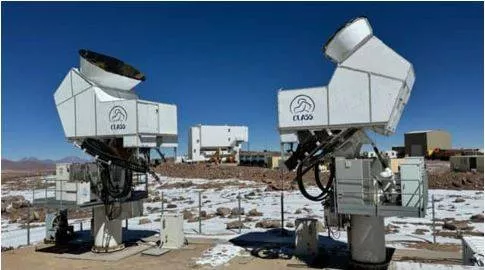
In what can be called a truly unique accomplishment, scientists seem to have detected a 13 billion-year-old signal using Earth-based telescopes. This feat allow them to see how the first stars impacted light emitted from the Big Bang. Astrophysicists measured polarised microwave light to create a clearer picture of what is known as Cosmic Dawn. They traced this by using telescopes high in the Andes mountains of northern Chile. Cosmic Dawn refers to the period roughly between 50 million to one billion years after the Big Bang, a time when the first stars, black holes, and galaxies were reportedly formed.The research led by Tobias Marriage, professor of physics and astronomy at Johns Hopkins University (JHU), is the first time ground-based observations have captured signals from the Cosmic Dawn. “People thought this couldn’t be done from the ground. Astronomy is a technology-limited field, and microwave signals from the Cosmic Dawn are famously difficult to measure,” Marriage was quoted as saying by the JHU website. “Ground-based observations face additional challenges compared to space. Overcoming those obstacles makes this measurement a significant achievement,” he added.
According to the official JHU website, cosmic microwaves are barely millimetres in wavelength and are very hard to detect. The signal from polarised microwave light is about a million times fainter, making it much more difficult to trace. Meanwhile, on Earth, broadcast radio waves, radar and satellites can drown their signal, and changes in the atmosphere, weather and even temperature can distort it. The researchers claimed that even under perfect conditions, measuring this type of microwave would need highly sensitive equipment.
Scientists from the US National Science Foundation’s Cosmology Larger Angular Scale Surveyor, or CLASS project, used telescopes that have been specifically designed to detect traces left by the first stars in the relic big bang light. This was previously only accomplished by technology deployed in space, such as the US National Aerospace and Space Administration Wilkinson Microwave Anisotropy Probe (WMAP) and European Space Agency Planck space telescopes.
As part of the project, the researchers compared the CLASS telescope data with data from the Planck and WMAP missions. They identified interference and narrowed in on a common signal from the polarised microwave light. Polarisation is when light waves collide into something and scatter.
“When light hits the hood of your car and you see a glare, that’s polarisation. To see clearly, you can put on polarised glasses to take away glare,” said author Yunyang Li, who was a PhD student at Johns Hopkins and then a fellow at the University of Chicago during the research. “Using the new common signal, we can determine how much of what we’re seeing is cosmic glare from light bouncing off the hood of the cosmic dawn, so to speak.”











Stay updated with The Hindu Editorial Vocab24 app, your definitive source for breaking news and comprehensive coverage from India and around the globe. Whether it's political developments, business updates, sports highlights, the latest technology trends, or current events, The Hindu brings live, accurate, and reliable news directly to your device.
Don’t fall for sensationalized or fake news shared online. Read and share accurate updates with friends and family through The Hindu Editorial Vocab24 app. Download it today!
News Coverage in The Hindu Editorial Vocab24 App
Breaking News: Receive instant notifications on breaking news stories as they unfold. Stay informed about major events and developments in India and around the world with live blogs, news in shorts videos, and concise articles.
Politics: Get the latest updates on Indian politics, including elections, policy changes, government decisions, and political events that shape the nation.
Business and Economy: Stay ahead in the economic landscape with detailed business news and market analysis. Learn about stock market trends, financial reports, corporate news, and economic developments to make informed investment decisions.
Current Events: Follow stories on social issues, policy changes, global events, and daily current affairs, tailored for UPSC and other competitive exam preparations.
Technology: Keep up with the latest gadgets, innovations, and tech trends. Read expert reviews and analyses in short, concise updates on cutting-edge technology from India and beyond.
Sports: Never miss a moment of your favorite sports. Get live scores, match reports, and expert analysis on cricket, football, tennis, and more.
International News: Stay informed about global events and geopolitical developments, including the Russia-Ukraine war, Israel-Palestine conflict, and other key international stories.
Local News: Stay connected to your community with the latest updates on city events, issues, and local news. Coverage includes hyperlocal updates from cities like Bangalore, Chennai, Delhi, Hyderabad, Mumbai, Kolkata, and more.
Trending Topics: Discover what's trending today with the most talked-about stories and hot topics across India and the world.
Experience journalism that values integrity, accuracy, and reliability. Download The Hindu Editorial Vocab24 app today and stay connected with the world.
Subscribe to our newsletter!







