

As u s trade truce gets back on track some china exporters ‘slowly dying’
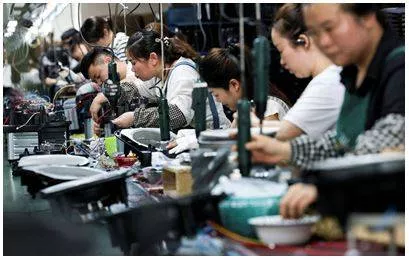
U.S.-China trade talks in London expected to restore trade truce; but tariff pain ongoing in China, small exporters struggling; some firms are selling at a loss, others are delaying wages; Washington likely to use tariff damage on China as leverage; but ‘Beijing can still bear more pain than Washington’.Jacky Ren, who owns a kitchen appliance factory in China, says exporters in his industry are now selling at a loss to keep their U.S. clients, with little power to say “no” to requests for lower prices on products facing higher tariffs.
If an exporter does not take such orders, Mr. Ren said, “you will die immediately. So, people think it’s better to die slowly.”
U.S. and Chinese officials agreed on Tuesday on ways to restore a trade truce and roll back duelling export restrictions, including on rare earths, where China has a near-monopoly in production and major leverage in the negotiations.
But in the meantime, the pain from U.S. tariffs is deepening in China, especially among smaller exporters such as Mr. Ren’s Gstar Electronics Appliance Co., which did not move part of production abroad after U.S. President Donald Trump imposed tariffs in his first term.
The growing pressure on companies to sell at a loss or to cut wages and jobs to stay afloat gives Washington a pain point to press Beijing in coming weeks and months as talks continue between the two sides to rebalance their trade relationship.
“If it lasts more than three or four months, I think many of these small and medium-sized enterprises will not be able to bear it,” said Zhiwu Chen, chair professor of finance at the University of Hong Kong. “This is definitely a bargaining chip for the United States.”
This week’s talks in London are expected to bring the two sides back to where they were after an initial discussion in Geneva last month, when they agreed to cut back tariffs from triple-digits to levels that are still damaging for both sides, but at least allow trade flows to resume.
U.S. levies on Chinese goods remain 30 percentage points higher than last year. In April, when tariffs were at their highest, the number of loss-making Chinese industrial firms rose 3.6% year-on-year to 164,467 — a whopping 32% of the total, official statistics show.
Industrial capacity utilisation dropped to 74.1% in the first quarter of this year — when Washington began raising tariffs — from 76.2% in the last quarter of 2024, according to Chinese government data. It remains near record lows.
And while China’s overall export growth rate of 4.8% in May might be interpreted as a sign of resilience — even as U.S. exports shrank by more than 30% — the intense competition among Chinese manufacturers looking for a slice of the subdued external demand is evident in falling prices.
“People forget, but the current tariff level is already quite painful,” says Alicia Garcia-Herrero, chief economist for Asia Pacific at Natixis.
“This is a weakness” for Beijing, she said, but cautioned “it’s not a big card” for Washington, which has its own worries over high inflation and product scarcity. Beijing was also confident it can bear more pain than its rival, she said.
Delayed wages
Before the meeting in Switzerland, Beijing had grown increasingly alarmed about internal signals that Chinese firms were struggling to avoid bankruptcies, including in labour-intensive industries such as furniture and toys, Reuters reported last month.
The subsequent rollback in tariffs may have saved China from a nightmare scenario of mass layoffs, but analysts say millions of jobs are at risk.
Candice Li, a marketing manager for a medical devices maker in southern China, says her employer has not paid wages for the past two months due to cashflow issues caused by new demands from U.S. clients who want to protect themselves from the tariff uncertainty.
Ms. Li says U.S. buyers no longer offer an advance deposit for their orders and demand to only make payments 120-180 days after delivery. And because other Chinese firms accept such terms, her employer is not in a position to fight back.
“They have us under their thumb,” Ms. Li said. “It looks calm on the surface, but it’s really hard to do business now.”
“The company can’t even manage to pay wages,” she said, adding a quarter of the staff left as a result.
“It’s really hard to keep the company running.”
To be sure, not all Chinese firms are under such strain. In the short term, neither the United States nor other countries can significantly reduce their reliance on supply chains from an economy that produces about a third of the world’s goods.
The pain is being felt mostly among small firms in sectors that don’t make essential products, such as Christmas decorations or where China can easily be replaced by other producers - for instance, in household appliances and other low-to-mid-range electronics.
Across the economy, industrial profits in China still rose 1.4% year-on-year in January-April, according to official statistics.
China’s headline resilience has been helped by U.S. importers frontloading orders ahead of higher tariffs, while Beijing ramped up fiscal spending and cut interest rates, said Shuang Ding, Standard Chartered’s chief Greater China and North Asia economist.
But as these mitigating factors wane in coming months, Beijing might grow increasingly uncomfortable, analysts warn.







Stay updated with The Hindu Editorial Vocab24 app, your definitive source for breaking news and comprehensive coverage from India and around the globe. Whether it's political developments, business updates, sports highlights, the latest technology trends, or current events, The Hindu brings live, accurate, and reliable news directly to your device.
Don’t fall for sensationalized or fake news shared online. Read and share accurate updates with friends and family through The Hindu Editorial Vocab24 app. Download it today!
News Coverage in The Hindu Editorial Vocab24 App
Breaking News: Receive instant notifications on breaking news stories as they unfold. Stay informed about major events and developments in India and around the world with live blogs, news in shorts videos, and concise articles.
Politics: Get the latest updates on Indian politics, including elections, policy changes, government decisions, and political events that shape the nation.
Business and Economy: Stay ahead in the economic landscape with detailed business news and market analysis. Learn about stock market trends, financial reports, corporate news, and economic developments to make informed investment decisions.
Current Events: Follow stories on social issues, policy changes, global events, and daily current affairs, tailored for UPSC and other competitive exam preparations.
Technology: Keep up with the latest gadgets, innovations, and tech trends. Read expert reviews and analyses in short, concise updates on cutting-edge technology from India and beyond.
Sports: Never miss a moment of your favorite sports. Get live scores, match reports, and expert analysis on cricket, football, tennis, and more.
International News: Stay informed about global events and geopolitical developments, including the Russia-Ukraine war, Israel-Palestine conflict, and other key international stories.
Local News: Stay connected to your community with the latest updates on city events, issues, and local news. Coverage includes hyperlocal updates from cities like Bangalore, Chennai, Delhi, Hyderabad, Mumbai, Kolkata, and more.
Trending Topics: Discover what's trending today with the most talked-about stories and hot topics across India and the world.
Experience journalism that values integrity, accuracy, and reliability. Download The Hindu Editorial Vocab24 app today and stay connected with the world.
Subscribe to our newsletter!







