

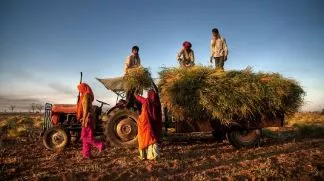
Savings not credit
More than four decades ago, the idea of microcredit was born out of a radical concept ~ poor people, when lent small amounts of money, pay back in a timely manner.In the meantime, that money can be put to use in ways that help boost income, such as rearing goats or weaving carpets. These occupations can help a family improve its standard of living.
As impoverished borrowers defaulted on debts at alarming rates and often with fatal consequences, many organisations questioned the power of credit.
This led to soul-searching by the industry and the rediscovery of a new radical idea, specifically the realisation that what the people really need ~ more urgently than business loans ~ is a safe place to save their money. This is what the development expert, Robert Vogel, once famously called the “forgotten half of rural finance”. It is now universally acknowledged that the most fundamental instrument of personal finance is the piggy-bank.
Access to the right financial tools at critical moments can determine whether a poor household is able to utilise an opportunity to move out of poverty or absorb a shock without being pushed deeper into debt. The poor don’t need simple banking tools; they need tools that can help them navigate their complex financial condition that is marked by needs and inconsistent income. Given the variability of their income, the poor are vulnerable to sickness or death in the family or weather-shocks which can be a drain on family finances and may even prevent families from hanging on to accumulated assets, including productive ones.
These shocks can quickly sink families into spells of extreme duress(pressure/coercion). As a result, the poor lead precarious (not securely held or in position; dangerously likely to fall or collapse.), anxiety-ridden lives with the risks looming much larger than opportunities. The benefits of microcredit are often extolled(praise enthusiastically), but debt remains debt; it always increases the risk and borrowers are sometimes overstretched. Savings can help people manage such risks and conveniently, with less monetary burden. And savings do matter, especially to women.
Even in traditional societies, no matter how oppressed women are or the degree of literacy, they are often the stewards(caretaker) of family savings. The key to effective financial inclusion is a safe and confidential savings account for every woman.
The older ones advise the young to keep a store of value that other family members don’t know about. In the event of an emergency, they will appreciate your initiative. Savings have been the mainstay(someone or something on which something else is based or relies.) of the impoverished and villagers cope with a veritably biblical(very great; on a very large scale.) range of hazards. Nature delivers snakes, scorpions, malaria, drought, floods, hurricanes, tuberculosis and pests that ravage (cause severe and extensive damage to.) crops and animals.
And then there are the environmental and vocational risks arising out of changes in market climates. Families are normally financially prepared for education and marriages, but health tragedies are usually wild surprises.
Credit can be both an opportunity and a risk for low-income families. It is necessary to open the doors, but this can also be a barrier. You can dig yourself into a fair amount of debt, and that prevents you from moving up financially. It may become a deepening hole Loans can be malignant (evil in nature or effect; malevolent.). Some people just cannot handle debts. Certain business enterprises are too risky. And there is always the temptation to take these costly loans and scrimp (be thrifty or parsimonious; economize.) on groceries.
When they miss loan payments because a lingering illness keeps them away from their business, they get into a regular default cycle.
This soon leads to acute indebtedness and makes life stressful for the entire family. Savings increase their capability to manage cash-flow, address the problems of uneven income, reduce the impact of the lean season, become more resilient in the face of shocks, build assets or invest in a family business and, most importantly, become empowered to improve one’s status within the households and communities.
A safe and smart savings account can transform the lives of villagers. Savings also serve as a form of self-insurance and enhance the sense of well-being. They are a gateway to self-employment and job creation. Lower-income families can convert savings into home purchases, education and microenterprise.
Despite conventional wisdom, poor people actually do save, even if the amount is meagre. They use a variety of informal mechanisms ~ hiding cash at home, lending money to relatives, participating in rotational savings groups with their neighbours, engaging deposit collectors, buying livestock or other commodities such as jewellery or construction materials. None of these measures can be reliable or safe. One major problem that the poor often face in accumulating savings is lack of easy access to savings accounts where they can deposit money. The money is kept in a tin at home, and is easily spent when a neighbour, who is in difficulty, approaches the person next door for help. By taking a loan from a microfinancier to buy a needed asset, and then making regular mandatory weekly payments out of her income, the housewife borrows to save. She no longer has spare cash lying around for others to fritter away (to squander or disperse).
The institutions that promote credit, to the exclusion of savings, place poor clients in bondage. To finance a child’s primary school education, clients must take on debt because they are not in a position to save. To deal with a health emergency or family food shortage, to finance weddings, funerals or social ceremonies, they must keep borrowing again and again. To acquire essential gadgets, they will need to borrow at prohibitive rates of interest that keep them on the debt treadmill since there is no other option. Financial institutions ought ought to realise that they owe poor people a safe, flexible entity to save.
With cedit alone, they cannot free them from the tangled web of poverty. Savings is a vital prerequisite (required as a prior condition.) for the emancipation from poverty. We must think beyond the standard microcredit model.
Modern microfinance ~ savings and insurance, and more flexible credit products ~ has often had a more important impact than simple credit, according to microfinance researcher Dean Karlan, who is also the founder of Innovations for Poverty Action.
As the former RBI Governor, Raghuram Rajan, had emphasised, credit should follow and not lead. “Savings habit, once inculcated, not only allows the customer to handle the burden of repayment better, it may also lead to better credit allocation.”


Philippines president rodrigo duterte slams unhcr
Apr 06, 2018

Oli to take up currency ban issue with pm modi
Apr 02, 2018
Curbing the khaps
Apr 01, 2018





Stay updated with The Hindu Editorial Vocab24 app, your definitive source for breaking news and comprehensive coverage from India and around the globe. Whether it's political developments, business updates, sports highlights, the latest technology trends, or current events, The Hindu brings live, accurate, and reliable news directly to your device.
Don’t fall for sensationalized or fake news shared online. Read and share accurate updates with friends and family through The Hindu Editorial Vocab24 app. Download it today!
News Coverage in The Hindu Editorial Vocab24 App
Breaking News: Receive instant notifications on breaking news stories as they unfold. Stay informed about major events and developments in India and around the world with live blogs, news in shorts videos, and concise articles.
Politics: Get the latest updates on Indian politics, including elections, policy changes, government decisions, and political events that shape the nation.
Business and Economy: Stay ahead in the economic landscape with detailed business news and market analysis. Learn about stock market trends, financial reports, corporate news, and economic developments to make informed investment decisions.
Current Events: Follow stories on social issues, policy changes, global events, and daily current affairs, tailored for UPSC and other competitive exam preparations.
Technology: Keep up with the latest gadgets, innovations, and tech trends. Read expert reviews and analyses in short, concise updates on cutting-edge technology from India and beyond.
Sports: Never miss a moment of your favorite sports. Get live scores, match reports, and expert analysis on cricket, football, tennis, and more.
International News: Stay informed about global events and geopolitical developments, including the Russia-Ukraine war, Israel-Palestine conflict, and other key international stories.
Local News: Stay connected to your community with the latest updates on city events, issues, and local news. Coverage includes hyperlocal updates from cities like Bangalore, Chennai, Delhi, Hyderabad, Mumbai, Kolkata, and more.
Trending Topics: Discover what's trending today with the most talked-about stories and hot topics across India and the world.
Experience journalism that values integrity, accuracy, and reliability. Download The Hindu Editorial Vocab24 app today and stay connected with the world.
Subscribe to our newsletter!







