

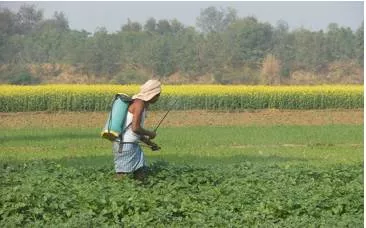
Price distortions in fertilisers will not help farming in the long run govt can offer acreage based cash transfers
The government can maintain a stock of basic fertilisers, including urea and DAP, to ensure no untoward price rise even in a decontrol scenario.Two ambitious schemes of the Narendra Modi government — Soil Health Card and mandatory neem-coating of urea — were supposed to promote balanced use of fertilisers. However, far from weaning farmers from urea, annual consumption of this nitrogenous fertiliser has only risen from 30 to 35 million tonnes (mt) in the last five years. This year, not only have urea sales gone up by 3.7 per cent during April-October over the same period of 2021, it has grown even more, at 16.9 per cent, for di-ammonium phosphate (DAP). This has come even as sales of all other fertilisers — including complexes containing nitrogen (N), phosphorus (P), K (potash) and sulphur (S) in different proportions – have fallen. In other words, instead of balanced use of plant nutrients based on soil testing and specific crop requirement, Indian farmers are effectively applying just urea and DAP — both high-analysis fertilisers containing 46 per cent N and P respectively.
They have reason to do so: The government has fixed the maximum retail price (MRP) of urea at Rs 5,628 per tonne. The MRPs of other fertilisers are technically decontrolled, but companies have been “told” not to charge more than Rs 27,000/tonne for DAP. The informally-fixed MRPs are higher at Rs 29,000-31,000 and Rs 34,000 per tonne for NPKS complexes and muriate of potash (MOP) respectively, but farmers have little incentive to buy at these prices. Why should they apply complexes such as 10:26:26:0, 12:32:16:0 and 20:20:0:13 when DAP is cheaper and has 46 per cent P as well as 18 per cent N? The fact that DAP does not contain K, S or other macro and micro nutrients wouldn’t matter to a majority of farmers. For them, choice of fertilisers is primarily a function of prices. Underpricing of urea (a historical phenomenon) and DAP (recent) is a product of subsidy-induced market distortions, for which the blame lies squarely with the Modi government. The compulsions of electoral politics have clearly trumped concerns over soil nutrient imbalances.
The effects of these – the current NPK ratio is about 13:5:1, as against the ideal 4:2:1 – would ultimately show up in crop yields. Plants, like humans, will respond poorly to fertilisers if only one or two nutrients are given in excess. The Modi government should replace subsidies on individual fertiliser products with a flat per-hectare cash transfer, maybe twice a year. Every farmer can have an e-wallet account into which this money can be credited before the kharif and rabi planting seasons. The e-wallet may be used only for the purchase of fertilisers. The government can maintain a stock of basic fertilisers, including urea and DAP, to ensure no untoward price rise even in a decontrol scenario.












Stay updated with The Hindu Editorial Vocab24 app, your definitive source for breaking news and comprehensive coverage from India and around the globe. Whether it's political developments, business updates, sports highlights, the latest technology trends, or current events, The Hindu brings live, accurate, and reliable news directly to your device.
Don’t fall for sensationalized or fake news shared online. Read and share accurate updates with friends and family through The Hindu Editorial Vocab24 app. Download it today!
News Coverage in The Hindu Editorial Vocab24 App
Breaking News: Receive instant notifications on breaking news stories as they unfold. Stay informed about major events and developments in India and around the world with live blogs, news in shorts videos, and concise articles.
Politics: Get the latest updates on Indian politics, including elections, policy changes, government decisions, and political events that shape the nation.
Business and Economy: Stay ahead in the economic landscape with detailed business news and market analysis. Learn about stock market trends, financial reports, corporate news, and economic developments to make informed investment decisions.
Current Events: Follow stories on social issues, policy changes, global events, and daily current affairs, tailored for UPSC and other competitive exam preparations.
Technology: Keep up with the latest gadgets, innovations, and tech trends. Read expert reviews and analyses in short, concise updates on cutting-edge technology from India and beyond.
Sports: Never miss a moment of your favorite sports. Get live scores, match reports, and expert analysis on cricket, football, tennis, and more.
International News: Stay informed about global events and geopolitical developments, including the Russia-Ukraine war, Israel-Palestine conflict, and other key international stories.
Local News: Stay connected to your community with the latest updates on city events, issues, and local news. Coverage includes hyperlocal updates from cities like Bangalore, Chennai, Delhi, Hyderabad, Mumbai, Kolkata, and more.
Trending Topics: Discover what's trending today with the most talked-about stories and hot topics across India and the world.
Experience journalism that values integrity, accuracy, and reliability. Download The Hindu Editorial Vocab24 app today and stay connected with the world.
Subscribe to our newsletter!







