

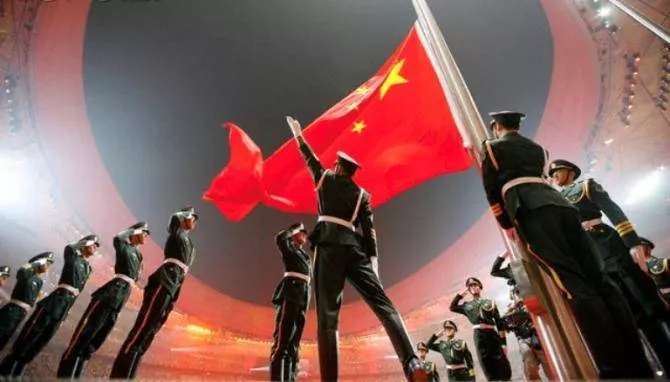
Is china bribing its way to superpower status
In a throwback to the golden days of the Middle Kingdom when foreign rulers brought with them tributes for the Chinese emperor, French President Emmanuel Macron on his recent visit presented Chinese President Xi Jinping with an eight-year-old gelding. Macron hopes that a charm offensive directed at Xi can help his task of reinvigorating the French economy and industries. Airbus, for instance, is betting its future on large orders from China. The French president has, so far, only offered up a horse and has expressed his admiration for Chinese civilization. David Cameron, the former British prime minister—who was announced last month to be taking over a leadership role in a joint UK-China investment fund—went further.Before Macron, it was Cameron who championed the rise of China, and closer UK-China and Europe-China ties. Among other deals, Cameron approved massive Chinese investments in a nuclear power project at Hinkley Point in Somerset. Controversial on both security and commercial grounds, the deal was deemed not to be in Britain’s interests by many critics. Theresa May, Cameron’s successor, even shelved the project temporarily after taking charge. So, is there a smoking gun to link the Hinkley Point deal with Cameron’s latest job? Not really. But it was reported (goo.gl/ufg2Zn) that the former British prime minister lobbied for this fund to be set up on behalf of Peter Gummer, an old associate of Cameron and donor of the Conservative Party—enough to raise eyebrows.
As the news of Cameron taking over a fund meant to project Chinese influence across Europe and Asia came out, many were quick to draw parallels with Gerhard Schröder, former German chancellor. After losing his office in 2005, Schröeder bagged a job with Gazprom, the Russian energy giant. During his tenure, Schröder had staunchly backed the contentious Nord Stream pipeline that was a joint project of Gazprom with two German companies.
These instances might be from developed European countries—but leaders of smaller, poorer countries are much more vulnerable to the ambitions of a country with deep pockets like China. After being thrown out of power, leaders in a number of countries have been investigated for accepting bribes from Chinese companies. The former president of Sri Lanka, Mahinda Rajapaksa, has been accused of accepting bribes from China Harbour Engineering Company, a subsidiary of state-owned China Communications Construction Company. Rajapaksa’s tenure saw several high-profile Chinese investments in Sri Lanka. Many of those, including an airport and a seaport in Hambantota—the home base of Rajapaksa—have proven to be commercial non-starters. In Nigeria, just three days before exiting office, former president Goodluck Jonathan approved an out-of-court settlement—now being probed by US agencies—between Addax Petroleum (owned by Chinese oil giant Sinopec) and the Nigerian National Petroleum Corp., saving the former millions of dollars.
In 2012, the husband of former Philippine president Gloria Macapagal-Arroyo was arrested on charges of accepting bribes to push a deal between the Philippine government and the Chinese telecom company ZTE. Mohammad Nasheed, the leader-in-exile of Maldivian opposition, has accused President Abdulla Yameen of corruption in leasing out islands to foreign countries. India, too, was concerned about the Yameen government leasing out the Feydhoo Finolhu island to a Chinese company at a throwaway price without competitive bidding. Known for his proximity to China, Yameen again surprised New Delhi in November last year by passing a free trade agreement with China through the Maldivian parliament in an emergency session called at short notice with most of the opposition members unavailable to attend.
As China pushes its ambitious trillion-dollar Belt and Road Initiative, such sweetheart deals can be expected in greater numbers. India’s smaller neighbours are especially vulnerable, but New Delhi can do little as it cannot match Beijing’s largesse. India can indeed partner with other countries like Japan and the US to take up infrastructure projects in these countries. But even so, it is difficult to match Chinese state-controlled firms with excess capacity and a bounty of cash to throw at projects and leaders. It is not, in any case, a replacement for the citizens of the host countries realizing that Chinese money unaccompanied by domestic institutional reforms and local capacity development cannot make them rich. Conversely, it can exacerbate local political economy problems by encouraging venality and corruption.
As economist William Easterly has argued, foreign aid discourages the development of the right market institutions that would be required for higher investment flows unmediated by corrupt political practices. China’s support is not even in the form of aid, but through more distortionary high-interest loans. Often, the labour and the input materials in these projects are also sourced from China. Moreover, the investment flow is dictated by political rather than market choices. The result is a host country saddled with white elephants not generating enough capital to pay back the loans. Sri Lanka has already seen these fears come true.
Other countries too make strategic use of foreign aid. The US, most prominently, deploys aid (goo.gl/MSfeh9) to win votes in the UN. Israel does this (goo.gl/oTzyM2) as well. But the scale at which China is using its capital for securing political influence is unprecedented—and the consequences could be deeply felt across the globe.
Courtesy : Livemint Editorial


The non trivial costs of a slow judiciary
Jan 31, 2018
Very important the economic survey an overview
Jan 30, 2018
The conflict between equity and efficiency
Jan 29, 2018
Judicial primacy is not the same as exclusivity
Jan 25, 2018
Global monetary policy enters a decisive phase
Jan 25, 2018





Stay updated with The Hindu Editorial Vocab24 app, your definitive source for breaking news and comprehensive coverage from India and around the globe. Whether it's political developments, business updates, sports highlights, the latest technology trends, or current events, The Hindu brings live, accurate, and reliable news directly to your device.
Don’t fall for sensationalized or fake news shared online. Read and share accurate updates with friends and family through The Hindu Editorial Vocab24 app. Download it today!
News Coverage in The Hindu Editorial Vocab24 App
Breaking News: Receive instant notifications on breaking news stories as they unfold. Stay informed about major events and developments in India and around the world with live blogs, news in shorts videos, and concise articles.
Politics: Get the latest updates on Indian politics, including elections, policy changes, government decisions, and political events that shape the nation.
Business and Economy: Stay ahead in the economic landscape with detailed business news and market analysis. Learn about stock market trends, financial reports, corporate news, and economic developments to make informed investment decisions.
Current Events: Follow stories on social issues, policy changes, global events, and daily current affairs, tailored for UPSC and other competitive exam preparations.
Technology: Keep up with the latest gadgets, innovations, and tech trends. Read expert reviews and analyses in short, concise updates on cutting-edge technology from India and beyond.
Sports: Never miss a moment of your favorite sports. Get live scores, match reports, and expert analysis on cricket, football, tennis, and more.
International News: Stay informed about global events and geopolitical developments, including the Russia-Ukraine war, Israel-Palestine conflict, and other key international stories.
Local News: Stay connected to your community with the latest updates on city events, issues, and local news. Coverage includes hyperlocal updates from cities like Bangalore, Chennai, Delhi, Hyderabad, Mumbai, Kolkata, and more.
Trending Topics: Discover what's trending today with the most talked-about stories and hot topics across India and the world.
Experience journalism that values integrity, accuracy, and reliability. Download The Hindu Editorial Vocab24 app today and stay connected with the world.
Subscribe to our newsletter!







