

India, U.S. unveil framework for trade deal
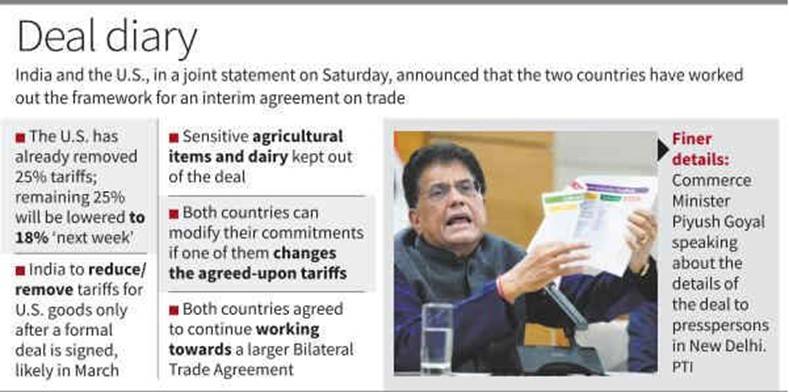
India will remove or reduce tariffs on all industrial goods and a “wide range” of agricultural goods imported from the United States, according to the joint statement issued by the two countries on Saturday morning.In return, the U.S. will reduce its tariffs on Indian imports to 18% from the existing 50% by amending the relevant executive order, the statement said. These commitments are part of the framework the two countries have worked out in an Interim Agreement on trade.
Notably, the joint statement did not include any mention of India’s imports of Russian oil. However, U.S. President Donald Trump separately signed an amendment to an executive order — effective from February 7, 2026 — that removed the additional 25% tariff on imports from India, which had been imposed in August 2025.
Phased implementation
Speaking to presspersons on Saturday, Commerce Minister Piyush Goyal said that the executive order that would reduce the remaining 25% reciprocal tariff to 18% is expected next week. Earlier, he had said that India will be able to reduce or remove its tariffs on American goods only after the formal Interim Agreement is signed, which he said is expected to happen in mid-March.
Notably, the joint statement includes a specific clause that says that each country can modify its own commitments if the other country changes the agreed tariffs.
“This framework reflects the growing depth, trust and dynamism of our partnership,” Prime Minister Narendra Modi said on X. “It strengthens ‘Make in India’ by opening new opportunities for India’s hard-working farmers, entrepreneurs, MSMEs, StartUp innovators, fishermen and more. It will generate large-scale employment for women and youngsters.”
“India will eliminate or reduce tariffs on all U.S. industrial goods and a wide range of U.S. food and agricultural products, including dried distillers’ grains, red sorghum for animal feed, tree nuts, fresh and processed fruit, soybean oil, wine and spirits, and additional products,” the joint statement said.
“The United States and India commit to provide each other preferential market access in sectors of respective interest on a sustained basis,” the statement said. “The United States and India will establish rules of origin that ensure that the benefits of the Agreement accrue predominantly to the United States and India.”
In a post on X, Mr. Goyal said the framework “reflects India’s commitment to safeguarding farmers’ interests and sustaining rural livelihoods by completely protecting sensitive agricultural and dairy products, including maize, wheat, rice, soya, poultry, milk, cheese, ethanol (fuel), tobacco, certain vegetables, meat, etc”.
The joint statement said that the U.S. would reduce its tariffs to 18% on several imports from India, including textiles and apparel, leather and footwear, plastic and rubber, organic chemicals, home décor, artisanal products, and certain machinery.
After the interim agreement is officially signed, the U.S. will remove tariffs on a wider range of goods, including generic pharmaceuticals, gems and diamonds, and aircraft and aircraft parts. In addition, the U.S. said it would remove tariffs on aluminium, steel, and copper.
Non-tariff barriers
The joint statement said that the two countries would also address non-tariff barriers that affect trade between them.
India has agreed to address non-tariff barriers on the import of U.S. medical devices and Information and Communication Technology (ICT) goods.
“Recognising the importance of working together to resolve long-standing concerns, India also agrees to address long-standing non-tariff barriers to the trade in U.S. food and agricultural products,” the statement said.
The statement added that the two countries would work towards “further expanding market access opportunities” through negotiations on a more comprehensive Bilateral Trade Agreement (BTA).
“The U.S. affirms that it intends to take into consideration, during the negotiations of the BTA, India’s request that the U.S. continue to work to lower tariffs on Indian goods,” the statement said.
The two countries also agreed to strengthen “economic security alignment” to enhance supply chain resilience and innovation through complementary actions “to address non-market policies of third parties”, as well as cooperating on inbound and outbound investment reviews and export controls.
“India intends to purchase $500 billion of U.S. energy products, aircraft and aircraft parts, precious metals, technology products, and coking coal over the next 5 years,” the statement said. “India and the U.S. will significantly increase trade in technology products, including Graphics Processing Units (GPUs) and other goods used in data centers, and expand joint technology cooperation.”
Digital trade
The two countries also committed to addressing “discriminatory or burdensome” practices and other barriers to digital trade, and to set a “clear pathway” to achieve mutually beneficial digital trade rules as part of the BTA.
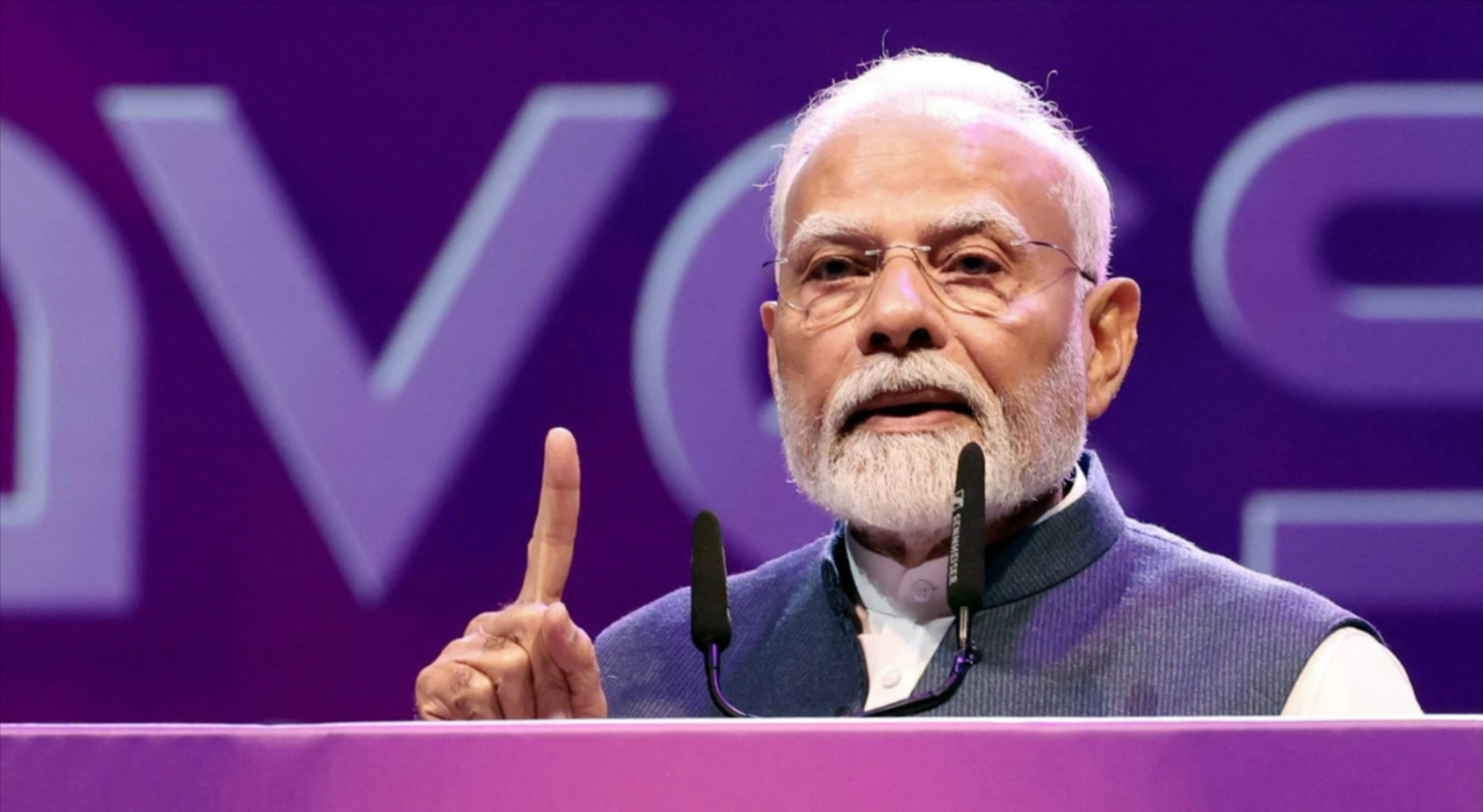
During the WAVES Summit in Mumbai, Prime Minister Narendra Modi underlined India's developing position in the global creative economic sector. During his opening address, India earned the description of an "orange economy" because cultural and creative sectors drive both financial growth and job creation. Rajnikanth and Mukesh Ambani joined
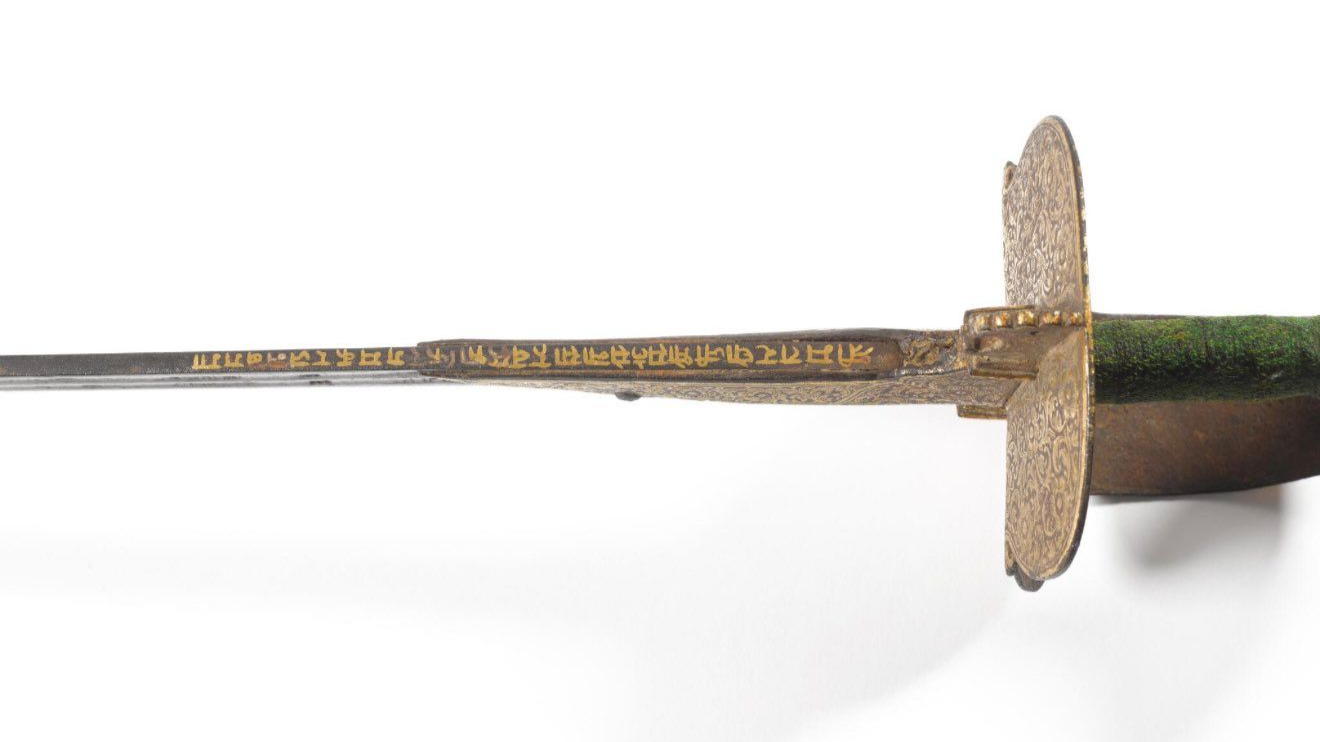
The Mahahtra government achieved a historical milestone by returning to India the historic sword of Raghuji Bhosale I during a Sotheby’s auction in London, which belonged to a notable 18th-century Maratha ruler. The state of Mahahtra achieves its first success in acquiring historical artifacts from international auctions. The bidding




Stay updated with The Hindu Editorial Vocab24 app, your definitive source for breaking news and comprehensive coverage from India and around the globe. Whether it's political developments, business updates, sports highlights, the latest technology trends, or current events, The Hindu brings live, accurate, and reliable news directly to your device.
Don’t fall for sensationalized or fake news shared online. Read and share accurate updates with friends and family through The Hindu Editorial Vocab24 app. Download it today!
News Coverage in The Hindu Editorial Vocab24 App
Breaking News: Receive instant notifications on breaking news stories as they unfold. Stay informed about major events and developments in India and around the world with live blogs, news in shorts videos, and concise articles.
Politics: Get the latest updates on Indian politics, including elections, policy changes, government decisions, and political events that shape the nation.
Business and Economy: Stay ahead in the economic landscape with detailed business news and market analysis. Learn about stock market trends, financial reports, corporate news, and economic developments to make informed investment decisions.
Current Events: Follow stories on social issues, policy changes, global events, and daily current affairs, tailored for UPSC and other competitive exam preparations.
Technology: Keep up with the latest gadgets, innovations, and tech trends. Read expert reviews and analyses in short, concise updates on cutting-edge technology from India and beyond.
Sports: Never miss a moment of your favorite sports. Get live scores, match reports, and expert analysis on cricket, football, tennis, and more.
International News: Stay informed about global events and geopolitical developments, including the Russia-Ukraine war, Israel-Palestine conflict, and other key international stories.
Local News: Stay connected to your community with the latest updates on city events, issues, and local news. Coverage includes hyperlocal updates from cities like Bangalore, Chennai, Delhi, Hyderabad, Mumbai, Kolkata, and more.
Trending Topics: Discover what's trending today with the most talked-about stories and hot topics across India and the world.
Experience journalism that values integrity, accuracy, and reliability. Download The Hindu Editorial Vocab24 app today and stay connected with the world.
Subscribe to our newsletter!







