

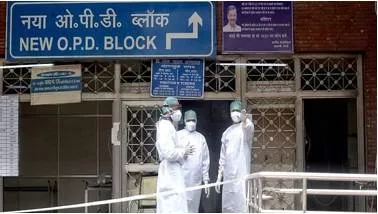
India needs to innovate in filling vacant hospital posts building new aiims alone won’t cut it
Right-minded reforms in healthcare are in place, but India should not end up in a situation where the surgery is successful but the patient is dead.Union Minister of State for Health and Family Welfare Bharati Pravin Pawar told Rajya Sabha last week that over 40 per cent positions in centrally run healthcare institutions were lying vacant. This staggering number highlights a crisis affecting not only India’s health systems but of several countries. Recent news reports from the UK, Germany, France and Spain have shown vacancies in healthcare services to be reaching a breaking point. This global phenomenon needs urgent addressal from health systems and countries alike.
The reasons for healthcare workforce shortages have been both country and system specific. Historically, healthcare professionals such as doctors, nurses, technicians and allied health workers have required specialised training institutions with long periods of training. But in most countries, the number of seats and institutions have been inadequate to meet the healthcare needs. While the global north has generally done better than the global south and low- and middle-income countries (LMIC), developed economies too have felt the pressure due to changing demographics and disease profiles.
Developed countries have been able to attract the best talent from around the world to run their health systems. This along with better quality of life and higher pay ensured a brain drain from the developing world to the developed world in the past four decades. The advancements in health infrastructure and systems over the past two decades in countries like India have been able to stem the flow of professionals overseas, but the problem still persists.
Problem areas
In India, two divergent data points have been highlighted by the government in Parliament. One the one hand, there has been an 87 percent and 105 percent rise in the number of graduate MBBS and post-graduate seats over the past eight years. At the same time, nearly 6 percent of post-graduate seats remain vacant in a health system that has a shortage of super specialists.
Moreover, the bed-to-patient and doctor-to-patient ratios, by World Bank’s 2017 estimates, were 0.5 and 0.8 per 1,000 people, all below LMIC standards. The increase in medical seats is a welcome step, one for which the government’s efforts must be lauded. However, given the past experience of the Medical Council of India (MCI) and of regulation in medical education, one hopes that reformed regulatory mechanisms currently in place can help address the issue of quality of education.
The government’s reforms have focused on expansion of health infrastructure through tertiary institutions like AIIMS and primary health facilities like Health & Wellness Centres across the country. This along with increased medical seats aims to address the chronic low bed-to-patient and doctor-to-patient ratio that have plagued India for decades. However, the timelines for impact for the two reforms are divergent. So, while new institutes like AIIMS will take time to come up, the ones that have been created over the past few years have a large number of vacancies. To fill these, one measure is the increased pipeline of trained medical professionals, which will only be available over the next decade as the full impact of increased seats are felt in the availability of medical talent. Therefore, the government is currently left with a situation which needs innovations and imaginative policy.
The expansion of tele-health services through government programmes like e-Sanjeevani and other efforts by private providers have been a step in the right direction to enhance supply side management. However, with the increased focus on and funding to tele-health, clinical talent is moving away from traditional health settings to such initiatives, which may not necessarily help meet the overall availability of health services across settings and requirements.
But arguments against tele-health find echoes of similar positions in retailing between brick and mortar providers and e-commerce platforms. The talent shift to providers of only tele-health will need concerted action to ensure adequate manpower is available to patients who approach more traditional health settings like PHCs, district hospitals and clinics. Also, one must be mindful that tele-health is not a panacea. Primary and community health, awareness and interventions need the “traditional” in-person delivery. Therefore, while tele-health acts as a force multiplier, the “force” remains the foot soldiers delivering care on the ground.
Reforms are in place
The government needs imaginative policy on recruitment. The traditional methods are clearly not suitable for the 21st century health system. Fast tracking through the use of technology, better remuneration, creation of new cadres like nurse practitioners, structured training and upskilling—all need to find place in a cohesive policy on workforce recruitment, retention and career development.
The question of disproportionate geographical spread and availability of medical professionals across the country has been an endemic issue in India’s health system. Various incentive-coercive mechanisms have been put forward, but the real issue remains the lack of social and economic development in areas where healthcare professionals are expected to serve. Until holistic development is not addressed, it remains unfair for professionals to “act selflessly”. Indian healthcare professionals can help fill workforce gaps of health systems overseas. But the government should be mindful of the problems that plague our own health system and prioritise ‘health workforce nationalism’ to ensure health equity and access for our citizens. While no professional should be stopped from taking independent decisions on their career, incentivised brain drain may not be in the interest of our health system.
As India emerges from the Covid-19 pandemic, one which exacerbated the availability of workforce with many leaving the sector, it is time for a rethink on how best to address the availability of health professionals. Right-minded reforms and intent are in place, but we should not end up in a situation where the surgery is successful but the patient is dead.










Stay updated with The Hindu Editorial Vocab24 app, your definitive source for breaking news and comprehensive coverage from India and around the globe. Whether it's political developments, business updates, sports highlights, the latest technology trends, or current events, The Hindu brings live, accurate, and reliable news directly to your device.
Don’t fall for sensationalized or fake news shared online. Read and share accurate updates with friends and family through The Hindu Editorial Vocab24 app. Download it today!
News Coverage in The Hindu Editorial Vocab24 App
Breaking News: Receive instant notifications on breaking news stories as they unfold. Stay informed about major events and developments in India and around the world with live blogs, news in shorts videos, and concise articles.
Politics: Get the latest updates on Indian politics, including elections, policy changes, government decisions, and political events that shape the nation.
Business and Economy: Stay ahead in the economic landscape with detailed business news and market analysis. Learn about stock market trends, financial reports, corporate news, and economic developments to make informed investment decisions.
Current Events: Follow stories on social issues, policy changes, global events, and daily current affairs, tailored for UPSC and other competitive exam preparations.
Technology: Keep up with the latest gadgets, innovations, and tech trends. Read expert reviews and analyses in short, concise updates on cutting-edge technology from India and beyond.
Sports: Never miss a moment of your favorite sports. Get live scores, match reports, and expert analysis on cricket, football, tennis, and more.
International News: Stay informed about global events and geopolitical developments, including the Russia-Ukraine war, Israel-Palestine conflict, and other key international stories.
Local News: Stay connected to your community with the latest updates on city events, issues, and local news. Coverage includes hyperlocal updates from cities like Bangalore, Chennai, Delhi, Hyderabad, Mumbai, Kolkata, and more.
Trending Topics: Discover what's trending today with the most talked-about stories and hot topics across India and the world.
Experience journalism that values integrity, accuracy, and reliability. Download The Hindu Editorial Vocab24 app today and stay connected with the world.
Subscribe to our newsletter!







