

India must learn how to abstain in nepal resist temptation to micromanage
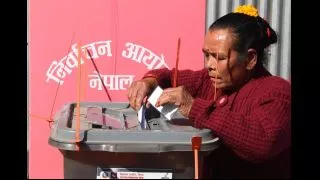
Nepal’s chronic political instability has hurt Indian interests and now that China is also getting involved, there are even less benefits from playing the powerbroker game.As Nepal concludes this week its first parliamentary election since 1999, New Delhi faces a window of opportunity to deepen the bilateral relationship. With China making unprecedented inroads into the northern neighbour, India must take bold steps on the economic, political and strategic fronts.
First, India must focus on its capacity to deliver more, better and faster on key infrastructure projects. Of what use is Kathmandu’s recent decision to revoke the permit for a Chinese company to build the Budhi Gandaki hydropower project if India is unable to offer a credible alternative? To accelerate implementation, New Delhi must consider establishing special purpose vehicles with private sector participation.
Beyond neighbourly generosity, it should also recast its development assistance for Nepal to serve its long-term economic interests, creating a new market for Indian goods and investments. From an isolationist and security-oriented logic, based on borders as buffers, this requires a shift towards leveraging comparative advantages through interdependence, and treating borders as transmission belts of people, goods, and capital. To leverage the open border, New Delhi must invest in more Integrated Check Posts, consider implementing a joint electronic identification system to monitor the flow of people and goods, and invest massively in new air, road and rail transportation links.
Second, at the political level, India must learn how to abstain, reversing decades of deep involvement. New Delhi’s temptation to micromanage governments in Kathmandu has often proved counter-productive and continues to waste diplomatic and intelligence resources. Instead, after the election results are announced, and especially if there is a hung parliament or realignments within the Leftist Alliance, New Delhi should reset and pursue an open-doors policy based on equal engagement towards all parties.
Nepal’s chronic political instability – with ten different Prime Ministers in ten years – has hurt Indian interests and now that China is also getting involved, there are even less benefits from playing the powerbroker game. New Delhi must now take the long view, which means letting China move ahead in playing a more prominent or maybe even leading role in managing Nepal politically.
If reports about Beijing facilitating and funding the Leftist Alliance are true, this not only indicates that China is now more involved and influential, but also that it will become entangled in Nepal’s factious politics and inevitably attract animosity. As in Sri Lanka after 2014, China is thus bound to taste its own poison and realize the costs of increasing political involvement as a liability. Sooner or later, once the grass across the Himalayas looks less green, Nepalese will revert to India to balance China.
Beyond statements or pressure, as during the 2015 Madhesi blockade, India’s support for a more democratic and inclusive Nepal will have to focus on delivering technical assistance to strengthen the country’s electoral, parliamentary and provincial institutions. Under the federal constitution there will be almost seven hundred new representatives who can benefit from India’s expertise in achieving inclusive and equitable development through pluralism and decentralization.
Finally, on the geostrategic and security fronts, New Delhi will have to accelerate its outreach to like-minded partners to cooperate in Nepal. Long gone are the days in which India could enforce Nepal as its exclusive sphere of influence. To compete with China’s formidable financial clout and capacity, New Delhi will have to intensify coordination with Japan, the United States, the United Kingdom, the European Union, the Asian Development Bank and other extra-regional actors. Such trilateral partnerships should focus on how to coordinate or jointly implement connectivity, capacity-building and military assistance projects.
India’s plans for cross-border connectivity must be given a clearer geostrategic direction, tying Nepal to East South Asia, the Bay of Bengal and the Indo-Pacific regions. This will counter Beijing’s efforts to link Nepal northwards, to China and the Belt and Road Initiative’s East-West corridors across Eurasia. Rather than opposing the India-Nepal-China (INC) corridors proposed by Beijing, this will incentivize Kathmandu to prioritize Southwards connectivity.
Based on the positive experience with Bhutan, in 2007, India should also take the initiative and push for a revision of the 1950 India-Nepal Treaty of Peace and Friendship. This will put the ball in Kathmandu’s court and help defuse one of the most persistent Nepalese demands. While Indian security remains inseparable from that of Nepal, in times of crisis New Delhi’s ability to ensure a cooperative Kathmandu will depend on its practical capacity of persuasion or coercion, rather than on the “letter and spirit” of a treaty from another century. This must be topped up with stronger military cooperation, defence diplomacy and scenario-based strategic dialogues: for example, do New Delhi and Kathmandu have a plan if China repeats the Doklam model in the disputed tri-junction points at Lipulekh or Jhinsang Chuli?
Nepal shows how under Prime Minister Modi’s neighbourhood first policy, South Asia has, once again, returned as a priority for India. In 2014, Modi paid the first exclusively bilateral visit to Nepal in twenty years. In just two years, between 2014 and 2016, the India-Nepal Joint Commission met twice, as many times as in the preceding 23 years. But besides coming late, such initiatives are still too few. If it wants to keep its relationship with Nepal special, India must take bolder steps.
Author : CONSTANTINO XAVIER











Stay updated with The Hindu Editorial Vocab24 app, your definitive source for breaking news and comprehensive coverage from India and around the globe. Whether it's political developments, business updates, sports highlights, the latest technology trends, or current events, The Hindu brings live, accurate, and reliable news directly to your device.
Don’t fall for sensationalized or fake news shared online. Read and share accurate updates with friends and family through The Hindu Editorial Vocab24 app. Download it today!
News Coverage in The Hindu Editorial Vocab24 App
Breaking News: Receive instant notifications on breaking news stories as they unfold. Stay informed about major events and developments in India and around the world with live blogs, news in shorts videos, and concise articles.
Politics: Get the latest updates on Indian politics, including elections, policy changes, government decisions, and political events that shape the nation.
Business and Economy: Stay ahead in the economic landscape with detailed business news and market analysis. Learn about stock market trends, financial reports, corporate news, and economic developments to make informed investment decisions.
Current Events: Follow stories on social issues, policy changes, global events, and daily current affairs, tailored for UPSC and other competitive exam preparations.
Technology: Keep up with the latest gadgets, innovations, and tech trends. Read expert reviews and analyses in short, concise updates on cutting-edge technology from India and beyond.
Sports: Never miss a moment of your favorite sports. Get live scores, match reports, and expert analysis on cricket, football, tennis, and more.
International News: Stay informed about global events and geopolitical developments, including the Russia-Ukraine war, Israel-Palestine conflict, and other key international stories.
Local News: Stay connected to your community with the latest updates on city events, issues, and local news. Coverage includes hyperlocal updates from cities like Bangalore, Chennai, Delhi, Hyderabad, Mumbai, Kolkata, and more.
Trending Topics: Discover what's trending today with the most talked-about stories and hot topics across India and the world.
Experience journalism that values integrity, accuracy, and reliability. Download The Hindu Editorial Vocab24 app today and stay connected with the world.
Subscribe to our newsletter!







