

India energy stack how this digital integration plan hopes to replicate upi’s success in india’s power sector
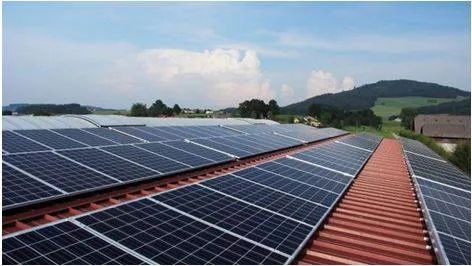
Picture this: Solar panels on your rooftop generate excess power, which you store in a battery at your neighbour’s home — and draw back in the evening. In return, a payment for renting the battery is instantly transferred from your bank account to your neighbour’s, enabled by a digital public infrastructure (DPI) as seamless as UPI. Now, with the government setting up a task force led by Infosys co-founder Nandan Nilekani, a digitally integrated future for India’s power sector is beginning to take shape.The proposed India Energy Stack (IES) aims to do for the power sector what Aadhaar did for identity, and UPI for finance. By digitally integrating India’s fragmented power ecosystem — from producers and grid operators to consumers, exchanges, and regulators — the IES will enable peer-to-peer energy trading, support aggregated demand-response programmes amid rising renewable integration, and facilitate smoother compliance with carbon offsetting.
The 17-member task force, constituted by the Ministry of Power on June 27, has Nilekani as its chief mentor and is charged with designing and charting a roadmap for the nationwide rollout of the IES — a process expected to take several years.
Why is a DPI-style intervention needed?
In India, electricity is a concurrent subject, meaning both the Union and state governments share responsibility for its governance, which has contributed to a highly fragmented sector, leading to “isolated digital islands rather than an integrated national platform”.
This fragmentation, according to a concept brief by New Delhi-based FSR Global — knowledge partner for the IES initiative – “creates significant operational challenges that impede the energy sector’s ability to meet India’s growing energy demands efficiently”.
The brief identified four key challenges facing the power sector that the IES could help address. First, there is no unique identifier for consumers, assets, or stakeholders. Second, decision-making is hampered by the lack of access to harmonised, real-time data. Third, those seeking to offer solutions in this space struggle to scale, as they depend on various proprietary digital platforms. And fourth, there is no interoperability between these digital systems, which prevents cross-regional data sharing and cross-discom transactions.
“In other words, the challenges faced by India’s energy sector resemble those faced by the identity and financial sectors prior to the introduction of Aadhaar and UPI. And, just as these DPIs transformed their respective domains, a similar approach can revolutionise the energy sector,” the brief said.
What are the possibilities with the IES?
Beyond enabling unique identification, full integration, and interoperability, the IES can help unlock an entirely new ecosystem — one where energy fintech, virtual power plants, and peer-to-peer trading can thrive on a standardised, interoperable digital infrastructure.
The possibilities are many. Consumers – and producer-consumers, or prosumers – could instantly buy surplus energy to store in batteries or sell rooftop solar output at peak prices. The IES would deepen the decentralisation of electricity and allow prosumers to manage their assets more actively and efficiently. Grid operators could make far more precise load-balancing and dispatch decisions, while energy producers could reduce curtailment or track carbon offsets using transparent performance data.
The utility of IES is based on its ability to maintain the integrity of data, processes, and settlements across the board. A key component of this architecture is the Utility Intelligence Platform (UIP) – a primary application layer built on the IES foundation that would enable all of these services.
Who’s leading the task force, and what’s next?
The government is positioning the IES as a natural extension of its successful DPI projects like Aadhaar and UPI, evident by the selection of individuals included in the task force. Nilekani, the founding chairperson of the Unique Identification Authority of India (UIDAI), will serve as chief mentor. Ram Sevak Sharma, the first director general of UIDAI, will chair the task force, and Pramod Verma, the chief architect of Aadhaar, returns in the same capacity for this initiative.
REC Ltd, a central public sector undertaking, will serve as the programme nodal agency for the IES initiative. The 17-member task force will be supported by five expert working groups — on technology, distribution, system operations, generation, policy and regulation, and markets — comprising 35 members in total.
“The Ministry of Power will undertake a 12-month proof of concept (PoC) to validate the India Energy Stack by implementing its foundational building blocks and demonstrating its value through real-world use cases,” the concept brief said. The IES “will be deployed over the coming years”, it added.
While concept-proofing may be swift, given India’s prior experience with DPIs, the timely rollout of the IES will hinge on several factors — including cooperation from state utilities, rapid adoption of smart meters and other digital enablers, and the success of trial runs.










Stay updated with The Hindu Editorial Vocab24 app, your definitive source for breaking news and comprehensive coverage from India and around the globe. Whether it's political developments, business updates, sports highlights, the latest technology trends, or current events, The Hindu brings live, accurate, and reliable news directly to your device.
Don’t fall for sensationalized or fake news shared online. Read and share accurate updates with friends and family through The Hindu Editorial Vocab24 app. Download it today!
News Coverage in The Hindu Editorial Vocab24 App
Breaking News: Receive instant notifications on breaking news stories as they unfold. Stay informed about major events and developments in India and around the world with live blogs, news in shorts videos, and concise articles.
Politics: Get the latest updates on Indian politics, including elections, policy changes, government decisions, and political events that shape the nation.
Business and Economy: Stay ahead in the economic landscape with detailed business news and market analysis. Learn about stock market trends, financial reports, corporate news, and economic developments to make informed investment decisions.
Current Events: Follow stories on social issues, policy changes, global events, and daily current affairs, tailored for UPSC and other competitive exam preparations.
Technology: Keep up with the latest gadgets, innovations, and tech trends. Read expert reviews and analyses in short, concise updates on cutting-edge technology from India and beyond.
Sports: Never miss a moment of your favorite sports. Get live scores, match reports, and expert analysis on cricket, football, tennis, and more.
International News: Stay informed about global events and geopolitical developments, including the Russia-Ukraine war, Israel-Palestine conflict, and other key international stories.
Local News: Stay connected to your community with the latest updates on city events, issues, and local news. Coverage includes hyperlocal updates from cities like Bangalore, Chennai, Delhi, Hyderabad, Mumbai, Kolkata, and more.
Trending Topics: Discover what's trending today with the most talked-about stories and hot topics across India and the world.
Experience journalism that values integrity, accuracy, and reliability. Download The Hindu Editorial Vocab24 app today and stay connected with the world.
Subscribe to our newsletter!







