

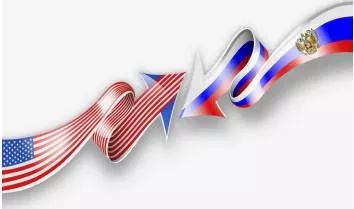
India and russia salvaging a strategic partnership
THE INDIA-RUSSIA DIALOGUE SHOULD NOT GET INEXTRICABLY ENTANGLED IN THE INDIA-U.S. DIALOGUE.At their meeting in Goa at the India-Russia annual summit, in October 2016, Prime Minister Narendra Modi quoted a Russian proverb to Russian President Vladimir Putin: “An old friend is better than two new ones.” It was a reassurance that India’s growing proximity to the U.S. would not affect India-Russia relations. As Mr. Putin came calling two years on, the shadow of America again loomed over the summit, in New Delhi. This time, it was closer, larger and more menacing.
ASSERTION OF AUTONOMY
The question that dominated the meet was whether or not the deal for the Russian air defence missile system, the S-400, would go through. The U.S. has been publicly warning for months that this purchase could attract provisions under the Countering America’s Adversaries Through Sanctions Act (CAATSA), which authorises the U.S. government to impose sanctions on entities for “significant” defence transactions with Russia. The state-of-the-art S-400 deal, at a little over $5 billion, would naturally qualify as “significant”. The sanctioned entity would be cut off from all business in the U.S. and with U.S. companies.
Just before Mr. Modi left for his informal meeting with Mr. Putin in Sochi in May this year, a U.S. official warned in a media conference that the S-400 acquisition would attract CAATSA. The same message was conveyed in India by a visiting Congressional delegation in end-May. The India-U.S. 2+2 meeting (of Foreign and Defence Ministers) in September did not resolve this issue. Shortly thereafter, two weeks before Mr. Putin arrived in India, the U.S. State Department announced sanctions on a Chinese company that had imported the S-400 over eight months earlier, asserting that it was a signal to others engaged with the Russian defence sector.
The contract for the S-400 was signed at the Delhi summit in a low-key manner. Neither leader mentioned it in his press statement and it was not signed in their presence. The one sentence announcement was in paragraph 45 of a rambling 68-paragraph Joint Statement. Mr Modi did not mention defence cooperation in his press statement, though it has been the centrepiece of India-Russia relations over decades. There was no mention also of other defence projects under discussion; their consideration may have been deferred to the meeting of the India-Russian Inter-Governmental Commission on Military-Technical Cooperation, in December.
Though understated, it was a clear assertion of autonomy of Indian decision-making on Russia. Other signals conveyed the same message. Mr. Modi invited his Russian guest to a tete-a-tete over dinner, which lasted over three hours. They displayed the warm chemistry that was evident in their Sochi meeting. Mr. Modi’s press statement paid fulsome tribute to Mr. Putin’s personal contribution to the “unique” India-Russia relations, said India attached “top priority” to these relations, which would scale new heights. Such utterances would normally be considered usual summit hyperbole (A way of speaking or writing that makes someone or something sound bigger, better, more, etc. than they are:), but spoken in this context of external scrutiny, they are significant.
OUTLOOK ON NEIGHBOURHOOD
There is a general perception that Indian and Russian perspectives today differ on key issues in India’s neighbourhood — Pakistan, Afghanistan and China — and on India’s strategic linkages with the U.S., including on the Indo-Pacific. These issues would certainly have figured in the various meetings. In the public domain, we have only Mr. Modi’s bland assertion that there were detailed discussions on “all international issues of mutual interest”, specifically citing “common interests” on terrorism, Afghanistan and the Indo-Pacific. On Pakistan, one might note the nuance (A very slight difference in appearance, meaning, sound, etc.) that the Joint Statement mentions cross-border terrorism, which some earlier Joint Statements did not. On Afghanistan, India expressed support for the “Moscow format”, in which Russia involves regional countries and major powers in an effort to draw the Taliban into negotiations with the Afghan leadership. The U.S. has boycotted (To refuse to buy a product or take part in an activity as a way of expressing strong disapproval) this initiative, but has initiated its own dialogue with the Taliban. A U.S. Special Representative for Afghanistan is now touring Afghanistan, Pakistan, the United Arab Emirates, Qatar, and Saudi Arabia to generate help in bringing the Taliban to the negotiating table. India is not on his itinerary. The Joint Statement has the usual laundry list of priority areas of cooperation, including infrastructure, engineering, natural resources, space and technology. It expresses the commitment to raise trade and investment to a level more commensurate with the potential. There has been some recent action in this direction, with Commerce and Industry Minister Suresh Prabhu leading business delegations to major Russian economic forums. Mr. Modi and Mr. Putin also addressed a well-attended business summit in Delhi.
BUSINESS DESPITE SANCTIONS
There are obvious opportunities for cooperation between Russia, which is natural resources-rich, and India, which is resource-hungry. Whether they are exploited would depend on how well India’s economic ministries, banks and business community understand the ground realities of doing business with Russia. Even before CAATSA, there was confusion in India about sanctions against Russia. The U.S. and European sanctions between 2014 and 2016 are sector- and currency-specific. They affect entities operating in Europe and the U.S., and transactions in euro or dollar currencies. They are not applicable to other geographies or currencies. This remains the case, even post-CAATSA, for all sectors other than defence and energy. Therefore, with proper structuring of business deals, trade and investment exchanges with Russia are possible, and without losing business with Europe and America. This explains how the economic engagement of major European countries with Russia has actually grown in 2017 and 2018, despite the sanctions. European and American corporate lawyers with expertise on sanctions have enabled this. Indian business needs to tap into this expertise.
The threat to India-Russia defence cooperation extends well beyond the suspense over the S-400 deal. Every potential India-Russia defence deal could be subjected to a determination on applicability of sanctions. Actually imposing sanctions would hurt U.S. defence sales to India, defeating one of the principal objectives of the legislation. The effort would likely be to achieve desired results with the threat of sanctions.
Given the political dynamics in the U.S. today, a systemic solution to this problem is not evident. However, it has to be on the India-U.S. dialogue agenda. The India-U.S. strategic partnership is based on a strong mutuality of interests, but it was not intended to have the exclusivity of an alliance. India should not have to choose between one strategic partnership and another. The India-Russia dialogue should not get inextricably entangled in the India-U.S. dialogue.



Top court quashes FIRs against Gen Z protesters
Sep 04, 2026






Stay updated with The Hindu Editorial Vocab24 app, your definitive source for breaking news and comprehensive coverage from India and around the globe. Whether it's political developments, business updates, sports highlights, the latest technology trends, or current events, The Hindu brings live, accurate, and reliable news directly to your device.
Don’t fall for sensationalized or fake news shared online. Read and share accurate updates with friends and family through The Hindu Editorial Vocab24 app. Download it today!
News Coverage in The Hindu Editorial Vocab24 App
Breaking News: Receive instant notifications on breaking news stories as they unfold. Stay informed about major events and developments in India and around the world with live blogs, news in shorts videos, and concise articles.
Politics: Get the latest updates on Indian politics, including elections, policy changes, government decisions, and political events that shape the nation.
Business and Economy: Stay ahead in the economic landscape with detailed business news and market analysis. Learn about stock market trends, financial reports, corporate news, and economic developments to make informed investment decisions.
Current Events: Follow stories on social issues, policy changes, global events, and daily current affairs, tailored for UPSC and other competitive exam preparations.
Technology: Keep up with the latest gadgets, innovations, and tech trends. Read expert reviews and analyses in short, concise updates on cutting-edge technology from India and beyond.
Sports: Never miss a moment of your favorite sports. Get live scores, match reports, and expert analysis on cricket, football, tennis, and more.
International News: Stay informed about global events and geopolitical developments, including the Russia-Ukraine war, Israel-Palestine conflict, and other key international stories.
Local News: Stay connected to your community with the latest updates on city events, issues, and local news. Coverage includes hyperlocal updates from cities like Bangalore, Chennai, Delhi, Hyderabad, Mumbai, Kolkata, and more.
Trending Topics: Discover what's trending today with the most talked-about stories and hot topics across India and the world.
Experience journalism that values integrity, accuracy, and reliability. Download The Hindu Editorial Vocab24 app today and stay connected with the world.
Subscribe to our newsletter!







