

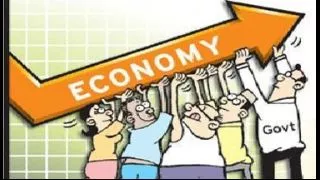
India the road to wider prosperity
The key political economy challenge is to establish the correct balance between the state, the market and the private sectorVijay Joshi is one of the most thoughtful commentators on the Indian economy. His trilogy of books—India: Macroeconomics And Political Economy, 1964-91; Indian Economic Reforms, 1991-2001; India’s Long Road: The Search For Prosperity—are among the best in their category. The first two were written in collaboration with the great Ian Little, teacher to a generation of Indian economists, including former prime minister Manmohan Singh. The L K Jha Memorial Lecture that Joshi delivered with his trademark clarity at the Reserve Bank of India this week is a clarion call for the next wave of economic reforms.
Joshi argues that the “partial reforms model” since 1991 has now run into diminishing returns. The next round of radical reforms is needed to boost growth, in his words, “to keep the engine of productivity firing on all cylinders”.
The key political economy challenge is to establish the correct balance between the state, the market and the private sector. “India has not fully recovered from a bad case of old-fashioned socialism, with its belief in the benefits of state ownership of the means of production, and its propensity for arbitrary state intervention in the operation of the markets. We have yet to complete the move to becoming a modern social democracy,” he said.
What is to be done? Joshi recommends a five-pronged agenda—privatization, employment creation, deep fiscal adjustment, primary education and building state capacity. There is little to disagree with in this broad wish list, though it is heavily derived from the original reform programme of the early 1990s. Later focus areas, such as financial inclusion, formalization of the Indian economy, ease of doing business, and integrating the domestic market, get less explicit attention; they sometimes feature as components of the broader strategy, rather than policy goals in themselves.
At the cost of simplification, it is fair to say that the reforms agenda Joshi has laid out is profoundly influenced by the development success of the tiger economies of Asia, with their focus on macroeconomic stability, adequate provision of public goods, labour-intensive industrialization and dependence on exports to make up for the inadequacy of domestic aggregate demand. This newspaper has often pointed out that the Asian model is still worth pursuing for a poor country such as India that has surplus labour.
The most important difference is that India is a political democracy while the East Asian countries were under authoritarian regimes during their years of very rapid growth, as Joshi too points out. The old question of whether the primitive accumulation of capital is possible under political democracy is still an uncomfortable one. Or, on a more pedestrian plane, can the strong distributional coalitions of democracy come in the way of fiscal stability or the provision of public goods that benefit all citizens?
There are many policy paradoxes that can be gleaned from the lecture. Are banks a special case that need to be kept outside the ambit of aggressive privatization? Do wage subsidies have a role to play in promoting employment growth by organized industry? Can a negotiated deal with the trade unions reduce some of their opposition to labour market reforms? Is it possible to promote labour-intensive exports when the real effective exchange rate is appreciating? How can India have a deep fiscal adjustment—that Joshi estimates at a possible 10% of gross domestic product—by slashing non-merit subsidies as well as minimizing dysfunctional tax exemptions? And can these fiscal gains be used to build infrastructure and fund a programme for universal basic income? How can you get the Indian state—which Lant Pritchett famously described as a flailing one—to do less and do more at the same time?
Economic history tells us that only a handful of countries have been able to sustain 8%-plus growth over two decades. India needs to join this exclusive club—since the window of opportunity will slowly close as the labour force peaks and automation begins to destroy jobs on a bigger scale. Indian policymakers need to step on the reforms pedal. The past few years have seen important changes such as macroeconomic stability, a new monetary policy framework, the goods and services tax, and the bankruptcy law. The goal of inclusive growth in terms of job creation in the organized sector remains elusive. Structured thinking on India’s economic transformation is still needed. Joshi has provided one powerful framework.
Irrespective of where one stands on the Harvard versus hard-work debate, there is no doubt in our mind that the advice of an accomplished Oxford don such as Joshi needs to gain wider currency.
Courtesy : Livemint Editorial


The non trivial costs of a slow judiciary
Jan 31, 2018
Very important the economic survey an overview
Jan 30, 2018
The conflict between equity and efficiency
Jan 29, 2018
Judicial primacy is not the same as exclusivity
Jan 25, 2018
Global monetary policy enters a decisive phase
Jan 25, 2018





Stay updated with The Hindu Editorial Vocab24 app, your definitive source for breaking news and comprehensive coverage from India and around the globe. Whether it's political developments, business updates, sports highlights, the latest technology trends, or current events, The Hindu brings live, accurate, and reliable news directly to your device.
Don’t fall for sensationalized or fake news shared online. Read and share accurate updates with friends and family through The Hindu Editorial Vocab24 app. Download it today!
News Coverage in The Hindu Editorial Vocab24 App
Breaking News: Receive instant notifications on breaking news stories as they unfold. Stay informed about major events and developments in India and around the world with live blogs, news in shorts videos, and concise articles.
Politics: Get the latest updates on Indian politics, including elections, policy changes, government decisions, and political events that shape the nation.
Business and Economy: Stay ahead in the economic landscape with detailed business news and market analysis. Learn about stock market trends, financial reports, corporate news, and economic developments to make informed investment decisions.
Current Events: Follow stories on social issues, policy changes, global events, and daily current affairs, tailored for UPSC and other competitive exam preparations.
Technology: Keep up with the latest gadgets, innovations, and tech trends. Read expert reviews and analyses in short, concise updates on cutting-edge technology from India and beyond.
Sports: Never miss a moment of your favorite sports. Get live scores, match reports, and expert analysis on cricket, football, tennis, and more.
International News: Stay informed about global events and geopolitical developments, including the Russia-Ukraine war, Israel-Palestine conflict, and other key international stories.
Local News: Stay connected to your community with the latest updates on city events, issues, and local news. Coverage includes hyperlocal updates from cities like Bangalore, Chennai, Delhi, Hyderabad, Mumbai, Kolkata, and more.
Trending Topics: Discover what's trending today with the most talked-about stories and hot topics across India and the world.
Experience journalism that values integrity, accuracy, and reliability. Download The Hindu Editorial Vocab24 app today and stay connected with the world.
Subscribe to our newsletter!







