

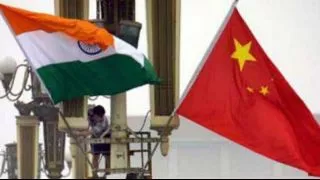
India china can neither give nor take
The Indian and Chinese special representatives, national security adviser Ajit Doval and state councillor Yang Jiechi, will have the 20th round of talks, ostensibly to discuss the “border issue” on December 20 and 21 in New Delhi. There is now a monotonous regularity in this, and no resolution seems to be in sight, let alone be discussed. There was a time when with a little bit of give and take this contentious and now protracted problem appeared to be solvable. In 1960 Chinese Premier Zhou Enlai had suggested something akin to a status quo as a permanent solution.This was repeated in 1982 by Chairman Deng Xiaoping to India’s ambassador in Beijing G. Parthasarathy. Once again it was offered during Rajiv Gandhi’s tenure as Prime Minister to the then Indian ambassador A.P. Venkateswaran and senior adviser to then Chinese PM Zhao Ziyang. But when Rajiv Gandhi visited Beijing in 1988, both countries decided to keep a permanent solution aside and focus on the immediate “doables”. All along India felt the internal political situation will not allow the government of the day the room to go with it.
What is commonly referred to as the “border dispute” between India and China has now manifested itself into two distinct disputes. The first is the dispute over two large and separated tracts of territories. One is Aksai Chin, a virtually uninhabited high-altitude desert expanse of about 37,000 sq km. The other is what is now the Indian state of Arunachal Pradesh, a diversely populated hill region with a population of around 1.4 million people spread out over 84,000 sq km, which China claims as “Southern Tibet”. Aksai Chin lies between the state of Jammu and Kashmir and China’s Xinjiang province, both regions that are also riven by separatist conflicts. Arunachal Pradesh borders Tibet, which also has a separation conflict with China. India claims these borders were agreed upon by British India, and independent or semi-independent authorities in Xinjiang and Tibet in the early days of the last century. China doesn’t agree with these. Both countries agree that these are legacies of history and cannot be solved in the immediate or near term, and are best left to the future to be resolved. But what causes the frequent frictions between the two is that they do not have agreed Lines of Actual Control (LAC) to separate the jurisdictions under the control of the armies of the two countries. The “perceptions” of the LAC differ at many places. At some places it might be by just a few metres, elsewhere by tens of kilometres.
To minimise the inflammability caused by the active patrolling of the security personnel of both sides, the two countries have a Border Defence Cooperation Agreement that sets out norms of behaviour for both. The important things being that nothing of a permanent nature will be built on these disputed areas, and that the patrols take all precautions not to confront each other. Which simply means that if they come face to face, they will both withdraw. The corollary to this is that the patrols will not tail each other.
The agreement also requires local commanders to frequently meet and exchange views and sort out local differences across the table. Despite the adverse geographical and climatic conditions, and the overarching tensions between Asia’s biggest economies, the troops on the ground are able to show surprising bonhomie and friendliness. But periodically, either due to misunderstanding or local-level posturing by either side, there are frictions that threaten to erupt into a conflict with use of arms. But it has not happened since 1967, when the two armies fought a fierce localised battle in the Sikkim sector, quite close to where the recent Doklam dispute took place.
The two countries have been engaged in frequent talks at various levels since 1981. After Prime Minister Rajiv Gandhi’s visit to Beijing in 1988, both countries had agreed to set up a task force to find a solution to the “border issue”. Chairman Deng welcoming his “young friend” suggested that they “forget the past” as they stood in the centre of the cavernous Great Hall of the People in the Chinese capital and the handshake lasted three long minutes. For three long decades since then, the two countries have been meeting to discuss the border issue, but so far we have seen unwillingness by both sides to forget the past. Since 2003 these talks were elevated to a high-level political dialogue between special representatives, in India’s case the national security adviser and in China’s case an official at the level of state councillor. The first meeting at this level took place between Indian NSA Brajesh Mishra and Chinese state councillor Dai Bing Guo.
We are now having the 20th round of this dialogue between India’s NSA Ajit Doval and China’s state councillor Yang Jiechi. A former Indian NSA once told me that the talks are high in style and hospitality, with the Indian side trying hard to match the Chinese, but there has been little traction. This is because of the versions of the claims that have been internalised and now form public opinion in both countries. Both nations are gripped by strong nationalism bordering on jingoism, which makes give and take, so vital in the resolution of such vexatious disputes, extremely difficult. But the Border Management and Cooperation Agreement is a major outcome of these talks and that has by and large worked. The next logical step of these talks should be to agree on an LAC.
But unfortunately even that is now being weighed down by aggressive nationalism driven by the social media which equates “giving up” with national loss of face. This is something increasingly very important to both countries. We will not be seen giving up anything, even our obduracy and historical short-sightedness. Both countries are now very different then what they were in the last century. Both India and China are relatively prosperous and militarily powerful. The rise of a new nationalism has also led to a hardening of hearts. Neither now seems capable of giving or taking. So Ajit Doval and Yang Jiechi will meet later this week, but both sides will not be giving away anything and we will have to wait for another time for that.
Author : MOHAN GURUSWAMY The writer, a policy analyst studying economic and security issues, held senior positions in government and industry. He also specialises in the Chinese economy












Stay updated with The Hindu Editorial Vocab24 app, your definitive source for breaking news and comprehensive coverage from India and around the globe. Whether it's political developments, business updates, sports highlights, the latest technology trends, or current events, The Hindu brings live, accurate, and reliable news directly to your device.
Don’t fall for sensationalized or fake news shared online. Read and share accurate updates with friends and family through The Hindu Editorial Vocab24 app. Download it today!
News Coverage in The Hindu Editorial Vocab24 App
Breaking News: Receive instant notifications on breaking news stories as they unfold. Stay informed about major events and developments in India and around the world with live blogs, news in shorts videos, and concise articles.
Politics: Get the latest updates on Indian politics, including elections, policy changes, government decisions, and political events that shape the nation.
Business and Economy: Stay ahead in the economic landscape with detailed business news and market analysis. Learn about stock market trends, financial reports, corporate news, and economic developments to make informed investment decisions.
Current Events: Follow stories on social issues, policy changes, global events, and daily current affairs, tailored for UPSC and other competitive exam preparations.
Technology: Keep up with the latest gadgets, innovations, and tech trends. Read expert reviews and analyses in short, concise updates on cutting-edge technology from India and beyond.
Sports: Never miss a moment of your favorite sports. Get live scores, match reports, and expert analysis on cricket, football, tennis, and more.
International News: Stay informed about global events and geopolitical developments, including the Russia-Ukraine war, Israel-Palestine conflict, and other key international stories.
Local News: Stay connected to your community with the latest updates on city events, issues, and local news. Coverage includes hyperlocal updates from cities like Bangalore, Chennai, Delhi, Hyderabad, Mumbai, Kolkata, and more.
Trending Topics: Discover what's trending today with the most talked-about stories and hot topics across India and the world.
Experience journalism that values integrity, accuracy, and reliability. Download The Hindu Editorial Vocab24 app today and stay connected with the world.
Subscribe to our newsletter!







