

In the wake of tripura
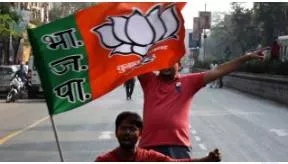
The Left is being pushed to the margins. It must mobilise secular, democratic elements to fight Hindutva forces.Two clear conclusions emerge from the Tripura election verdict. First, it is exceedingly difficult for an Opposition party that has an incumbent (one that occupies a particular position or place) government in any state to withstand the onslaught of the BJP. This party brings to the electoral arena the might of its Central government to buttress (to support, strengthen, or defend (something)) its own well-financed electoral effort.
True, the Manik Sarkar government had been crippled in its last term in office by a financial squeeze which had doubtless affected its performance, but this squeeze itself had been the result as much of the recommendations of successive Finance Commissions that had been grossly unfair to Tripura, as of the Centre’s wilful niggardliness (meanly or ungenerously small or scanty).
By-elections where the BJP gets defeated, and even assembly elections in states where the BJP has been in power, either alone or in alliance, and where the popular wrath (strong vengeful anger or indignation) it has earned leads to an opposition party’s victory, such as in Punjab, cannot negate this fact. An opposition-ruled state government can scarcely survive the single-minded effort of the BJP with its immense resources, combined with the machinations of the central government it controls, to dislodge it from power through electoral means. Even apparently well-entrenched governments like those of Mamata Banerjee and Naveen Patnaik are vulnerable on this score notwithstanding their by-election successes.
Second, in almost every state, the polity is now tending to get polarised into the BJP on one side and one anti-BJP opposition force on the other. The fates of the Aam Aadmi Party in Punjab, of the Congress in Odisha and now in Tripura, are obvious examples of this trend where opposition parties, other than the one which is perceived to be the main anti-BJP force, are getting marginalised. This suggests that those opposed to the BJP are pooling their votes in favour of one anti-BJP party, whose identity may differ from one state to another, instead of frittering (to spend or waste bit by bit, on trifles, or without commensurate return) them by backing candidates belonging to several different parties. The electorate sees the political choice before it as either supporting or keeping out the BJP.
If these trends continue then the ultimate denouement (the outcome of a situation, when something is decided or made clear) will be one where the BJP will be the only overwhelming national party, facing in different states different political opponents; and since these opponents can be easily beaten down, there will be BJP governments in almost all the states. The BJP’s explicitly (in a clear and detailed manner, leaving no room for confusion or doubt) -stated objective of creating an opposition-free India will thus get realised; and in such a case of course ushering in a Hindu Rashtra will pose no great difficulty.
It may well be asked: Are we not exaggerating the dangers of this denouement? Even if it comes to pass, it would be argued, the so-called “anti-incumbency factor” will work against the BJP governments in the different states, if not immediately, then at least after a while; and once these governments are voted out of power, as the Tripura government has been, then BJP rule at the Centre, even if not overthrown in the near future, will become difficult to sustain. Hence there is no need to be greatly exercised over this trend of extreme centralisation of power in the hands of the Hindutva party: This situation, no matter how disturbing in the short run, will get reversed in the long run.
The reasons for disquiet however are several: First, as Keynes had famously remarked, “in the long-run we are all dead”. We cannot, even in principle, simply put our trust in the long run.
Second, one cannot underestimate the Hindutva forces’ ability to manipulate voting behaviour in their own favour, to turn even losing situations into winning ones, in all kinds of devious (showing a skilful use of underhand tactics to achieve goals) ways. These include presiding over communal riots, spreading false rumours, and manufacturing news about “surgical strikes” against this or that “enemy of the nation”. In such a case, the so-called “long run”, when they are supposed to be voted out of power, will never come.
Third, if they are allowed to go their way, with little resistance from the forces of parliamentary opposition, which merely keeps waiting for the arrival of the “long run” when they would have lost their electoral appeal, then other extra-parliamentary forces which represent rival fascisms opposed to them will come up. In that case, the country will be torn apart through vicious (deliberately cruel or violent) conflicts.
The time to intervene, therefore, is now, before it becomes too late. The Left, which is being pushed into the margins by the offensive of the BJP has to defend the nation, and through that very process also defend itself, by mobilising all the secular and democratic elements in society to fight the Hindutva forces before they tighten their stranglehold over it.
Of course, a mere hotch-potch of parties coming together to fight the BJP will carry little credibility with the people; and even if it succeeds in dethroning the BJP, unless it effects some tangible improvement in the people’s lives, it will soon create sufficient disillusionment among them to allow the Hindutva party to come back to power at the next round.
The coming together of the secular and democratic parties, therefore, will have to be around a common minimum programme which is workable and to which all parties coming together are committed. Such a programme must include not only overcoming the pervasive (capable of affecting or influencing everything) fear, the assault on thought, and the flourishing of communal, patriarchal, and casteist attitudes that has occurred of late, but also introducing a set of universal welfare state measures, especially in the spheres of education, employment and health. Whoever is willing to come on such an agenda should be a part of the broad alliance, whose constituents therefore should be decided not on a priori grounds but on this criterion of agreeing to an agenda for change.
For the Left it is a fight for survival. If it recognises the seriousness of the situation and, in the wake of the reverse in Tripura, changes its political stance to take the lead in organising an anti-Hindutva resistance, then some good at least would have come out of the Tripura reverse.










Stay updated with The Hindu Editorial Vocab24 app, your definitive source for breaking news and comprehensive coverage from India and around the globe. Whether it's political developments, business updates, sports highlights, the latest technology trends, or current events, The Hindu brings live, accurate, and reliable news directly to your device.
Don’t fall for sensationalized or fake news shared online. Read and share accurate updates with friends and family through The Hindu Editorial Vocab24 app. Download it today!
News Coverage in The Hindu Editorial Vocab24 App
Breaking News: Receive instant notifications on breaking news stories as they unfold. Stay informed about major events and developments in India and around the world with live blogs, news in shorts videos, and concise articles.
Politics: Get the latest updates on Indian politics, including elections, policy changes, government decisions, and political events that shape the nation.
Business and Economy: Stay ahead in the economic landscape with detailed business news and market analysis. Learn about stock market trends, financial reports, corporate news, and economic developments to make informed investment decisions.
Current Events: Follow stories on social issues, policy changes, global events, and daily current affairs, tailored for UPSC and other competitive exam preparations.
Technology: Keep up with the latest gadgets, innovations, and tech trends. Read expert reviews and analyses in short, concise updates on cutting-edge technology from India and beyond.
Sports: Never miss a moment of your favorite sports. Get live scores, match reports, and expert analysis on cricket, football, tennis, and more.
International News: Stay informed about global events and geopolitical developments, including the Russia-Ukraine war, Israel-Palestine conflict, and other key international stories.
Local News: Stay connected to your community with the latest updates on city events, issues, and local news. Coverage includes hyperlocal updates from cities like Bangalore, Chennai, Delhi, Hyderabad, Mumbai, Kolkata, and more.
Trending Topics: Discover what's trending today with the most talked-about stories and hot topics across India and the world.
Experience journalism that values integrity, accuracy, and reliability. Download The Hindu Editorial Vocab24 app today and stay connected with the world.
Subscribe to our newsletter!







