

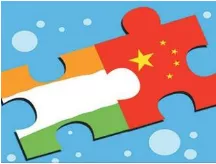
In south asia be the un china
As the stand-off between the Indian and Chinese militaries enters its third month at Doklam, it is not just Bhutan that is keenly anticipating the potential fallout (the adverse results of a situation or action.). The entire neighbourhood is watching. There is obvious interest in how the situation plays out and the consequent change in the balance of power between India and China in South Asia. India’s other neighbours are likely to take away their own lessons about dealing with their respective “tri-junctions” both real and imagined, on land and in the sea. A Chinese defence official was hoping to press that nerve with India’s neighbours when he told a visiting delegation of Indian journalists this week that China could well “enter Kalapani” — an area near Pithoragarh in Uttarakhand that lies along an undefined India-Nepal boundary and a tri-junction with China — or “even Kashmir” with a notional (existing as or based on a suggestion, estimate, or theory; not existing in reality) India-China-Pakistan trijunction. Buzzword is equidistance Perhaps, it is for this reason that governments in the region have refused to show their hand in the Doklam conflict. “Nepal will not get dragged into this or that side in the border dispute,” Nepal’s Deputy Prime Minister Krishna Bahadur Mahara said ahead of a meeting with External Affairs Minister Sushma Swaraj, who had travelled to Kathmandu for the Bay of Bengal Initiative for Multi-Sectoral Technical and Economic Cooperation (BIMSTEC) regional summit. Chinese Vice Premier (a prime minister or other head of government.) Wang Yang will be in Kathmandu next week, and Nepal’s Prime Minister Sher Bahadur Deuba in Delhi the week after. Making a similar point while speaking at a conference on public relations this week, a Sri Lankan Minister in Colombo contended that India and China are “both important” to Sri Lanka. Bhutan’s Foreign Ministry has stuck to its line, blaming China for violating agreements at Doklam, but not mentioning India. Columnists in the country too are increasingly advocating that Bhutan distance itself from both Indian and Chinese positions. A policy of ‘equidistance’ for our closest neighbours is a far cry from (very different from) India’s past primacy in the region and something South Block can hardly be sanguine (optimistic or positive) about. Yet, it is a slow path each of the neighbours (minus Bhutan) has taken in the past few years. When the Maldives first turfed (force (someone) to leave) private infrastructure group GMR out of its contract to develop Male airport in 2012, few could have imagined the situation today with Chinese companies having bagged contracts to most infrastructure projects. This includes development of a key new island and its link to the capital Male and a 50-year lease to another island for a tourism project. Similarly, when the then Prime Minister of Nepal K.P. Sharma Oli signed a transit trade treaty and agreement on infrastructure linkages with China in late 2015-2016, Ministry of External Affairs mandarins had brushed it off as a “bluff”. Today, China is building a railway to Nepal, opening up Lhasa-Kathmandu road links, and has approved a soft loan of over $200 million to construct an airport at Pokhara. According to the Investment Board Nepal, at a two-day investment summit in March this year, Chinese investors contributed $8.2 billion, more than 60% of the foreign direct investment commitments made by the seven countries present. Sri Lanka’s Hambantota port construction project went to the Chinese in 2007 only after India rejected it. Today, China doesn’t just own 80% of the port; it has also won practically every infrastructure contract from Hambantota to Colombo. Chinese President Xi Jinping’s visit to Bangladesh last October was another such overture (an approach), with $24 billion committed in infrastructure and energy projects. Earlier this year, the largely state-owned Chinese consortium, Himalaya Energy, won a bid for three gas fields in Bangladesh’s north-east shoulder from the American company Chevron, which together account for more than half of the country’s total gas output. Even if Pakistan is not counted in this list, it is not hard to see which way India’s immediate neighbours, which are each a part of China’s Belt and Road Initiative (BRI), are headed in the next few years. More pointedly, once the investment flows in, it will be that much harder for them to stave off (रोकना) a more strategic presence which China is now more unabashed (disconcerted) about. If one of the aims of the action in Doklam is to save Bhutan from the same fate, then what else must India do to ensure that China doesn’t succeed in creating similar space for itself in a country that stood by India in its objections to BRI, and bring its other neighbours back? Rebooting SAARC To begin with, India must regain its role as a prime mover of the South Asian Association for Regional Cooperation (SAARC), the organisation it abandoned a year ago over its problems with Pakistan. Despite sneers all around, SAARC has survived three decades in spite of its biggest challenge, India-Pakistan tensions. That New Delhi would cancel its attendance at the summit to be held in Pakistan in the wake of the Uri attack, winning support from other countries similarly affected by terrorism such as Bangladesh and Afghanistan, is understandable. But a year later, the fact that there have been no steps taken to restore the SAARC process is unfortunate. This will hurt the South Asian construct and further loosen the bonds that tie all the countries together, thereby making it easier for China to make inroads. It should be remembered that despite China’s repeated requests, SAARC was one club it never gained admittance to. For all the Narendra Modi government’s promotion of alternate groupings such as South Asia Subregional Economic Cooperation (SASEC), BIMSTEC, the Bangladesh, Bhutan, India, Nepal (BBIN) Initiative and Security and Growth for All in the Region (SAGAR), none will come close to SAARC’s comprehensive cogency (the quality of being clear, logical, and convincing) . Second, India must recognise that picking sides in the politics of its neighbours makes little difference to China’s success there. In Sri Lanka, the Sirisena government hasn’t changed course when it comes to China, and despite its protestations that it was saddled with debt by the Rajapaksa regime, it has made no moves to clear that debt while signing up for more. The United Progressive Alliance government made a similar mistake when President Mohamed Nasheed was ousted in the Maldives, only to find that subsequent governments did little to veer (change direction suddenly) away from Chinese influence. India made its concerns about the then Prime Minister Oli very clear, and was even accused of helping Pushpa Kamal Dahal ‘Prachanda’ to replace him in 2016, yet Nepal’s eager embrace of Chinese infrastructure and trade to develop its difficult terrain has not eased. In Bangladesh too, Prime Minister Sheikh Hasina, who has overseen the closest ties with New Delhi over the past decade, has also forged ahead on ties with China. Should her Awami League lose next year’s election, the Bangladesh Nationalist Party will most certainly strengthen the shift towards China. In Bhutan’s election, also next year, it is necessary that India picks no side, for nothing could be worse than if the Doklam stand-off becomes an India-versus-China China election issue. A policy of respect Above all, India must recognise that doing better with its neighbours is not about investing more or undue favours. It is about following a policy of mutual interests and of respect, which India is more culturally attuned (accustomed or acclimatized) to than its large rival is. Each of India’s neighbours shares more than a geographical context with India. They share history, language, tradition and even cuisine. With the exception of Pakistan, none of them sees itself as a rival to India, or India as inimical (tending to obstruct or harm) to its sovereignty. As an Indian diplomat put it, when dealing with Beijing bilaterally, New Delhi must match China’s aggression, and counter its moves with its own. When dealing with China in South Asia, however, India must do exactly the opposite, and not allow itself to be outpaced. In short, India must “be the Un-China”.Notional (adjective)
Existing as or based on a suggestion, estimate, or theory; not existing in reality) अनुमानित/काल्पनिक
Synonyms: Abstract, Conceptual, Phantasmal, Theoretical
Example: If the actual earnings of the company are close to the notional ones then the performance of the company will be termed as “ideal”.
Sanguine (adjective)
(Optimistic or positive, especially in an apparently bad or difficult situation.) आशापूर्ण/विश्वासपूर्ण
Synonyms: Optimistic, Hopeful, Buoyant, Positive, Upbeat
Example: Since the doctor had told Sharon she could leave the hospital in two days, she was feeling quite sanguine about her recovery.
Turf (verb)
(Force (someone) to leave) निष्कासित करना/बाहर करना
Synonyms: Throw out, Remove, Eject, Expel, Force out, Drive out, Evict, Oust, Dismiss
Example: In August 1990, Iraq seized Kuwait, but was turfed by American-led United Nations coalition forces during the Gulf War.
Stave off (phrasal verb)
To hold someone or something off/ to defend against the attack of someone or something. रोकना
Synonyms: Hold off, Ward off, To delay (from imminent danger)
Example: The army staved off the attackers for three hours without letup.
Abash (verb)
(Make (someone) feel embarrassed, disconcerted, or ashamed.) लज्जित करना/शर्मिंदा करना
Synonyms: Embarrass, Feel or make ashamed, Humiliate, disconcert
Example: Because he doesn’t have any empathy, the evil man finds it fun to abash and embarrass others.
Cogency (noun)
(The quality of being clear, logical, and convincing) सुबोधगम्यता/स्पष्टता
Synonyms: Plausibility, Effectiveness, Efficacy, Logicality, Reasonableness, Rationality, Lucidity, Coherence
Example: An experienced speaker, John knew how to deliver a presentation with cogency that would easily engage his audience.
Veer (verb)
(Change direction suddenly) दिशा बदलना
Synonyms: Change direction, Change course, Go off course, Deviate, Be deflected, Diverge, Turn (aside), Branch off
Example: The captain of the Titanic attempted to veer out of the way of the iceberg but the ice sideswiped the hull and the ship began to take on water.
Attune (verb)
(Be accustomed or acclimatized) अनुकूल करना या होना
Synonyms: Accustom, Adjust, Adapt, Acclimatize, Assimilate, Accommodate
Example: After years spent in music, he's finding it difficult to attune himself to the corporate culture.
Inimical (adjective)
(Tending to obstruct or harm) अहितकर/प्रतिकूल
Synonyms: Harmful, Injurious, Detrimental, Deleterious, Pernicious, Antagonistic
Example: Not wearing a helmet while driving a scooter can be inimical to your life.
A far cry (idiom)
(Very different from) बहुत दूर/एकदम अलग
Synonyms: Different, Diverge From, Of Variance, Of Dissimilitude
Example: Living in the heart of New York City is certainly a far cry from living in the rural countryside.






Stay updated with The Hindu Editorial Vocab24 app, your definitive source for breaking news and comprehensive coverage from India and around the globe. Whether it's political developments, business updates, sports highlights, the latest technology trends, or current events, The Hindu brings live, accurate, and reliable news directly to your device.
Don’t fall for sensationalized or fake news shared online. Read and share accurate updates with friends and family through The Hindu Editorial Vocab24 app. Download it today!
News Coverage in The Hindu Editorial Vocab24 App
Breaking News: Receive instant notifications on breaking news stories as they unfold. Stay informed about major events and developments in India and around the world with live blogs, news in shorts videos, and concise articles.
Politics: Get the latest updates on Indian politics, including elections, policy changes, government decisions, and political events that shape the nation.
Business and Economy: Stay ahead in the economic landscape with detailed business news and market analysis. Learn about stock market trends, financial reports, corporate news, and economic developments to make informed investment decisions.
Current Events: Follow stories on social issues, policy changes, global events, and daily current affairs, tailored for UPSC and other competitive exam preparations.
Technology: Keep up with the latest gadgets, innovations, and tech trends. Read expert reviews and analyses in short, concise updates on cutting-edge technology from India and beyond.
Sports: Never miss a moment of your favorite sports. Get live scores, match reports, and expert analysis on cricket, football, tennis, and more.
International News: Stay informed about global events and geopolitical developments, including the Russia-Ukraine war, Israel-Palestine conflict, and other key international stories.
Local News: Stay connected to your community with the latest updates on city events, issues, and local news. Coverage includes hyperlocal updates from cities like Bangalore, Chennai, Delhi, Hyderabad, Mumbai, Kolkata, and more.
Trending Topics: Discover what's trending today with the most talked-about stories and hot topics across India and the world.
Experience journalism that values integrity, accuracy, and reliability. Download The Hindu Editorial Vocab24 app today and stay connected with the world.
Subscribe to our newsletter!







