

Healing the sea
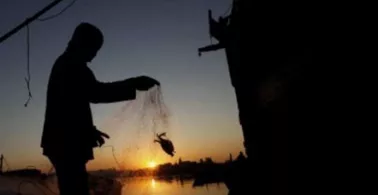
The Sri Lankan Parliament’s unanimous amendment of its Fisheries and Aquatic Resources Act last week to ban trawling is a bold step from both political and ecological perspectives. It will have an impact on the conflict between Indian Tamil fishermen and the fishermen of Northern Sri Lanka who fish in the Palk Bay, a highly productive but spatially limited marine ecosystem. During the ethnic conflict in Sri Lanka’s northern districts, Colombo had prohibited all coastal fishing in a bid to curb the LTTE’s naval prowess. The Indian fishermen in the Palk Bay took advantage of the cessation of fishing on the Sri Lankan side and expanded their trawler fleet. They also made risky fishing ventures into Sri Lanka’s Exclusive Economic Zone. Their clashes with the Sri Lankan Navy often resulted in the impounding of trawlers, arrests and jail terms for fishermen. The civil war in Sri Lanka ended in 2009. When the fishermen of northern Sri Lanka set out to restart their lives, they found the coastal ecosystem significantly damaged. It was attributed to incessant bottom trawling by Indian fishers. Requests were made to their Tamil brethren in India to stop this manner of fishing. Negotiations yielded little in terms of a sensible compromise from the Indian side. Politicians and fishermen were unwilling to give up trawling due to large profits. However, from a marine ecological standpoint and socio-economic and justice perspectives, trawling must be banned in coastal waters of all tropical Asian countries. Trawling — more specifically bottom-trawling — is a fishing technique where a heavy bag-shaped net is dragged along the sea bottom using a mechanically powered boat. The technique, originally applied in fishing nations in the temperate waters, was introduced in Asian tropical waters on a commercial scale after World War II. In India, it was popularised in the late 1950s by the Indo-Norwegian Fisheries Project in Kerala to take advantage of the demand for prawns in the international market. During that time trawling was banned in Norwegian coastal waters. Small-scale fishermen in Asia catch prawns using selective fishing nets during the season when the prawns moved up to the surface waters. Trawling, a more efficient and active technique, could “plough out” prawns from their marine habitats at the sea bottom, resulting in a manifold increase in output. The bonanza from this “pink gold” rush resulted in another sea change in Asian fisheries. The need for large investment and the huge profit potential of prawn exports saw new capital entering marine fisheries in Asia. Foreign exchange earnings from prawns meant that trawlerisation got state support. In India, prawns was the top commodity in our foreign trade basket during the 1970s and ’80s in terms of net foreign exchange earnings. Extensive trawlerisation engendered conflicts in Asian waters. In Indonesia, conflicts took racial overtones as trawlers were owned by Chinese capitalists. The widespread and violent protests by local small fishermen forced the military dictatorship to pronounce the first-ever trawler ban in Asia in 1980. In India, the National Fishworkers Forum started protests against trawling in 1978. Monsoon trawl ban was introduced in Kerala in 1984. Other maritime states followed. Trawling was developed in the temperate marine waters, which are home to fewer species. Inter-species interactions are limited there, while each species is available in millions of tonnes. In such an ecological context, trawling is not overly destructive. In tropical marine waters, there are thousands of species, exhibiting phenomenal inter-species interactions, but each in limited quantities. Trawls used in such a milieu damage the ecosystem. Trawling of the sea bottom is akin to clear-felling of tropical forests. Trawling is not an ecosystem-neutral technology. Every technology carries the code of the ecosystem and the society in which it is created. Merely changing the ownership pattern does not solve the ecological issues. The Sri Lankan trawling ban is bound to upset the calculations of trawler owners on the Indian coast of the Palk Bay. But in the long run, this bold measure will be a source of healing for the marine ecosystem and a blessing for the small scale fishers on both sides.
Bellwether in crisis
Aug 19, 2017
Remaking the board
Aug 19, 2017
Unsportsmanlike
Aug 13, 2017
Ties that bind
Aug 06, 2017
Defenders of varna
Aug 05, 2017
What the gods drank
Jul 30, 2017





Stay updated with The Hindu Editorial Vocab24 app, your definitive source for breaking news and comprehensive coverage from India and around the globe. Whether it's political developments, business updates, sports highlights, the latest technology trends, or current events, The Hindu brings live, accurate, and reliable news directly to your device.
Don’t fall for sensationalized or fake news shared online. Read and share accurate updates with friends and family through The Hindu Editorial Vocab24 app. Download it today!
News Coverage in The Hindu Editorial Vocab24 App
Breaking News: Receive instant notifications on breaking news stories as they unfold. Stay informed about major events and developments in India and around the world with live blogs, news in shorts videos, and concise articles.
Politics: Get the latest updates on Indian politics, including elections, policy changes, government decisions, and political events that shape the nation.
Business and Economy: Stay ahead in the economic landscape with detailed business news and market analysis. Learn about stock market trends, financial reports, corporate news, and economic developments to make informed investment decisions.
Current Events: Follow stories on social issues, policy changes, global events, and daily current affairs, tailored for UPSC and other competitive exam preparations.
Technology: Keep up with the latest gadgets, innovations, and tech trends. Read expert reviews and analyses in short, concise updates on cutting-edge technology from India and beyond.
Sports: Never miss a moment of your favorite sports. Get live scores, match reports, and expert analysis on cricket, football, tennis, and more.
International News: Stay informed about global events and geopolitical developments, including the Russia-Ukraine war, Israel-Palestine conflict, and other key international stories.
Local News: Stay connected to your community with the latest updates on city events, issues, and local news. Coverage includes hyperlocal updates from cities like Bangalore, Chennai, Delhi, Hyderabad, Mumbai, Kolkata, and more.
Trending Topics: Discover what's trending today with the most talked-about stories and hot topics across India and the world.
Experience journalism that values integrity, accuracy, and reliability. Download The Hindu Editorial Vocab24 app today and stay connected with the world.
Subscribe to our newsletter!







