

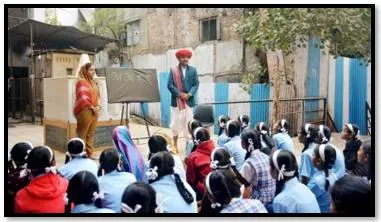
Erasure of caste in universities existed during colonialism but its roots much deeper
IIT Bombay has ruled that the death of Darshit Solanki was due to academics, and not caste; as if the two are independent.This article comes in the aftermath of the alleged suicide of Darshit Solanki, a B.Tech first-year Dalit student— at IIT Bombay, an ‘Institute of Eminence’.
A 12-member committee, appointed by IIT-B to investigate the death, submitted an interim report earlier this month. The report shifts the blame from caste discrimination to his alleged “deteriorating academic performance”. As if academic performance and merit are independent of caste.
This is a classic case of caste erasure, or ‘castelessness’, where caste becomes a lower-caste problem, while the oppressor castes ride on the high horses of merit and excellence. Upper-caste Hindu students and faculties transform caste into merit, talent and national development, lower caste and Dalit students continue to experience caste exclusions and humiliations as it is.
It impacts the everyday social interactions and life experiences of students and faculty in higher education spaces. The latest developments in the case, a note that points to Solanki’s upper caste roommate, gives a glimpse into how caste affected his experience.
Based on the historical trajectory of higher education in India, I argue that caste is the dominant mode of inequality and it is sustained, contested and negotiated by various social groups.
This article attempts to historicise the question of caste in the Indian educational system, from colonial times. This will contextualise the problem in contemporary times.
Colonial legacy
With the onset of British colonialism in the 18th century, they sought to expand the education sector. In the late 18th and 19th centuries, they established a plethora of schools and colleges across India.
In her book Beyond Macaulay: Education in India, Parimala Rao, historian of education, writes that some of these were the Government Sanskrit College in Varanasi (1791), now called Sampurnanand Sanskrit Vishwavidyalaya; Hindoo College in Kolkata (1817), now called Presidency University; Poona Sanskrit College (1821), now Deccan College. All of these colleges gave access to Brahmins alone.
The places like Agra College (1824) and Delhi College (1825) were meant for the Hindu and Muslim land-owning aristocracy.
Unsurprisingly, the upper-caste Hindus and Muslims opposed higher education for Dalits and lower castes; on many occasions, it is recorded that caste Hindus left the school en masse because the Dalits were enrolled in the same classes as them, writes Rao.
Historically, in India, education was a preserve of the higher caste ‘twice-born’ Hindus, particularly, the Brahmins, who ascribed to themselves the roles of teaching, learning, and priestly duties. One of the core features of the religious Hindu scriptures was to deny subordinated caste groups access to education.
Caste groups such as Brahmins, Khatris, and Kayasthas who had exclusive access to education under various Hindu and Muslim rulers were employed as scribes, advisors, and clerks in British India.
Some of these caste groups who were already in established positions formed alliances with the colonialists. The Bania groups in western India deployed their business of brokerage and commercial activities for their own benefits as well as to sustain the British empire. While the Tamil Brahmins in southern India continued to preside as hereditary landlords under the colonial land revenue system.
Thus, it can be argued that caste led to differential access to education even in the colonial period.
However, there were leaders from lower caste communities such as Jyotiba Phule and Savitribai Phule who advocated education for subordinated caste groups. They opened the first-ever school for women and lower castes in India and also petitioned the government to expand education for disadvantaged sections of society.
In the South, Mahatma Ayyankali strived for the same. “If you don’t allow our children to study, weeds will grow in your fields,” he famously said regarding the education of Dalit children.
In Cultivator’s Whipcord (1883), Jotiba Phule writes about the importance of education for the Shudras (Backward Classes) and Ati Shudras (untouchables). “Without education, wisdom was lost; without wisdom, morals were lost; without morals, development was lost; without development, wealth was lost; without wealth, the Shudras were ruined; all of it happens through the lack of education.”
During the early decades of the 20th century, the non-Brahmin and Dalit-led movements demanded reservation policies to counter the inequalities pervasive in higher education and employment opportunities, particularly in south Indian states such as Tamil Nadu and Karnataka. They believed that education could be an emancipatory tool for Dalit-Bahujans in their fight against caste and to create an egalitarian society.
Post-Independence Indian dream
In the immediate decades after Independence, the Nehruvian regime expanded the scope of higher education by establishing various IITs, IIMs, medical colleges, and central universities. But there was no reservation policy for Backward Castes (OBCs) and higher educational institutions were reluctant to implement reservations for SC/ST students. It was only in the early 1990s that Dalit and Adivasi students started entering higher education in comparatively higher numbers. But it was largely limited to social sciences and humanities departments in central and state universities.
Engineering and medical colleges continued to be exclusive spaces for higher-caste Hindu students. The students in these fields have even taken an active role in violent agitations against reservations — be it in Gujarat in 1981 or in New Delhi and Mumbai in 2006 or during the Anti-Mandal protests in the 90s.
In the past couple of decades, academic spaces have witnessed an increased intake of Dalit-Bahujan-Adivasi (DBA) students. The barriers to entry have been to an extent, made flexible, but the problems upon entering have not ceased.
The absence of a socio-political redressal system in the form of a lack of SC/ST cells, caste-tribal sensitive mental health support systems, and overall lack of students from similar backgrounds in these spaces pose a range of barriers for students to excel in academia. They agonise the Darshans, Rohiths, Anikets, Payals, and endless others, who enter these spaces and continue to suffer in silence.
When DBA students attempt to address the caste question in universities, their struggles and identities are forced to subsume under academic pressure, fear from administration, prevailing dominant cultural interests, and hence they are forced to mask their identities.
I believe this is a sociocultural problem and hence needs to be dealt with in that way. We need to send more and more DBA students to universities and create ecosystems that support them. Only then can university spaces be democratised and historical undoings corrected.
Raju Kendre is the founder of Eklavya India Movement, which works towards the democratisation of higher education in India. Susmit Panzade is a student, pursuing a Research degree from IIT Bombay. Views are personal.









Stay updated with The Hindu Editorial Vocab24 app, your definitive source for breaking news and comprehensive coverage from India and around the globe. Whether it's political developments, business updates, sports highlights, the latest technology trends, or current events, The Hindu brings live, accurate, and reliable news directly to your device.
Don’t fall for sensationalized or fake news shared online. Read and share accurate updates with friends and family through The Hindu Editorial Vocab24 app. Download it today!
News Coverage in The Hindu Editorial Vocab24 App
Breaking News: Receive instant notifications on breaking news stories as they unfold. Stay informed about major events and developments in India and around the world with live blogs, news in shorts videos, and concise articles.
Politics: Get the latest updates on Indian politics, including elections, policy changes, government decisions, and political events that shape the nation.
Business and Economy: Stay ahead in the economic landscape with detailed business news and market analysis. Learn about stock market trends, financial reports, corporate news, and economic developments to make informed investment decisions.
Current Events: Follow stories on social issues, policy changes, global events, and daily current affairs, tailored for UPSC and other competitive exam preparations.
Technology: Keep up with the latest gadgets, innovations, and tech trends. Read expert reviews and analyses in short, concise updates on cutting-edge technology from India and beyond.
Sports: Never miss a moment of your favorite sports. Get live scores, match reports, and expert analysis on cricket, football, tennis, and more.
International News: Stay informed about global events and geopolitical developments, including the Russia-Ukraine war, Israel-Palestine conflict, and other key international stories.
Local News: Stay connected to your community with the latest updates on city events, issues, and local news. Coverage includes hyperlocal updates from cities like Bangalore, Chennai, Delhi, Hyderabad, Mumbai, Kolkata, and more.
Trending Topics: Discover what's trending today with the most talked-about stories and hot topics across India and the world.
Experience journalism that values integrity, accuracy, and reliability. Download The Hindu Editorial Vocab24 app today and stay connected with the world.
Subscribe to our newsletter!







