

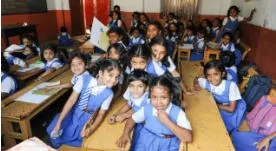
Equity fused with right
The Right of Children to Free and Compulsory Education Act was enacted in 2009. The RTE Act uniquely creates an obligation for unaided private schools located within a range of one km from the house of an applicant to provide primary education until class 8 free of cost.For the education provided, such unaided private school could seek reimbursement from the state. The RTE Act, 2009 endeavors to create an egalitarian (believing in or based on the principle that all people are equal and deserve equal rights and opportunities.) society promoting equality of opportunity and outcome to children from economically weaker section (EWS) and disadvantaged category (DG).
The recent judgment passed by the Hon’ble Allahabad High Court in Sudheer Kumar v. State of U.P. has universal appeal and ubiquitous (present, appearing, or found everywhere.) utility.
This judgment could set right what is wrong with the interpretation of the concept of ‘neighbourhood’ under the RTE Act, 2009 in India. The Allahabad High Court passed this order while hearing a petition of a manual labourer whose five year old son applied for admission in a prestigious private school in Allahabad, and was spurned (reject with disdain or contempt.).
The reason supplied by the school was that the applicant failed to comply with the neighbourhood criteria as laid down in the U.P. RTE Rules of 2011.
The concept of neighbourhood purports (appear to be or do something) to provide education to EWS and DG students in private unaided schools that fall within the range of one km from the house of a child. The rules drafted pursuant to RTE, 2009 in almost all the states endeavor to adopt this definition of neighbourhood. This has been done to promote the value of certainty and avoid any unsolicited (not asked for; given or done voluntarily.) chaos relating to admission.
In the absence of this rule, a child from any part of the district could have applied to any school, and this would have invested the school with an unfettered power to discriminate amongst the applicants in deciding the beneficiary.
This rule of one km guides the discretion (the freedom to decide what should be done in a particular situation.) of the schools and shackles (restrain; limit.) it by setting out geographical contours in providing admission to applications. The Allahabad High Court, in a detailed judgment, held that neighbourhood criteria cannot mutilate the pristine (not spoiled, corrupted, or polluted) purpose of the RTE Act, 2009 which endeavors to provide primary education to EWS and DG children in private unaided schools.
The judgment is unique in its ability to usher the jurisprudence on RTE Act, 2009 by equitably interpreting the neighbourhood criterion to grant relief to millions of children in the state. In Sudheer Kumar, the High Court made the distinction between those instances in which applications are more than the seats in a school and those in which seats are more than the applications.
The court majestically fused the principles of equity with right and gave it a tinge (a slight trace of a feeling or quality.) of altruism by spelling out that the concept of neighbourhood shall only apply in those cases where seats are less and students are more and not in those instances where seats are more than the students.
The court asserted that a subordinate law cannot subvert the principles ensconced in the enabling statute. This extraordinary interpretation echoes the spirit of 25 per cent in the RTE Act, 2009 and reinstates the hope of a weak parent in obtaining what is due to her – her rightful claim.
The use of ‘costs’ in imposing an obligation to provide for free senior secondary education is new to the jurisprudence of socio-economic rights.
Since the litigation led to wastage of an academic year of the child, the court imposed costs on the school, and directed it to provide additionally education from class 9 to class 12 for free. This moral invocation of cost imbued with elements reflecting importance associated with primary education, might check the impishness (full of ill intentions) of private schools.
To conclude, this judicious interpretation may go a long way in informing the other states in interpreting the neighbourhood criteria in promoting values of equity and equality.
The healing ability of this judgment could downplay the role of destiny, and offer a fair chance to millions of children across India in leading a dignified life.


Philippines president rodrigo duterte slams unhcr
Apr 06, 2018
Oli to take up currency ban issue with pm modi
Apr 02, 2018
Curbing the khaps
Apr 01, 2018





Stay updated with The Hindu Editorial Vocab24 app, your definitive source for breaking news and comprehensive coverage from India and around the globe. Whether it's political developments, business updates, sports highlights, the latest technology trends, or current events, The Hindu brings live, accurate, and reliable news directly to your device.
Don’t fall for sensationalized or fake news shared online. Read and share accurate updates with friends and family through The Hindu Editorial Vocab24 app. Download it today!
News Coverage in The Hindu Editorial Vocab24 App
Breaking News: Receive instant notifications on breaking news stories as they unfold. Stay informed about major events and developments in India and around the world with live blogs, news in shorts videos, and concise articles.
Politics: Get the latest updates on Indian politics, including elections, policy changes, government decisions, and political events that shape the nation.
Business and Economy: Stay ahead in the economic landscape with detailed business news and market analysis. Learn about stock market trends, financial reports, corporate news, and economic developments to make informed investment decisions.
Current Events: Follow stories on social issues, policy changes, global events, and daily current affairs, tailored for UPSC and other competitive exam preparations.
Technology: Keep up with the latest gadgets, innovations, and tech trends. Read expert reviews and analyses in short, concise updates on cutting-edge technology from India and beyond.
Sports: Never miss a moment of your favorite sports. Get live scores, match reports, and expert analysis on cricket, football, tennis, and more.
International News: Stay informed about global events and geopolitical developments, including the Russia-Ukraine war, Israel-Palestine conflict, and other key international stories.
Local News: Stay connected to your community with the latest updates on city events, issues, and local news. Coverage includes hyperlocal updates from cities like Bangalore, Chennai, Delhi, Hyderabad, Mumbai, Kolkata, and more.
Trending Topics: Discover what's trending today with the most talked-about stories and hot topics across India and the world.
Experience journalism that values integrity, accuracy, and reliability. Download The Hindu Editorial Vocab24 app today and stay connected with the world.
Subscribe to our newsletter!







