English in India, a language that has earned its place
What makes a language Indian? A recent observation by the Supreme Court of India has revived the debate over whether English can be considered an indigenous language of India. The debate over the place of English in India has often been framed as a contest between English and Indian languages. Such a binary is both historically misleading and politically unhelpful. The promotion of Indian languages such as Hindi, Tamil, Telugu, Odia, Kannada, or Marathi need not — and should not — be predicated upon denying recognition or patronage to English. The future of India’s linguistic diversity lies not in choosing one language over another but in nurturing multilingualism. English may not be an indigenous language in the same historical sense as Sanskrit or Tamil, yet, over two centuries, has acquired a legitimate claim to belong to India.A language transformed
The strongest objection to treating English as an Indian language is that it arrived with British colonialism. It was introduced to facilitate administration, commerce, missionary activity, and what the colonial rulers described as their civilising mission. In its early history, English undoubtedly served the interests of the Empire. Yet, languages cannot be permanently imprisoned by the circumstances of their arrival. Their identities are continually reshaped by the people who speak them. Once English entered India, Indians appropriated it, transformed it, and made it serve Indian aspirations rather than colonial objectives.
By the early 19th century, English had already become an instrument of Indian political and intellectual expression. In 1823, Raja Ram Mohan Roy and his associates submitted one of the earliest petitions in English defending the freedom of the Indian-language press in Calcutta. Later in the century, Dadabhai Naoroji marshalled his famous “Drain Theory” in English to expose the economic exploitation of India under British rule. Swami Vivekananda addressed educated India in English through his celebrated lecture, ‘My Plan of Campaign’, delivered in Madras in 1897. Mahatma Gandhi himself translated Hind Swaraj into English, recognising that the language could carry Indian ideas to both national and international audiences. To deny English a place in India is, in some measure, to overlook the contributions of generations of Indians who employed the language to articulate Indian nationalism, social reform, and cultural renaissance.
After Independence, India indeed found a place for English. The Constituent Assembly debates on the language question adopted a balanced resolution. Moved by K.M. Munshi and N. Gopalaswami Ayyangar, it recognised Hindi as the Official Language of the Union and retained English for official purposes. Over the subsequent decades, English has evolved into one of the principal languages of Indian academic and administrative domains, including but not limited to the legislature, the executive and the judiciary.
India has also recognised English as a language of Indian creativity. The Sahitya Akademi has treated English as one of the languages of Indian literature, conferring annual awards. Indian Writing in English has developed into one of the richest literary traditions in the postcolonial world. From R.K. Narayan, Mulk Raj Anand to Amitav Ghosh and Vikram Seth, Indian writers have demonstrated that English can express Indian experiences with authenticity, subtlety, and artistic distinction.
Reach and scale
It is often argued that only a small section of Indians speak English. This is not exactly the case. The Census of 2011 reports that nearly 129 million Indians chose English as a first, second or third language. These numbers make India one of the largest English-speaking countries in the world. Nearly 2,60,000 people reported English to be their mother tongue. A whopping 83 million identified it as their second language. About 46 million spoke it as their third language. Scholars observe that the number of Indians who possess at least a functional knowledge of English may well have further increased to the range of 180 million to 250 million given the rapid expansion of English-medium education over the last decade. These statistics suggest that English has become the language of aspiration for a large segment of the Indian society.
As an aspirational people, Indians invest considerable effort and money in education. Nearly 31,000 schools affiliated to the Central Board of Secondary Education (CBSE) impart education primarily through English. So do the 3,000 schools which are affiliated to comparable boards such as the Council for the Indian School Certificate Examinations. Let us not forget that English is also the principal medium of education in all premier higher educational institutions of India.
In a wide range of professional fields that produce wealth and service, English has become the language through which India engages with the world. This is an advantage that India presently possesses over several other competing nations, and it would be wise for it to continue to invest its resources in further expanding the English language skills of Indians.
It also needs to be pointed out that India has Indianised English. Raja Rao spoke about it in the well-known Foreword to his novel Kanthapura way back in 1938. Just as Canada and Australia had fashioned their own versions of English, Rao felt, so would India. That prediction has been fully realised. Indian English today possesses its own pronunciation, vocabulary, idioms, and rhetorical conventions. It reflects Indian social realities and cultural sensibilities while remaining part of the larger global family of Englishes.
Taking root
This process of linguistic naturalisation is captured in V.K. Gokak’s poem ‘English Words’: “O winged seeds! You crossed the furrowed seas/To nestle in the warm and silent earth./...You ripened into nectar in fruit-jars/That hung like clustered stars.” Gokak’s metaphor is striking. English words arrive as seeds from distant shores, but they do not remain foreign. They take root in Indian soil, acquire new life, and bear fruit that belongs as much to India as to anywhere else. A similar sensibility informs A.K. Ramanujan’s ‘Prayers to Lord Murugan’, where an Indian poet employs English not as a borrowed medium but as a natural vehicle for expressing Indian mythology, philosophy, and devotion. Such works demonstrate that languages are ultimately shaped not by their origins but by the communities that inhabit them.
Ironically, many of the strongest advocates of Indian languages have themselves turned to English when addressing a pan-Indian or international audience. Kannada scholar and Jnanpith awardee V.K. Gokak argued for the unity of Indian literature through English in works such as The Concept of Indian Literature and Pathways to the Unity of Indian Literature.
Monolingualism has never been the historical reality of Indian society. India has always deeply cherished languages that Indians speak in their homes and among kith and kin. At the same time, they have spoken in other languages with considerable facility and comfort. English is not in competition with Hindi or Tamil. Rather it is a language that provides Indians with an already historically familiar bridge to connect with other language-speaking communities both within and beyond India.
It is not an important question, therefore, whether English is an indigenous language. It is not. More important is the realisation that through history and literature, constitutional practice and governance, and through everyday usage, English has earned the right to be regarded as one of modern India’s own languages. It is useful to remember that English has long ceased to be the language of colonial rulers. It has evolved into one of the several languages in which Indians imagine themselves. Indian English belongs to India.
English is no longer colonial and has evolved into a language, shaped by how Indians speak, think, and imagine themselves
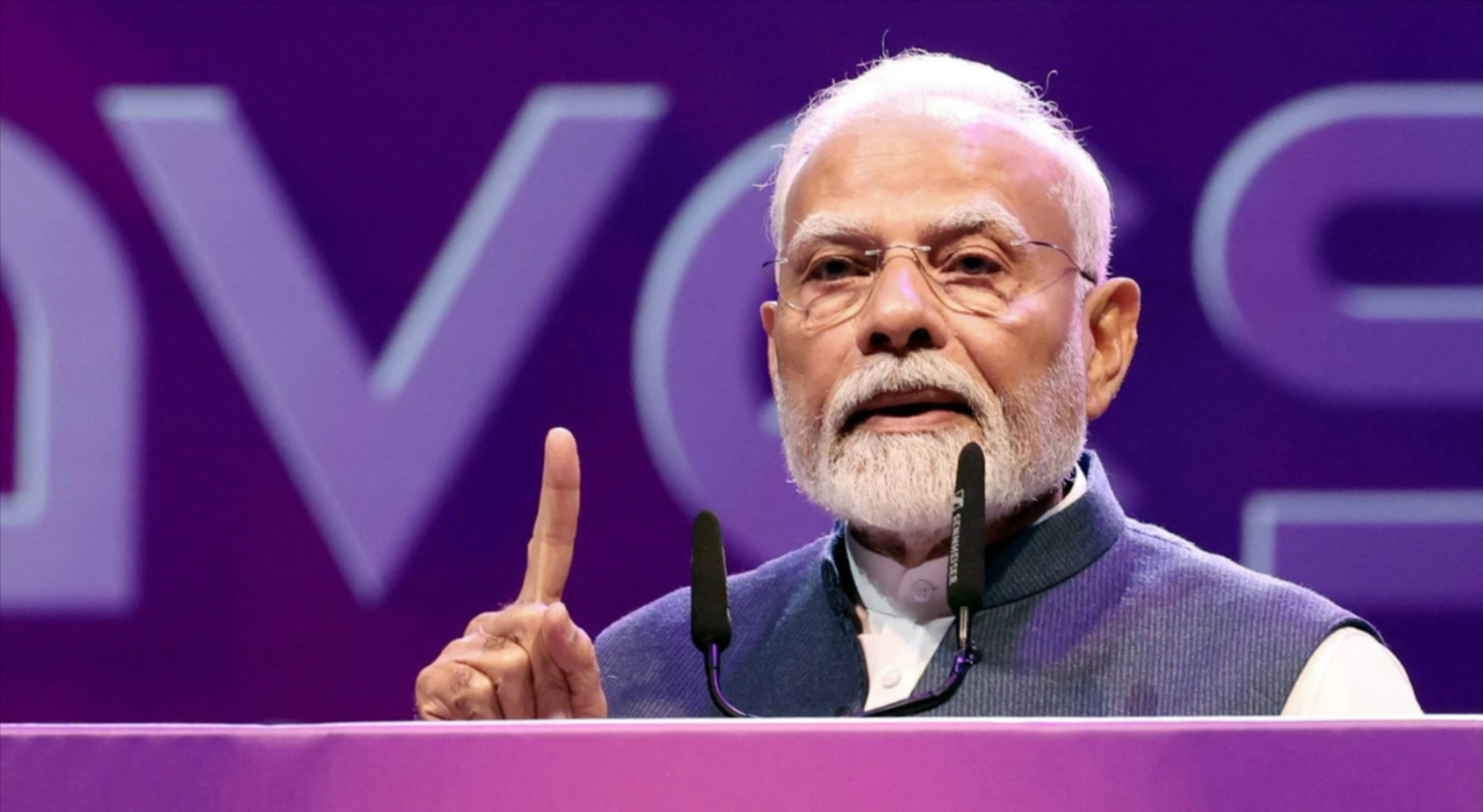
During the WAVES Summit in Mumbai, Prime Minister Narendra Modi underlined India's developing position in the global creative economic sector. During his opening address, India earned the description of an "orange economy" because cultural and creative sectors drive both financial growth and job creation. Rajnikanth and Mukesh Ambani joined

The Mahahtra government achieved a historical milestone by returning to India the historic sword of Raghuji Bhosale I during a Sotheby’s auction in London, which belonged to a notable 18th-century Maratha ruler. The state of Mahahtra achieves its first success in acquiring historical artifacts from international auctions. The bidding


Stay updated with The Hindu Editorial Vocab24 app, your definitive source for breaking news and comprehensive coverage from India and around the globe. Whether it's political developments, business updates, sports highlights, the latest technology trends, or current events, The Hindu brings live, accurate, and reliable news directly to your device.
Don’t fall for sensationalized or fake news shared online. Read and share accurate updates with friends and family through The Hindu Editorial Vocab24 app. Download it today!
News Coverage in The Hindu Editorial Vocab24 App
Breaking News: Receive instant notifications on breaking news stories as they unfold. Stay informed about major events and developments in India and around the world with live blogs, news in shorts videos, and concise articles.
Politics: Get the latest updates on Indian politics, including elections, policy changes, government decisions, and political events that shape the nation.
Business and Economy: Stay ahead in the economic landscape with detailed business news and market analysis. Learn about stock market trends, financial reports, corporate news, and economic developments to make informed investment decisions.
Current Events: Follow stories on social issues, policy changes, global events, and daily current affairs, tailored for UPSC and other competitive exam preparations.
Technology: Keep up with the latest gadgets, innovations, and tech trends. Read expert reviews and analyses in short, concise updates on cutting-edge technology from India and beyond.
Sports: Never miss a moment of your favorite sports. Get live scores, match reports, and expert analysis on cricket, football, tennis, and more.
International News: Stay informed about global events and geopolitical developments, including the Russia-Ukraine war, Israel-Palestine conflict, and other key international stories.
Local News: Stay connected to your community with the latest updates on city events, issues, and local news. Coverage includes hyperlocal updates from cities like Bangalore, Chennai, Delhi, Hyderabad, Mumbai, Kolkata, and more.
Trending Topics: Discover what's trending today with the most talked-about stories and hot topics across India and the world.
Experience journalism that values integrity, accuracy, and reliability. Download The Hindu Editorial Vocab24 app today and stay connected with the world.
Subscribe to our newsletter!