

Dichotomy that is india
I am myself influenced by the reality and myth about India, and feel that anything that had the power to mould hundreds of generations, without a break, must have drawn its enduring vitality from some deep well of strength, and have had the capacity to renew that vitality from age to age. ~ Jawaharlal Nehru, Discovery of IndiaIndia was once known as the mine of wisdom and the fountainhead of justice and was also credited with excellent intellect, exalted (of a noble, elevated, or lofty nature.) ideas, universal maxims ( a short, pithy statement expressing a general truth or rule of conduct.), rare inventions and wonderful talents. But modern India is marked by various contradictions. Despite its impressive growth, the country now has the largest number of illiterates, most of the undernourished children and anaemic mothers. Millions are jobless both in the countryside as well as in towns and cities. The tryst (good relatioship) with destiny, promised seven decades ago, still remains elusive.
The saddest paradox (a seemingly absurd or contradictory statement or proposition which when investigated may prove to be well founded or true.) is that while the country boasts the world’s second largest pool of trained scientists and engineers, around 52 per cent of the primary schools have only one teacher for two classes. The country produces the most sophisticated (having, revealing, or involving a great deal of worldly experience and knowledge of fashion and culture.) software for US computer manufacturers, but has the largest number of school dropouts in the world and nearly half the population is illiterate. To these problems can be added hunger and diseases.
Martin Feldstein, the eminent Harvard economist, in an essay in the Wall Street Journal wrote: “Cell phone service is widely available in India at low cost because it was regarded as a luxury and therefore left to the market, while electricity is hard to obtain because it was regarded as a necessity and therefore managed by the government.”
The dichotomy (a division or contrast between two things that are or are represented as being opposed or entirely different.) is the striking feature. An estimated 25 per cent of our population is economically advanced with access to the latest technology, while the rest wallows (indulges) in inhuman conditions. The grim (very serious or gloomy.) reality must make one wonder whether this is 21st century AD or 21st century BC.
The India that is perceived as a global economy is a young India with more than 62 per cent of its population in the 15-59 working age group, and more than 54 per cent below 25. While the global population is ageing rapidly, India is the world’s youngest country. The young are in a position to effect changes and can serve as the engine of growth.
According to a World Bank report, India’s working age population will continue to grow at least till 2040, and this can propel the country from a ‘developing’ to a ‘developed nation.’ For all that, the country lacks trained manpower. Meeting the aspirations of the youth, coupled with economic growth, is central to the development agenda.
The formidable (inspiring fear or respect through being impressively large, powerful, intense, or capable.) challenge is to equip youth with employable skills and to ensure there is no mismatch between demand for jobs and supply. To achieve this dream, the government has taken up skill development initiatives under the slogan of Kaushal Bharat, Kushal Bharat. It has also launched such programmes as Make in India, Skill India Mission, Startup India, Stand up India and Digital India. These initiatives are aimed at bridging the gap and to transform the mindset of the youth from one of job-seeker to job provider.
The Make-in-India campaign needs to be finetuned. Create-in-India might be a better mantra. Digital India envisages a new phase in transforming the largest democracy into a stronger democracy. Indeed, digital connectivity creates a level playing field for all citizens. Irrespective of demographic and socioeconomic strata, Indians today are increasingly savvy (shrewd and knowledgeable;) thanks to the evolution of internet and mobile phones.
The Digital India programme provides for digital literacy, digital resource, and collaborative digital platforms. The gap between rich and poor shows no sign of narrowing. The richest one per cent stake claim to 60 per cent of the country’s total wealth, and the 50 per cent in the lowest rung collectively own only 2 per cent of the national wealth. Indeed, we live in two India ~ the country of glitter and privilege and the country of despair, rage and grinding poverty.
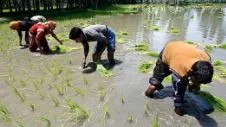
As the former Vice-President, Hamid Ansari, said: “Inequality is the No. One risk The rising inequality is seen as a contributing cause for the rise of authoritarian leaders, often with a divisive agenda fuelled by the sectarianism, xenophobia and nationalism. The basic culture of India is agriculture.” Most worryingly, rising inequality results in conflict, and threatens the stability of democracies. Indian farmers once enjoyed a certain status in society, but today they are trapped in a vicious cycle of poverty because, as macro and micro data reveal, their earnings barely cover the costs of cultivation.
A 2016 report by NITI Aayog states that around 53 per cent of farmers live below the poverty line. Indebtedness and inability to repay loans have driven many farmers to commit suicide. The latest data furnished by the National Crime Records Bureau indicates that in 2015, a total of 12,602 people in the farming sector committed suicide. This comes to one suicide every hour that year. Indian farmers are betrayed by politicians, ignored by bureaucrats, exploited by intermediaries and shunned (kept away) by the elite.
The Swaminathan Committee has reported that about 40 per cent of the country’s farmers are eager to switch over from agriculture to “non-farm activities”.
The Green Revolution had made India self-sufficient in foodgrain. It is one of the leading exporters of wheat. In 2012- 13, India exported 6.5 million tones of wheat and in 2013-14, wheat production was a record 95.8 million tonnes. But the country has one of the lowest per capita daily supply of calories, protein and fat, according to the Organisation for Economic Co-operation and Development (OECD). This is lower than even South Africa, Brazil and Indonesia.
A large segment of the population is under-nourished despite high production. Indeed, more than one-fifth of the nation lives in a state of semi-starvation. At least another one-fifth suffers from acute (present or experienced to a severe or intense degree.) malnutrition. The wrong model of development has suppressed both growth and jobs, and has denied the poor an opportunity to rise above the poverty line. The central component of this model is to condone (accept (behaviour that is considered morally wrong or offensive).) the loot of natural resources by corporations.
And this includes the common property of the people such as water, forests, mountains, and coastlines. The loot is carried out with the active connivance (willingness to allow or be secretly involved in an immoral or illegal act.) of the government which acquires land in the name of ‘public purpose’.
As a result, we have produced a strange spectacle of the number of dollar billionaires growing phenomenally side by side with inhuman poverty. Both have been nurtured by corruption to help corporations which in turn compensate the parties and politicians. The most damning indictment of Indian socialism is that at the end of the day there is very little for the poor.


Philippines president rodrigo duterte slams unhcr
Apr 06, 2018
Oli to take up currency ban issue with pm modi
Apr 02, 2018
Curbing the khaps
Apr 01, 2018




Stay updated with The Hindu Editorial Vocab24 app, your definitive source for breaking news and comprehensive coverage from India and around the globe. Whether it's political developments, business updates, sports highlights, the latest technology trends, or current events, The Hindu brings live, accurate, and reliable news directly to your device.
Don’t fall for sensationalized or fake news shared online. Read and share accurate updates with friends and family through The Hindu Editorial Vocab24 app. Download it today!
News Coverage in The Hindu Editorial Vocab24 App
Breaking News: Receive instant notifications on breaking news stories as they unfold. Stay informed about major events and developments in India and around the world with live blogs, news in shorts videos, and concise articles.
Politics: Get the latest updates on Indian politics, including elections, policy changes, government decisions, and political events that shape the nation.
Business and Economy: Stay ahead in the economic landscape with detailed business news and market analysis. Learn about stock market trends, financial reports, corporate news, and economic developments to make informed investment decisions.
Current Events: Follow stories on social issues, policy changes, global events, and daily current affairs, tailored for UPSC and other competitive exam preparations.
Technology: Keep up with the latest gadgets, innovations, and tech trends. Read expert reviews and analyses in short, concise updates on cutting-edge technology from India and beyond.
Sports: Never miss a moment of your favorite sports. Get live scores, match reports, and expert analysis on cricket, football, tennis, and more.
International News: Stay informed about global events and geopolitical developments, including the Russia-Ukraine war, Israel-Palestine conflict, and other key international stories.
Local News: Stay connected to your community with the latest updates on city events, issues, and local news. Coverage includes hyperlocal updates from cities like Bangalore, Chennai, Delhi, Hyderabad, Mumbai, Kolkata, and more.
Trending Topics: Discover what's trending today with the most talked-about stories and hot topics across India and the world.
Experience journalism that values integrity, accuracy, and reliability. Download The Hindu Editorial Vocab24 app today and stay connected with the world.
Subscribe to our newsletter!







