

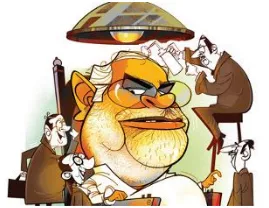
Decoding the modi effect
During the general election of 2014, Prime Minister Narendra Modi had convincingly demonstrated his extraordinary skill in crafting an election campaign that was unlike any other — and not only by the standard of Indian elections. The victory was a personal triumph for campaigner Modi. In the course of the electoral campaign he had demonstrated a total disdain (तिरस्कार/अवज्ञा) for the kind of tactics (रणनीति) previously adopted by the Bharatiya Janata Party, and had led the party to a spectacular victory. An issue uppermost in people’s minds at the time was whether the momentum could be sustained to achieve similar victories in future elections to various State Assemblies and the general election due in 2019. Some wrinkles did occur soon thereafter, with the party losing out to rivals in Bihar and Delhi (2015), and displaying an inability to breach regional bastions (an institution, place, or person strongly maintaining particular principles, attitudes, or activities.) in West Bengal, Tamil Nadu and Kerala (2016). It seemed to indicate that the BJP might not be able to repeat its 2014 success. The highly creditable victory in Assam (2016) and the party’s performance in Uttar Pradesh, Uttarakhand, Manipur and Goa (February-March, 2017) have removed such doubts. Most commentators seem reconciled to a Modi victory in the 2019 general election. Overwhelming victory U.P. was seen by many analysts as the BJP’s likely ‘Achilles heel’, the one most likely to derail its election dynamic. By winning 325 seats, the BJP alliance has put paid to all such prognostications (पूर्वानुमान/भविष्यवाणी) . Further, it has effectively consigned rival parties such as the Samajwadi Party, Bahujan Samaj Party and Congress to near irrelevance in U.P. politics. The vote share of the BJP alliance in U.P. almost equals that of the next two parties, the SP and BSP, combined, confirming the scale of victory in the State. In Uttarakhand, the BJP humbled the Congress by increasing its vote share by over 13% to 46.5%, compared to 2012. The Congress vote remained stagnant at around 33.5%. In Manipur, the BJP made substantial inroads into the Congress vote bank. In Goa, the BJP by and large maintained its 2012 vote share. All this was indicative of a growing groundswell of support for the BJP, reflected again in sub-State elections, including significant advances in recent zilla parishad elections in Odisha and a strong showing in Mumbai local elections against the Shiv Sena. Mr. Modi refrained this time from resorting to his 2014 high-tech campaign. The emphasis was on mega rallies, specially in U.P., with him acting as the lead campaigner. No Prime Minister had previously campaigned so hard or so extensively in any State elections. Political disruption Decoding the Modi Effect hence becomes an objective necessity. The campaign seemed to involve both a penchant (झुकाव) for political disruption as also a reliance on certain unusual skills. These, far more than his ‘can do’ image, appear to be the key to BJP’s success. Mr. Modi himself revealed an unerring instinct for ‘voter sentiment’, especially where it related to class and caste issues, followed by an ability to convert defeat into victory. For instance, and despite the pain of demonetisation, Mr. Modi could convince the common man that he was representing his interests against ‘hoarders’ of ‘black money’. Further, that he stood for a ‘developmental model’, implicitly distancing himself from any role either in weaving a ‘majoritarian’ Indian ethos (spirit or character), or in endorsing religious intolerance. Strong leadership accompanied by powerful oratory, often verging (के जैसा होना) on demagogy (impassioned appeals to the prejudices and emotions of the populace) , and steering his own political ecosystem seemed to account for the Prime Minister’s personal appeal. This ‘leadership mantra’ rather than the development agenda appeared to tilt the balance, with Mr. Modi skilfully projecting an image of a ‘conviction’ politician in the line of powerful leaders like Margaret Thatcher, Vladimir Putin and Donald Trump. Complementing his mass appeal was the crucial importance the Prime Minister attached to messaging and propaganda. Linked to this was also the skilful use of social media, and utilisation of Twitter and other forms for sending short pithy ((of language or style) terse and vigorously expressive.) messages, including at times unverified facts. Mr. Modi’s command and mastery over the political narrative clearly helped to out manoeuvre the Opposition, which was unable to offer any counter-intuitive narrative. He also communicated with the electorate more effectively, and could convince them — rightly or wrongly — that whatever he was doing was for their benefit. It helped sidestep contentious issues such as the exclusion of the entire Muslim minority from the BJP’s electoral calculus. Notwithstanding the latest electoral success, it would be prudent to hoist (raise) certain danger signals. For one, identification of the Prime Minister as the biggest vote-catcher, leading to an image of being bigger than the party, could have a long-term adverse political fallout. A comparison could be made with the current fate of the Congress, which was led at one time by giants such as Pandit Jawaharlal Nehru and Indira Gandhi, leaders with great ideas and a deep commitment to certain fundamental principles and beliefs. With the passage of time and over-centralisation of power, however, the Congress seems to have lost much of its past elan (आवेग/उत्साह). The message is that no one can ignore the reality that as individuals gain wider salience (प्रमुखता/विशेषता) over the organisation and its ideology, it often leads to a party’s decline. For another, the rise of the centre-right narrative on nationalism, secularism and social justice has the potential to damage India’s most precious legacy, one which has stood the test of time, viz. India’s commitment to certain fundamental principles, beliefs and precepts. It is this which had enabled India to not only negotiate its way through some of the most difficult periods in its history, but also to hold its own in the comity of nations. For a third, the habit of ‘contriving (create or bring about (an object or a situation) by deliberate use of skill and artifice.) ’ majorities can prove extremely shortsighted. Narrowing of the social base to achieve winning combinations can be highly deleterious (क्षतिकर/हानिकर) in the medium and the longer, and perhaps even in the short, term. One should not also overlook the fact that the U.P. outcome was the result mainly of the ‘reinvention of electoral mobilisation’. It should not lead ‘believers’ to think that the nation is in sync with some of the more disruptive policies and programmes that were highlighted during the course of these elections. Mastery over the narrative may have helped create ‘alternative ideologies’, but this can prove to be as dangerous as ‘alternative facts’. Exclusion of the Muslim minority from the BJP’s electoral calculus on this occasion may have helped the BJP, but the fallout can be serious. Closing the mind to other possibilities can only lead to a widening of the fault lines in society and in the nation, whatever be the temporary benefit. Ignoring the larger picture could have disastrous results. Heed the lessons of history ‘Winners’ must also heed the lessons of history. Spectacular victories do not come without their share of concerns. Demonstration of leadership, with the Prime Minister scoring over rival leaders on this occasion, paved the way for victory in U.P. Yet, in the ultimate analysis, there is no one single template for leadership, nor any winning formula for all time. This time around, the Prime Minister and the BJP leadership succeeded in shaping the agenda around issues best suited to them, and could inveigle (मनाना/फुसलाना) the electorate to back them. This may not always be possible. Conventional wisdom today is that the Prime Minister represents a new model of change-related aspirational India. Strong populist leaders may succeed for a time, but it may be a mistake to think that democracy would reject Establishment leaders over populist ones over the longer haul. Many a leader in the past has confronted this reality sooner rather than later. In the ultimate analysis, rooting for Prime Minister Modi at this time may be understandable, but rooting for him as the ‘Platonic ideal’ may be inadvisable.Disdain (noun)
A feeling of contempt for someone or something regarded as unworthy or inferior./ तिरस्कार/अवज्ञा
Synonyms: Contemptuousness, Despitefulness, Contempt, Misprision, Scorn
Example: You should not disdain handicap people based on their disabilities.
Tactic (noun)
An action or strategy carefully planned to achieve a specific end. रणनीति
Synonyms: Strategy, Scheme, Stratagem, Plan, Manoeuvre
Example: In order to achieve the win, the coach showed his team the best tactic to perform.
Prognostication (noun)
The action of prophesying future events. पूर्वानुमान/भविष्यवाणी
Synonyms: Prediction, Forecast, Prophecy, Divination, Prognosis
Example: The sports writer believes he can prognosticate the next world cup champion based on last year’s statistics.
Bastion (noun)
an institution, place, or person strongly maintaining particular principles, attitudes, or activities.) मुख्याधार/गढ़
Synonyms: Stronghold, Bulwark, Mainstay
Example: Many people consider radio to be the final bastion of analog amusement.
Pithy (adjective)
Of language or style) terse and vigorously expressive./ using few words in a clever and effective way. सारगर्भित
Synonyms: Laconic, Terse, Concise, Succinct
Example: To save time, the professor tried to give pithy answers to all questions.
Ethos (noun)
Spirit or character/ the characteristic spirit of a culture, era, or community as manifested in its attitudes and aspirations. चरित्र/प्रकृति
Synonyms: Spirit, Character, Prevailing Tendency, Ideology, Principle
Example: Doctors are supposed to practice under ethos in which they put their patients’ health before financial compensation.
Verge (verb)
Be very close or similar to. के जैसा होना
Synonyms: Tend Towards, Incline To, Border On, Approach, Near
Example: The failed policies made the business verged on to shutdown
Elan (noun)
Energy, style, and enthusiasm. आवेग/उत्साह
Synonyms: Flair, Stylishness, Smartness, Elegance, Grace
Example: Displaying energetic Elan, the dancer’s dynamic enthusiasm wowed the crowd.
Deleterious (adjective)
Causing harm or damage. क्षतिकर/हानिकर
Synonyms: Harmful, Damaging, Detrimental, Injurious, Inimical, Hurtful, Bad, Adverse
Example: The overpopulation of large snakes in the forest is deleterious to the wild rat population.
Inveigle (verb)
Persuade (someone) to do something by means of deception or flattery. मनाना/फुसलाना
Synonyms: Cajole, Wheedle, Coax, Persuade
Example: My lazy brother is going to try and inveigle our mother into paying for his spring trip to the beach.
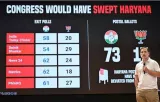
Ec complicit in haryana vote theft rahul
Nov 08, 2025







Stay updated with The Hindu Editorial Vocab24 app, your definitive source for breaking news and comprehensive coverage from India and around the globe. Whether it's political developments, business updates, sports highlights, the latest technology trends, or current events, The Hindu brings live, accurate, and reliable news directly to your device.
Don’t fall for sensationalized or fake news shared online. Read and share accurate updates with friends and family through The Hindu Editorial Vocab24 app. Download it today!
News Coverage in The Hindu Editorial Vocab24 App
Breaking News: Receive instant notifications on breaking news stories as they unfold. Stay informed about major events and developments in India and around the world with live blogs, news in shorts videos, and concise articles.
Politics: Get the latest updates on Indian politics, including elections, policy changes, government decisions, and political events that shape the nation.
Business and Economy: Stay ahead in the economic landscape with detailed business news and market analysis. Learn about stock market trends, financial reports, corporate news, and economic developments to make informed investment decisions.
Current Events: Follow stories on social issues, policy changes, global events, and daily current affairs, tailored for UPSC and other competitive exam preparations.
Technology: Keep up with the latest gadgets, innovations, and tech trends. Read expert reviews and analyses in short, concise updates on cutting-edge technology from India and beyond.
Sports: Never miss a moment of your favorite sports. Get live scores, match reports, and expert analysis on cricket, football, tennis, and more.
International News: Stay informed about global events and geopolitical developments, including the Russia-Ukraine war, Israel-Palestine conflict, and other key international stories.
Local News: Stay connected to your community with the latest updates on city events, issues, and local news. Coverage includes hyperlocal updates from cities like Bangalore, Chennai, Delhi, Hyderabad, Mumbai, Kolkata, and more.
Trending Topics: Discover what's trending today with the most talked-about stories and hot topics across India and the world.
Experience journalism that values integrity, accuracy, and reliability. Download The Hindu Editorial Vocab24 app today and stay connected with the world.
Subscribe to our newsletter!







