

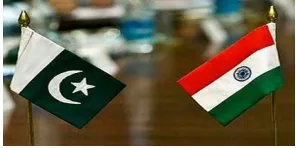
Cut through the fog
Indian strategic communication must aim to overcome Pakistan's state of delusion. Pakistan's citizenry are trapped in a delusional self-perception and view of India, which prevents them from making rational analyses of relations between the two countries. In meetings with the Pakistani elite (विशिष्ट/उत्कृष्ट), an Indian will just have to smile his way through because debating and arguing rationally isn't something the other side likes to engage in.
Munir Akram's recent rant (“to complain in a way that is unreasonable”) in Pakistani newspaper Dawn, against the treatment supposedly meted out to Pakistan foreign policy adviser Sartaj Aziz at the Heart of Asia Conference, is a case in point. When meeting people from Pakistan at neutral venues, a couple of things strike one immediately. First, Pakistan's superiority complex vis-à-vis India remains undimmed despite the evidence of the last 70 years.
The Pakistan army makes the public live in a make-believe world, forcing the belief that in 1971it never lost the war and was only deceived (धोखा खाया हुआ) by the Bangladeshis; on the western borders India was, apparently, squarely defeated. The army's expertise in public information and propaganda (मत प्रचार) is outstanding; the message to the public is that the proxy war in support of J&K separatists is succeeding.
The slickly communicated message speaks of the alienation of the Kashmiri people, the huge problems of integration of different faiths and ethnicities (जातीयता) all over India and that Pakistan's stamina will see it through to eventual victory, meaning the integration of J&K into Pakistan.
The coming of Prime Minister Narendra Modi rattled Pakistan as much as his stance of returning to the peace process. The invitation to the NDA inauguration on May 26, 2014, created a dilemma (दुविधा/असमंजस) and the common belief persists that Prime Minister Nawaz Sharif was given a cold shoulder, despite the courage he displayed in travelling to New Delhi against all advice within Pakistan.
Modi decided to break the impasse (कठिन स्थिति) with Pakistan by sending then newly appointed foreign secretary S Jaishankar on a round robin of visits within South Asia, including Pakistan. The pace of things picked up with the Ufa talks in mid-2015 and continued through to the Heart of Asia Conference 2015, preceded by the NSA talks in Bangkok. The icing came with the visit of Modi to Lahore on Christmas 2015.M
The visit took the Pakistani establishment by complete surprise. Usually one to surprise India with varieties of initiatives, Pakistan could not absorb the Modi visit. When Pathankot occurred seven days later, many in Pakistan blamed Modi for hastening (ज्ल्दबाज़ी करना) non-existent processes.
Fast paced initiatives by the NDA government weren't to the comfort level of Pakistan's deep state. The `peace chain' which Modi had initiated could have hijacked Pakistan's entire strategy in which it had invested for years. Pathankot put a halt to the events which could spell peace. Modi's olive branch found no takers and the deep state slunk back to its original strategy of bleeding India with a thousand cuts. The return was made even simpler once Sharif came under pressure following the Panama Papers leaks. An element of hesitation was yet evident when the Indian government permitted a Pakistan investigation team, with ISI officers included, to visit Pathankot. But Burhan Wani's killing on July 8 was the final nail in the coffin. Thus subterfuge (चाल/दांव) by the Pakistan army-led deep state, combined with the quirk of fate (“a strange and unexpected event”) of Wani's killing, put paid to sincere efforts.
Pakistani citizens continue to believe that India has not accepted the creation of Pakistan and is working towards dismembering it. That belief is often reinforced by strong Indian statements during strategic debates on the viability of weakening Pakistan. It is unfortunate that Pakistanis hardly read or believe in the writings of some of their own columnists, who profess that Pakistan's obsession with attempting to weaken India and playing strategic games is weakening its own edifice (“a complex system of beliefs.”).
Perhaps the Indian state has failed to effectively and convincingly communicate its true intent. That intent is to strengthen India internally and secure it externally using the twin strategy of promoting harmony and economic growth. India remains unwavering in ensuring the good of its people. The trust deficit doesn't allow this message to carry across the borders to Pakistan.
The colored Pakistani thinking also arises from a strange belief that Pakistan is succeeding in its strategy of weakening India and wresting J&K away from it. Pakistan's strategic community and even the public are aware of the great significance of Pakistan's physical strategic space; as a confluence (मेल/संगम) of many civilisations, interests and cross currents. This makes Pakistan extremely sure of its place in international strategic affairs.
At the end of the day the blame perhaps lies in the inability of reasonable communication of intent. Political rhetoric (शब्दाडंबरपूर्ण/वक्रपटुता) and social media are just one side of this. The real measure of serious intent has to be judged from the strategic literature emanating (निर्गत होना/उत्पन्न या उद्धभव होना) from a nation.
As in any functional democracy, there will always be different shades of opinion. However, governments shape this through cogent (प्रभावशाली/ ठोस) policies of strategic communication management. It is time we debated in India whether strategic communication emanating from the nation is in sync with our strategic aims and what we need to do to reduce Pakistan's delusions.











Stay updated with The Hindu Editorial Vocab24 app, your definitive source for breaking news and comprehensive coverage from India and around the globe. Whether it's political developments, business updates, sports highlights, the latest technology trends, or current events, The Hindu brings live, accurate, and reliable news directly to your device.
Don’t fall for sensationalized or fake news shared online. Read and share accurate updates with friends and family through The Hindu Editorial Vocab24 app. Download it today!
News Coverage in The Hindu Editorial Vocab24 App
Breaking News: Receive instant notifications on breaking news stories as they unfold. Stay informed about major events and developments in India and around the world with live blogs, news in shorts videos, and concise articles.
Politics: Get the latest updates on Indian politics, including elections, policy changes, government decisions, and political events that shape the nation.
Business and Economy: Stay ahead in the economic landscape with detailed business news and market analysis. Learn about stock market trends, financial reports, corporate news, and economic developments to make informed investment decisions.
Current Events: Follow stories on social issues, policy changes, global events, and daily current affairs, tailored for UPSC and other competitive exam preparations.
Technology: Keep up with the latest gadgets, innovations, and tech trends. Read expert reviews and analyses in short, concise updates on cutting-edge technology from India and beyond.
Sports: Never miss a moment of your favorite sports. Get live scores, match reports, and expert analysis on cricket, football, tennis, and more.
International News: Stay informed about global events and geopolitical developments, including the Russia-Ukraine war, Israel-Palestine conflict, and other key international stories.
Local News: Stay connected to your community with the latest updates on city events, issues, and local news. Coverage includes hyperlocal updates from cities like Bangalore, Chennai, Delhi, Hyderabad, Mumbai, Kolkata, and more.
Trending Topics: Discover what's trending today with the most talked-about stories and hot topics across India and the world.
Experience journalism that values integrity, accuracy, and reliability. Download The Hindu Editorial Vocab24 app today and stay connected with the world.
Subscribe to our newsletter!







