

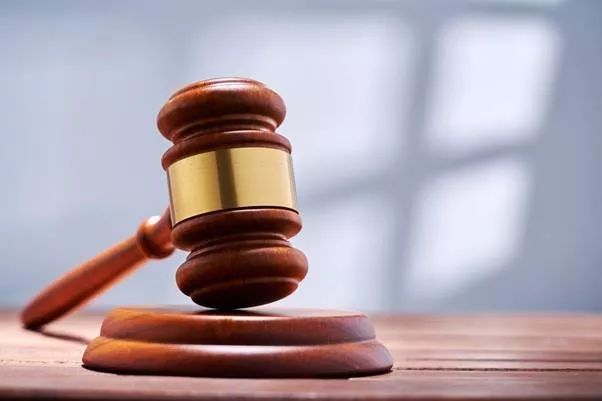
Courts must protect not regulate free speech
Freedom of speech is vital for any democracy. The suspect for any attack on the right to free speech is usually the executive or the legislature. However, the proceedings of the Supreme Court of India, in Ranveer Allahbadia vs Union of India and other cases have raised the worry that the potential risks of endangering speech could emerge from the Court itself. On November 27, 2025, the Court said that self-styled bodies are insufficient for regulation of online content and suggested the creation of neutral, autonomous bodies. It also suggested that the Government publish the draft regulatory guidelines and invite comments.Existing laws and regulation
In India, the existing laws already regulate various aspects of speech. Section 67 of the Information Technology Act and Sections 294, 295 and 296 of the Bharatiya Nyaya Sanhita (BNS) penalise obscenity. On online regulation in particular, Sections 66 of the Information Technology Act prohibits computer-related offences such as hacking and 66E of the Act prohibits publishing personal images of others. Section 66F of the same Act penalises cyber terrorism. The Information Technology (Intermediary Guidelines and Digital Media Ethics Code) Rules were also promulgated in 2021 though they are criticised for their overreaching interference and penal provisions.
Under these rules, there is already an oversight mechanism by the Centre. These rules also impose prior restraint. To illustrate, as per clause II (c) under the appendix of the Rules, a publisher should take “ due caution and discretion” while dealing with “activities, beliefs, practices or views of any racial or religious group”. Despite the existence of these and other provisions, any attempt at further regulating the right to freedom of speech and expression must be subject to critical analysis, especially when it comes from the Court.
The first concern is about the nature of the case under consideration. The Bench was dealing with a plea challenging the First Information Reports at the instance of persons who are accused of improper or obscene content. The question of online content regulation was not originally the subject matter of such a case.
However, in the earlier proceedings on March 3, 2025, the Court said that it would “extend the scope” of the case to examine the question of what regulatory measures are required to prevent broadcasting which are “offensive to well-known moral standards of our society”. This expansion is problematic at the outset. Identifying the problems of content and regulation is something that falls in the legislative domain. In Common Cause vs Union of India (2008), the Court cautioned itself: “Apart from the doctrine of separation of powers, courts must realize that there are many problems before the country which courts cannot solve, however much they may like to.” When the Court takes on this task, it is limited by inherent institutional barriers, including that of technical expertise in the field of online media regulation. The Court’s obstinacy for regulations in the field also would be vitiated by the same limitations.
The second is about the thin line between regulation and unlawful restraint. A five judge Bench of the Court in Sahara India Real Estate Corp. Ltd.& Ors. vs Securities & Exch. Board Of India & Anr., (2012) had considered in detail the question whether regulation of media content is desirable. Being conscious of the dangers of blanket prohibition, the Court held that pre-censorship of the media must be avoided at all costs. In the context of court reporting, it was held that the postponement orders directed at the media must be done only as a last resort and must satisfy a high threshold of reasonableness.
An outline in the Constitution
Also, the grounds based on which the right to free speech can be restricted are laid down by the Constitution in Article 19(2). This consists of interests of sovereignty, security of the state, public order, defamation and others expressly enumerated. The Court itself, speaking through a five judge Bench in Kaushal Kishor (2023) held that additional restrictions beyond what is expressly laid down in Article 19(2) could not be imposed. It was categorically held: “The grounds lined up in Article 19(2) for restricting the right to free speech are exhaustive. Under the guise of invoking other fundamental rights or under the guise of two fundamental rights staking a competing claim against each other, additional restrictions not found in Article 19(2) cannot be imposed on the exercise of the right conferred by Article 19(1)(a) upon any individual.”
It is interesting to note that on previous occasions, the Court has effectively restrained itself from venturing into blanket prohibitory measures. In Adarsh Co-operative Housing Society Ltd. vs Union of India and Others (2018), when a suggestion was made by a counsel urging the court to direct the film-makers to add a disclaimer before the movie, the Court repelled it.
It said that it is for the Censor Board and not for the Court to decide it, and even the Censor Board could decide it only after hearing the producer or the director of the movie.
Validity of the laws are to be determined by the Court as the constitutional umpire. During the Constituent Assembly debates, Pandit Thakur Dass Bhargava said that “the Supreme Court should ultimately be the arbiter and should have the final say” in situations of challenging the restrictions on freedom, by saying whether “the restrictions put are reasonable” (Constituent Assembly Debates. December 1, 1948). This is the scheme of Article 19 of the Constitution as well. Therefore, constitutional propriety demands that the Court abstains not only from the process of law making but also from the deliberation on the requirement for a law touching the citizen’s freedom.
The case abroad
The Court’s persuasive demand for further stringent laws in a tricky area could instigate prior censorship or statutory gag. Almost all the major democracies across the world focus on removal of offensive content and penalisation in case of breaching the order for removal of content. The Digital Services Act, 2022 promulgated by the European Union prescribes content removal protocols. The Network Enforcement Act, 2017 in Germany ensures prompt action on harmful content, without adversely impacting free speech. The Online Safety Act, 2023 of the United Kingdom focuses on removal of harmful content and imposing a fine in case of breach. The Online Safety Act, 2021 in Australia imposes a fine on non-compliance with regulation. Unlike these practices in democracies, countries such as China and Russia are invoking draconian laws to restrict online content. Surveillance and pre-censorship also dominate the online content regulation in these jurisdictions. Sadly, even some of the democracies which transform into autocracies also follow suit. David Landau and Rosalind Dixon, in a research paper, demonstrated that “would- be authoritarians at times seek to capture courts and deploy them in abusive ways as part of a broader project of democratic erosion....” (Abusive Judicial Review: Courts Against Democracy, 53 UC Davis Law Review 1313 (2020).
When the Court repeatedly asks for stringent laws to regulate Internet content and when the Centre readily agrees, it is a serious concern in terms of a citizen’s freedom. Author Salman Rushdie, when censored, has put it succinctly — “Free Speech is the whole thing, the whole ball game. Free speech is life itself .”
Any attempt at further regulating the right to freedom of speech and expression must be scrutinised, especially when it comes from the top court


Ensure peace, freedom of navigation, PM urges Iran
Sep 03, 2026







Stay updated with The Hindu Editorial Vocab24 app, your definitive source for breaking news and comprehensive coverage from India and around the globe. Whether it's political developments, business updates, sports highlights, the latest technology trends, or current events, The Hindu brings live, accurate, and reliable news directly to your device.
Don’t fall for sensationalized or fake news shared online. Read and share accurate updates with friends and family through The Hindu Editorial Vocab24 app. Download it today!
News Coverage in The Hindu Editorial Vocab24 App
Breaking News: Receive instant notifications on breaking news stories as they unfold. Stay informed about major events and developments in India and around the world with live blogs, news in shorts videos, and concise articles.
Politics: Get the latest updates on Indian politics, including elections, policy changes, government decisions, and political events that shape the nation.
Business and Economy: Stay ahead in the economic landscape with detailed business news and market analysis. Learn about stock market trends, financial reports, corporate news, and economic developments to make informed investment decisions.
Current Events: Follow stories on social issues, policy changes, global events, and daily current affairs, tailored for UPSC and other competitive exam preparations.
Technology: Keep up with the latest gadgets, innovations, and tech trends. Read expert reviews and analyses in short, concise updates on cutting-edge technology from India and beyond.
Sports: Never miss a moment of your favorite sports. Get live scores, match reports, and expert analysis on cricket, football, tennis, and more.
International News: Stay informed about global events and geopolitical developments, including the Russia-Ukraine war, Israel-Palestine conflict, and other key international stories.
Local News: Stay connected to your community with the latest updates on city events, issues, and local news. Coverage includes hyperlocal updates from cities like Bangalore, Chennai, Delhi, Hyderabad, Mumbai, Kolkata, and more.
Trending Topics: Discover what's trending today with the most talked-about stories and hot topics across India and the world.
Experience journalism that values integrity, accuracy, and reliability. Download The Hindu Editorial Vocab24 app today and stay connected with the world.
Subscribe to our newsletter!







